CHAT WITH CIARA BALLINTYNE

Ciara-Ballintyne-author

Ciara Ballintyne is a fantasy author and lawyer. She enjoys reading, horse-riding, and speculation about taking over the world. If she could choose to be anything it would be a dragon, but instead she shares more in common with Dr. Gregory House of House. M.D. Confronting the Demon is her debut book.

Time to chat with Ciara!

What is your latest book?

Confronting the Demon is an adult high fantasy novella. Alloran’s rather pampered life has just had a severe shake up and spat him out in the worst of the city’s rubbish-strewn back alleys. Everyone’s looking for him, and he doesn’t know who to trust. It’s a short read, only an hour for a fast reader.

Confronting the Demon

Is your recent book part of a series?

Originally, no. Then readers started speculating about sequels, and so I did too. I have three more novellas planned in the series, and there’s always room for more.

What part of writing a novel do you enjoy the most? The least?

Plotting. I love plotting. I would even go so far as to say it’s my drug of choice. Yep, I can totally get high on the rush of a new plot twist. Is that weird? I don’t really care. Playing around with new story ideas is exciting and fun.

Revising is the bit I least enjoy. Not editing, revising. And not all revisions. Some are as fun as writing the first draft. It’s just the hard revisions I don’t like – the ones where I took a short-cut the first time and now I (or my editor) have slapped me across the knuckles for it. Then I have to buckle down and get those hard words on the page

Is it important for you to know the ending of a book before you write it? The title?

The ending, absolutely. How can you foreshadow something you don’t know? Sure, you can put that in revisions, but it’s so much easier if the journey already has a destination. The title is less important, but it helps. Usually I would know the title. Every work in progress I currently have (and there are lots) has a title. I just finished a short story called A Dilemma of Twins, and from the get-go I had a strong theme for that tale. My WIP novel, In the Company of the Dead, is the same. On the other hand, I really struggled with a title for Confronting the Demon and getting the theme and inner conflict of that story really nailed down was difficult. If I don’t have a title, I think it means I don’t have a clear enough direction for the story.

Some writers edit excessively as they write; others wait until a novel is finished to do the bulk of the editing. How about you?

Write first, edit later. If I tried to revise as I go, I’d never finish, and editing the earlier sections really depends on what you’ve put in the back end of the book as well. The exception is that about 20% of the way into In the Company of the Dead I had to stop and re-read it. I didn’t edit a lot, just back-filled a few details that had changed, and the reason was I felt the book had lost its way and thinking about it was distracting me. It turned out I was completely wrong, and once I realized that I was able to get on with it.

After working for a very long time on a novel, many authors get to a point where they lose their objectivity and feel unable to judge their own work. Has this ever happened to you? If so, what have you done about it?

Absolutely. No one can read their own work objectively because they know what it should say, what it actually means, rather than seeing what it really says. You can’t read it with the ignorance of an unfamiliar reader. If you missed a word, your brain fills it in. If a sentence is ambiguous, you read it the way you intended because you know. You can never experience that first revelation of a new world, a new character, because you know everything there is to know. It’s like a reader picking up a book for the first time after they’ve already read the companion to that book. You can’t judge if everything is clear, because to you everything is, and always will be. This is why you need editors. Beta readers are also good. Not everyone uses them, but some of the most surprising directions for my stories have come from the musings of beta readers or my critique group.

How important is the choosing of character names to you? Have you ever decided on a name and then changed it because it wasn’t right for the character?

I’m anal about names. The name has to feel right, sound right, and look right. Because I write fantasy, I have an almost limitless choice, but sometimes that makes it harder. No perusing of baby name books for me.

Most of the time I get it right first time, but I have changed character names twice – Gwaine in my WIP The Blood Infernal became Aaric, and Ellemiaeran from In the Company of the Dead became Ellaeva. I was just never happy with Gwaine, and Ellemiaeran was too long, complicated, and didn’t carry any sense of foreboding. The villain from Deathhawk’s Betrayal also stayed nameless until I came up with something suitably sinister.

One of my biggest naming problems is my obsession with A. Here are some A names from across a range of books: Astarl, Aldenon, Aaric, Alyne, Alloran, and Avram. I really need to watch that tendency sometimes.

Authors, especially Indies, are constantly trying to understand why some authors sell very while their talented fellow authors have a hard time of it. It’s an ongoing conundrum. What do you make of it all?

I fall in the category of having a hard time of it, so incredibly frustrating springs to mind. Some books are easier to sell, I think that’s well-known. Romance, and of course paranormal romance. YA and now NA. I won’t touch those genres, for no other reason except I’ve never read them, so what would I know? I write for adults, and I write high/epic fantasy. Novels also sell better than novellas, I think, and a series better than a stand-alone. So at the moment I’ve pigeon-holed myself into a bad spot, and nothing but time and writing will change that.

The most frustrating thing is that story captures the reader’s mind, and that’s why otherwise mediocre books can do tremendously well. It’s like the story resonates with the reader to such a degree that it short-circuits the quality of the writing. The reader is so connected to the story that the writing almost ceases to matter. No one knows when they have a story like that. We hope every story is, and some may just languish undiscovered. My gripe is that there’s absolutely no reason why such a story can’t also be well written. Instead, some writers point to the success of these stories as evidence that there’s no need to improve their craft, when in fact the exception does not prove the rule, and that author was more lucky than anything else.

Have you received reactions/feedback to your work that has surprised you? In what way?

A few, yes. Some readers called Confronting the Demon paranormal romance. I wouldn’t call it that, but if the readers of that genre think it is, and enjoy it, I’m not going to argue. One reader compared me to a favourite author, Brent Weeks. That tickled me. My editor said I write in the style of Jacqueline Carey, another author I enjoy and respect. I don’t really think I’m that good, but I get giddy on the comparisons all the same. A test reader recently compared something I’d written to Joss Whedon, which was the high point of that day! Even some readers have shown an appreciation for the fact that Confronting the Demon is targeted at adults, or that it is short (even while hoping for more!) just as a change to other offerings.

Having our work out there to be judged by strangers is often daunting for writers. Do you have any tips on handling a negative review?

Some people say don’t read them. I’ve never had one that made me feel that way, and I suspect the ones that make people feel like that are personal attacks and bullying. If an author starts getting that kind, it might be best to just not know.

Otherwise, all you can do is remember that you can’t please everyone. Not every reader will like your work – and that’s OK. My approach is read the reviews, look for any constructive criticism or something that objectively indicates a problem with the book, and take it on board. If it’s subjective, and the reviewer is just not part of your target audience, don’t worry about it.

I have one 2-star review that criticized me for an unoriginal cliché. It took a long time to work out what the reviewer was talking about, but apparently I mimicked a rule in Dungeons & Dragons. I never played, except the computer game variety, in which the rules are less apparent because the computer does all that calculation. I probably did, once, know this rule, but it was such a long time ago I’d forgotten, and it certainly wasn’t in my conscious mind when I wrote the story. C’est la vie. That reader didn’t like the book for that reason. So be it. Plenty of other readers, as ignorant as I of D&D, have enjoyed it very much.

If you can’t take criticism, you are in the wrong industry.

What might we be surprised to know about you?

I have owned precisely one pair of riding boots in my life. I bought them in 1994 when I was 13. They still fit, although they are probably in need of replacing by now. At the same time I have also owned precisely one bicycle, although I definitely outgrew that. You can probably draw some conclusions about my attitudes to horses and bikes from that.

Also fun, is that all my uncles by marriage are named Rob. So my mum’s two sisters married a Rob, and so did my dad’s only sister. For a fun bonus, my dad’s name is also Rob. So basically my grandparents had four daughters between them – and they all married a Rob. My husband is very confused!

What makes you angry?

Lately, as the mother of two girls, the continuing inequality of women. I’ve never struggled against this much myself, but now I have to wonder how it will affect them as they get older. Society’s general attitude to women, the way the same quality can be treated positively in a man and negatively in a woman, the unrealistic nature of women’s body image, the level of ignorance in the general population about what a healthy woman’s body looks like – both before and after pregnancy. These all make me angry.

And child abuse. Babies dying, neglected children rescued. Child marriage. Every time I see one of these headlines I question whether to read the whole article or not. I usually cry if I do. It astounds me that parents can so mistreat their own children. It shakes my faith in people, and I have to go home and hold my babies close. I currently donate to an organization called Menindanca for this reason – they help girls, pre-teens and early teens, in Brazil who are sent out to sell their bodies on a major Brazilian highway to provide income for the family.

What music soothes your soul?

Country music. No matter what anyone else every thinks of it, there’s something about the steel guitar, the banjo and the fiddle that just soothes my soul. No matter how angry I might be, I can turn on some country music, crank it up loud, and everything feels better. It’s about family, friends, love, loyalty, respect, and honesty. Things that so often society seems to be turning its back on but which remain important to me.

What was the most valuable class you ever took in school? Why?

Jursisprudence at university, which is the study of legal philosophy. That might seem odd, but the lecturer asked if we thought slavery was wrong. We all agreed it was. But in Ancient Greece, it was actually unethical to release a slave in certain circumstances, and a slave owner had certain obligations to care and provide for his slaves.

We talked about a lot of things like that. It was important for understanding how context is important to people. Not only does this teach tolerance for others in the real world, but it’s invaluable when writing fantasy worlds for understanding how your invented world might shape the people.

What’s your biggest pet peeve?

Misuse of the apostrophe of possession and people who drive under the speed limit are on par – these cause me a certain amount of annoyance and frustration in my day-to-day life. The apostrophe of possession because when I read something like ‘FAQ’s’ I’m immediately wondering what belongs to the FAQ, and slow drivers because traffic congestion is bad enough without people unnecessarily slowing it down when there are no traffic problems! Time is precious, and while there may be times I am content to sit back and enjoy the journey, all too often driving is dead time.

CONNECT WITH CIARA

Website

Facebook

Twitter

Blog


CHAT WITH ROSARY McQUESTION

RosaryMcQ

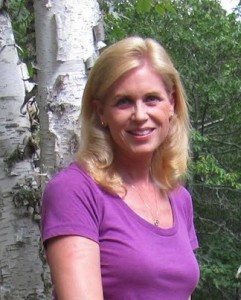
Rosary McQuestion was born in Brooklyn, New York, grew up in Wisconsin, and she currently lives in Michigan with her husband and their three cats. Following a long career in advertising and marketing, which included owning her own agency and later becoming director of marketing and creative services for a well-known party goods manufacturer, she now indulges in her love of writing—full time.

Time to chat with Rosary!

What is your latest book?

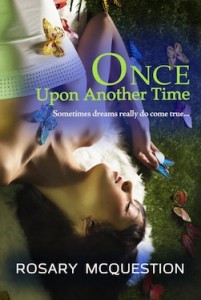
Once Upon Another Time

OnceUponAnotherTime

What do you think some of the greatest misconceptions about indie authors are?

A big misconception is that indie authors are not as talented as authors who have agents or large publishing houses backing them. I have read some wonderful books by indies whose writing talents are just as good as some of the well known authors of today. The general public, the readers who are not writers, don’t realize that indie authors actually work harder than well-established authors to market their books—they are more self-reliant. They have to take on huge challenges from start to finish. Although now agented, Wool by Hugh Howey is just one of thousands of examples of a great indie talent who rose to fame—on his own.

Some authors, like me, always write scenes in order. But I know some people write scenes out of order. How about you?

In my head, I have a snapshot of scenes that could work and write them down in a very rough sequenced outline, which by the way, always seems to change. I think it’s great if you can write in chronological order. Sometimes I can. However, depending on my mood on any given day, a particular scene (that may be chapters away from happening) will spark in my head, and I am compelled to write it immediately. For me, when creative juices are flowing, I must seize the moment and therefore, most of the time, I do not write scenes in order.

Is it important for you to know the ending of a book before you write it? The title?

It’s funny because I never know the beginning but always know the ending. I’m currently working on a mystery series and know all three endings. For me, it makes sense because I have to know what I’m working toward. Otherwise I’d feel as if I were thrashing about in the middle of the ocean with no land in sight. As for the title, I usually come up with a few choices for a working title. I don’t really know how my characters will react, or what will pop up during writing, so I have to know the full story and have it completed before I settle on the exact title.

Some writers edit excessively as they write; others wait until a novel is finished to do the bulk of the editing. How about you?

I know I shouldn’t but I obsess over trying to perfect each word, sentence, paragraph I write, which ends up stalling my writing and sometimes makes me feel as if I’m spinning my wheels and going nowhere. I’d read somewhere that when Joseph Hill, Stephen King’s son, was struggling with constant rewrites to perfect every line, King told him something that went like this: That’s what editing is for. Just finish the damn book! I’m trying to follow that same advice.

How important is the choosing of character names to you? Have you ever decided on a name and then changed it because it wasn’t right for the character?

Names give me instant images like Bertha and Otis always conjures up images of larger stature people, while Gwendolyn seems like a demure personality, Maria a fiery temper and Eden smart, quiet but somewhat of a temptress. Therefore, the names I choose for my main characters are very important and secondary characters, not so much. I always have a physical image in my mind of what my characters look like, as well as their personalities. Once I match a name to a personality, I don’t ever change it.

Please, tell us about your experiences with social media. What are your favorite and least-favorite parts of it?

Social media has allowed me meet so many wonderful, talented people. I love that I can communicate with cyber friends from around the world. Technology is wonderful. I’d go crazy if I had to use a manual typewriter and whiteout, and rely on word of mouth to spread the news around town or from city to city that I’d written a book. And without Amazon a lot of indie writers, like myself, wouldn’t stand a chance of making a name for themselves.

However, after spending hours and hours on social media (SM) sites as opposed to hours spent on writing, it was as if the electronic umbilical cord that connected me to Twitter, Facebook, LinkedIn, etc. was in fact, strangling me.

I had to find a smart way to integrate SM into my life without sacrificing my writing. The point is that we use these potentially distracting tools to get noticed, to market ourselves, our books, but they are time consuming enough to significantly pull us away from things that are more meaningful. For me, it’s trying to get that next novel written.

Also, if done creatively, SM can be a great marketing tool. The trick is to think outside the box. With so many people using SM, it’s beginning to feel as if everyone is blandly similar.

How much research was involved in writing your book? How did you go about it?

I put a fair amount of time into researching Providence, Rhode Island, where Once Upon Another Time takes place. As well as Block Island where Aubrey’s husband Matt died. I am a firm believer in getting the facts straight. Just because my book is fiction, it doesn’t mean it should be geographically incorrect.

Do you write anything besides novels? Care to share?

I don’t anymore, but I had worked in advertising and marketing agencies for most of my career and did everything from design to account management. Included was a lot of copywriting for brochures, catalogues, television, etc. I also wrote PR.

Having our work out there to be judged by strangers is often daunting for writers. Do you have any tips on handling a negative review?

If you’re going to be a writer, you have to be tough-skinned and realistic that not everyone is going to like your story. With that said, the reviewer might leave comments of constructive criticism, which a writer should take and learn from. Whether good, bad or indifferent, I always thank the reviewer for the time they took to write a review.

My advice to writers who let negative comments get them down is to go to Amazon, look up those iconic authors whose names are synonymous with New York Times Bestsellers, and read the one, two and three-star reviews.

What might we be surprised to know about you?

As a child, I lived in a house that was haunted, so I do believe in the supernatural. My experience wasn’t as bad as The Amityville Horrors, but still quite frightening. There were cold spots in rooms and hallways, doors closing unexpectedly, lights turning off and on at will, and other strange happenings in the house.

It was an old 1930s house converted into a two-family dwelling. My parents owned the house and rented out the upstairs apartment. The tenants came and went quickly, and in between when the apartment was unoccupied we’d hear footsteps walking back and forth overhead. At first my father thought someone had broken into the apartment and with baseball bat in hand, he’d run outside and up the back steps to catch whoever it was. However, he’d always find the apartment door locked. After inspecting the apartment anyway, he’d never find anyone there. It got to be one of those strange things we grew accustom to hearing.

My parents had the house blessed by the Catholic priest from our parish, but things didn’t quiet down and my parents eventually sold the house. Our next house wasn’t haunted, thankfully. However, I have remained fascinated by what lives beyond our world. It’s what jumpstarted my thoughts about wanting to write a book.

Once Upon Another Time is a lighthearted paranormal romance, but I’d like to write a paranormal story that is darker, scarier, more bizarre—something more Stephen King-ish.

CONNECT WITH ROSARY

Website

Facebook

Twitter

Amazon Author Page

Goodreads


CHAT WITH DEANNA SLETTEN

DeannaSlettenDeanna Lynn Sletten is a bestselling and award-winning author. She writes women’s fiction and romance novels and has also written one middle-grade novel that takes you on the adventure of a lifetime.

Deanna’s women’s fiction novel, Widow, Virgin, Whore,made the top 100 bestselling books on both Amazon and Barnes & Noble in March 2014. Her romance novels Memories and Sara’s Promise both won semi-finalist in The Kindle Book Review’s Best Indie Books of 2012 and 2013 respectively. Sara’s Promise was also a finalist in the 2013 National Indie Excellence Book Awards.

Deanna is married and has two grown children. When not writing, she enjoys walking the wooded trails around her northern Minnesota home with her beautiful Australian Shepherd or relaxing in the boat on the lake in the summer.

Time to chat with Deanna!

What is your latest book?

I have just published a romance novel titled Destination Wedding. It is a fun, heartwarming story that women of all ages will enjoy.

DestinationWedding

Do you write under a pen name?

No, I use my real name.

If you were to advertise your book on a bumper sticker, what would it say?

Imagine going to paradise—with your ex!

What else have you written?

I currently have seven novels published, some in the women’s fiction genre and others that are romances, plus one middle-grade novel. Some of my novels deal with difficult subjects. The main male character in Memories is a veteran of the Vietnam War and the story includes his struggle with his past memories of the war. Widow, Virgin, Whore is the story of three women who are friends/sisters and how they cope when one of them is infected with HIV/AIDS. Maggie’s Turn is a lighter story but deals with a disintegrating marriage. My women’s fiction/family drama novel, Summer of the Loon, is a heartwarming story of a young teen girl whose mother dies and she has to go live with the grandfather she has never met. While there is a lot of drama, there are also a lot of feel-good scenes. My other novels include Sara’s Promise (romance), Outlaw Heroes (Action/Adventure Middle-grade), and my latest romance, Destination Wedding.

What do you think some of the greatest misconceptions about indie authors are?

From what I’ve seen over the past three years is that indie authors are becoming more widely accepted by readers than from just a few years ago. Readers love to read, and if an indie author is professional and writes a good story, readers don’t care if they aren’t traditionally published. When I first started self-publishing, there was still some hesitation about buying an indie book due to poor editing and formatting. But now you see more indies hiring editors and proofreaders, as well as professional formatters and book cover designers. This has helped to improve the image of indie authors.

How often do your characters surprise you by doing or saying something totally unexpected?

Very often! It sounds crazy to a non-writer when you say that your character decided to go in a different direction than you intended them to go, but it does happen. There have been many times I’ve written a scene where I thought the character was going to do one thing, and then he does another, and no matter how I try, he just does what he wants. Usually, it helps to make the story more interesting. Obviously, I’m the one controlling the character, but it just doesn’t feel that way sometimes. I no longer act like I have any control over my characters when I write. I start writing and see where they want to go.

What part of writing a novel do you enjoy the most? The least?

I’m one of those oddball writers who love the entire process from the research to the final draft. I don’t understand writers who say how hard writing is or how much they hate writing, yet they choose to write. If you don’t love it, don’t do it. I love learning new things, so the research part of the process is interesting to me. Then, the writing phase is so much fun—I love getting lost in the story. I enjoy editing as well. It gives me a chance to re-read the novel and change where necessary to help make the story fuller and richer. Then, after the editor has had a turn at it, I enjoy going through the story and once again making changes to create a better story. I love it all—no complaints from me.

Some authors, like me, always write scenes in order. But I know some people write scenes out of order. How about you?

I almost always write my scenes in order, but once in a great while I get an idea for a scene and I want to write it down before I forget it. I’ve written the ending down before too, even though I might make a few changes. When I begin a project, I usually know exactly how I want to start it and how I want to end it and maybe have a few scenes in mind for the middle. The rest comes to me as I write, so that is why I generally write in order.

Is it important for you to know the ending of a book before you write it? The title?

For me, it’s important to know how I’m going to end it before I even start it, otherwise I don’t know where I’m going. It helps. As for the title, I’ve used working titles before and then changed the title in the end. Titles are the hardest thing for me, so I like it better if I have a title before I start, but it doesn’t always work out that way. I had at least five different titles for Memories before I decided on which one to use. I also had a different title for Sara’s Promise. On the other hand, Maggie’s Turn, Summer of the Loon, and Destination Wedding all came to me before I even started the project.

Some writers edit excessively as they write; others wait until a novel is finished to do the bulk of the editing. How about you?

I like to edit as I go, not drastically, but I do re-read and edit. Each day when I sit down to write, I usually read what I wrote the day before and that’s when I’ll make some edits. It gets me back into the story and helps me stay on track. And I also hate seeing a misspelled word or a sloppy phrase as I write, so I usually stop to fix it before going on. It’s like sitting in a messy room and not picking anything up. It drives me crazy.

How important is the choosing of character names to you? Have you ever decided on a name and then changed it because it wasn’t right for the character?

I think the character names are very important. They help to set the tone of the character’s personality. Before I begin writing, I go through names for each character to choose the perfect name. That is, unless I have already thought of a name that fits perfectly. If you want the reader to believe the story, then you can’t just grab names out of the air. The character’s name should fit the time period of when they were born, not of when you write the story. It should also fit their personality. Is the character silly? Flirty? Serious? A nerd? Are you going to name your nerdy character who is a computer genius Tiffany? You can, but is it realistic? The right name helps the reader identify with the characters, and hopefully want to get to know them. If you do your job right, the reader will think about the characters even when they are finished with the book, as if they were real people that the reader knew.

Have you ever written characters that you truly despise?

Not yet, but it sounds like fun.

Do you have any advice for first-time authors?

Over the past three years, I’ve met first-time authors who are still trying to go the traditional route but can’t seem to find a publisher. They are still hesitant to self-publish. While I think it’s wonderful to continue to try to find an agent/publisher, I also believe that you shouldn’t spend years waiting for something to happen. If you are a first time author, take the plunge and get your book out there. You may have the next best seller just sitting, unread, in a computer file. Always use an editor, or at the very least, a proofreader, and have your book professionally formatted and add a professional cover. But get it out there for people to read and enjoy. And don’t stop there. Continue to publish. You have a much better chance of finding a traditional publisher if you have a steady track record of interest and sales for your novel.

Can you tell us about your road to publication?

There are so many conflicting opinions out there about everything related to publishing: e-book pricing, book promotion, social media usage etc. How do you sort through it all to figure out what works best for you?

How much research was involved in writing your book? How did you go about it?

My latest novel, Destination Wedding, took very little research since our family had actually visited a similar island in the Bahamas the year before. It was while we were there that the book idea came to me, and I loved the island location so much I knew it would be the perfect backdrop for a romance novel. As for many of my other novels, I have done extensive research, depending upon the background of the characters. Widow, Virgin, Whore, and Memories both involved a heavy amount of research. Some of my other novels included only research on where they were set. I try to use settings that I have actually been to and know about from personal experience. I don’t think you can get a feel for a place by just reading about it, you have to experience it.

Do you allow others to read your work in progress, or do you keep it a secret until you’ve finished your first draft? Can you elaborate?

No, no one reads my work until after it’s been to the editor and is ready for publication. I wouldn’t feel comfortable having someone telling me what I was doing right/wrong with my novel before I’m even finished with it. That is what my editor is for, and I trust her advice. I know many writers depend upon critique groups and I’m sure that works well for them. It just isn’t something I’d be comfortable doing. Each story I write is personally mine, and all I can do is hope that others can relate to it and will enjoy it.

Have you received reactions/feedback to your work that has surprised you? In what way?

Both Widow, Virgin, Whore and Memories have received strong, emotional feedback from readers, which is rewarding considering the emotional topics of each book. What surprised me most, though, was some of the feedback I’ve received for Maggie’s Turn. I originally thought of Maggie’s Turn as just a fun, heartfelt story, so I was surprised when many women told me how it hit home with them. I’ve even had a few women tell me how it gave them hope for their own marriage. I love entertaining people with my novels, but it is even more gratifying to hear that they were actually touched by a story.

Do you feel your latest book is your personal favorite or one of your previous novels?

It seems like each book is my favorite right after I’ve written it. Currently, Summer of the Loon and Destination Wedding are my favorites. Before that, Maggie’s Turn was my favorite. I guess I just love them all or else I’d have never written them. Each story is special to me in one way or another.

Having our work out there to be judged by strangers is often daunting for writers. Do you have any tips on handling a negative review?

I think it’s always difficult handling negative reviews of anything you do in life. After spending so much time creating something like a novel, it’s difficult to read criticism of it. Unfortunately, that is just part of the process. A writer has to remember that not all people are going to love what you do—that’s just a fact. When I read a negative review, I decide if it’s helpful or not. Did the reviewer just say it was the worst thing they’ve ever read or did they give reasons why they didn’t like it? Were the reasons valid? If the majority of your reviews are positive and you only get a few negative/hate reviews, then I wouldn’t think too much of them. If the majority of your reviews are not positive, then it’s time to review what people are complaining about and see if it can help to improve your writing.

I know there are many writers out there who say they never read their reviews, good or bad, because it won’t change the way they write. While that may work for someone selling millions of books a year, I think as an indie author, you should be aware of what your readers think. Don’t change your writing or story because of a few negative comments, but be aware of the good and the bad. It might just help you improve as a writer.

Are you an early bird writer or night owl? And do you have any must haves like coffee, chocolates, wine, music or something else?

I’m more of a night owl writer. Some afternoons I will sit down and write for an hour or two, but the majority of my writing is done between 10 pm and 2 am. I love writing when it’s quiet and no one is going to disturb me. As for must haves, I really don’t have any of those when I write except for complete silence. Once I start writing, I’m so absorbed in the story that I rarely even think to eat, drink, or do anything else. It’s my time to give the story its full attention.

We all know the old saying; you can’t judge a book by its cover. This is true. However, how much importance do you place on your book cover design?

I place a high value on book covers. Everyone judges a book by its cover, especially today when people are glancing through books on a site like Amazon and you only have one or two seconds to make them stop and look at yours. It’s your cover they stop to look at. Maybe even your title, but most likely the cover. After that, they might read the book description. Then they might read the sample. All of those aspects must be top-notch to get the sale, but the cover comes first.

I also believe that the book cover has to give the reader an essence of what the book is about and of its genre. I’ve seen people put erotica-style covers on basic romances to try to capture the fast-growing erotica market. That’s not a good idea. It makes people mad. If they want a sexy book, and yours isn’t, then you will get a bad review. Likewise, you don’t want to put a playful cover on your book and then have nothing but hot sex in it. People don’t like that either, but I’ve seen it done. That’s why it’s important to work with an experienced cover designer who can help you create the perfect cover for your particular book. Deborah Bradseth at Tugboat Design (www.tugboatdesign.net) creates all my book covers, and she does an amazing job. We work together on what concept I want and then she gives me different ideas that she thinks will work. She usually knows more about what I want than I do. Your cover is your first chance to snag a reader, so don’t lose that chance by settling for a subpar cover.

What genre have you never written in that you’d like to try?

I do love paranormal/ghost stories, but I have yet to come up with a good one that I’d actually like to write. Hopefully, a good idea will come to me someday, but I’m not going to force it.

Where do you live now? If you had to move to another city/state/country, where might that be?

I currently live in a small, northern Minnesota town. If I had the chance to move, it would definitely be to an island in the Bahamas. I have a particular one I love, but I’m going to be greedy and not reveal its name because I don’t want anyone else to move there. I love it exactly as it is right now.

What’s your favorite comfort food? Least favorite food?

Chocolate – especially when it’s cold from the fridge. Least favorite? Most green foods – I’m just not a veggie person.

Care to brag about your family?

Who doesn’t enjoy bragging about their family? I have two amazing grown children, Michael and Deborah, who are both out in the world doing what they love best. My husband and I have been married for forever, and he not only works full-time but enjoys playing music professionally on the weekends. He and my son have a band together and they play often. My daughter works as a designer for our local newspaper and also runs her own home business. Michael’s girlfriend is beautiful and hardworking and we all adore her, and Deborah and her husband were just married last year in the Bahamas. And of course, I have to brag about my beautiful Aussie who is my walking companion every day of the summer. She’s amazing! We all have very full lives.

If you could have one skill that you don’t currently have, what would it be?

I’d love to be a painter. Sometimes, I see a sky or landscape and wish I could paint it. I have to settle for taking a nice picture instead.

What’s your favorite film of all times? Favorite book?

One single favorite film is difficult, but I will say Butch Cassidy & The Sundance Kid is on the top of the list. One of my novels is a middle-grade adventure in which twelve-year-old Will Long is swept back in time to join in on the escapades of these two outlaws. It’s a fun story and probably the most fun I’ve ever had writing. Other films on top of that list include Beaches, The Way We Were, and Somewhere In Time.

Favorite book? Again, it’s hard to choose only one. The Great Gatsby and everything ever written by F. Scott Fitzgerald top my list. Jane Eyre is right up there too.

What are three things you think we can all do to make the world a better place?

Listen to each other, have more compassion, and be more patient.

CONNECT WITH DEANNA

Website

Blog

Facebook

Twitter

Amazon Author Page


CHAT WITH FIONA QUINN

FionaQuinn

Canadian born, Fiona Quinn is now rooted in the Old Dominion outside of D.C. with her husband and four children. She unschools, pops chocolates, devours books, and taps continuously on her laptop.

Time to chat with Fiona!

What is your latest book?

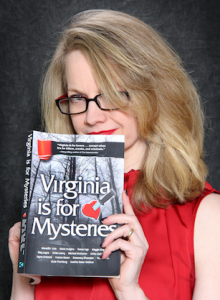
I was involved in a project with two local Sisters in Crime chapters. Sisters in Crime (SinC) is a national support organization for female crime writers, though males are welcome, as well.

Our book, Virginia Is for Mysteries is a compilation of 17 shorts stories set in and around the state of Virginia. Each story features a Virginia landmark, from the shores of Cape Henry Lighthouse to Richmond’s Old Hollywood Cemetery to Jefferson’s Monticello, transporting readers across Virginia’s rich, unique and very deadly landscape. I have two stories included, “Key to a Crime” and “Caged Bird.”

We do many public appearances — library talks, presentation, signings – getting together is always fun. We’ve hit the Amazon top 10 with our effort. And now, we are gearing up for our second book.

You have a website called ThrillWriting. Can you tell us about it, and how you help authors?

ThrillWriting celebrated its first birthday by sliding over the 100k page-view mark. (May 2014) That was hugely gratifying.

A year ago, I was looking through my notebook of research for my novels, and I thought that it might be useful to other authors. I hoped to create a resource that was a beginning point for finding the kinds of tricky details that might show up in writers’ works – sort of a one-stop-shop for mystery/suspense/thriller writers. Though, there are things on psychology and body language that could inform any genre.

In my articles, I include links to further information if an author needs to go deeper in depth, as well as videos – some I make, some I pull from YouTube – to support the ideas and make them clear.

My readers have asked me if I’m afraid of the consequences for researching some of the topics that I do, such as date-rape drugs and the NSA. I point out that I always cheer for the heroine and give her as many options for surviving as possible. I like to joke that the strip searches at the airports and the midnight interrogation visits are just another perk of my job.

While I believe the best way to write something correctly is to have experienced it, that’s not practical. So talking with someone who has expertise is a best secondary avenue. I have met fabulous experts willing to share their time and knowledge. Interviewing them and asking carte-blanche questions has really been a great deal of fun.

Writers looking for research information, or maybe just something to spark their muse, will find a bevy of information at ThrillWriting – and it’s supposed to be interactive. I have a group of experts who are willing to answer authors’ questions, and I have written many of my articles in response to writer queries.

What else have you written?

I am working on a series based on a young woman raised as an unschooler. Unschooling is like homeschool on steroids where everything is fair game for use as a learning experience. My heroine, Lexi Sobado, has the great good fortune of having an amazing brain, great physical abilities, and is pretty in a girl-next-door kind of way. But that’s the end of her good luck. The rest of her life is a non-stop nightmare, and Lexi has to put her skills to good use just to stay alive.

How often do your characters surprise you by doing or saying something totally unexpected?

All of my most dramatic scenes showed up unexpectedly. They often went further than I thought I wanted to go with a set of circumstances. After I let the idea marinate for a while, I saw that these scenes were necessary and truthful. I like that very much – stretching into a new mind set.

What part of writing a novel do you enjoy the most? The least?

I love when I have my teeth into a project. I could write from the moment that I open my eyes until my fingers simply cannot type another word at the end of the day. Sometimes the characters’ voices are so clear in my head and the plot is unravelling itself before me, and then ARGH kid interruptions. I adore my kids, but being pulled between my two worlds – my true life and my creative mind space – I find actually physically painful.

Some authors, like me, always write scenes in order. But I know some people write scenes out of order. How about you?

I start putting words on a page when I know my story in my head and all of the quirks and details about characters. I write, flipping back and forth along the time line – very seat of the pants-y.

Right now, I am experimenting with working with a writing partner. We have an idea that sets our characters in two separate parts of the world. I write in Virginia, USA and he writes in Thailand. For this kind of writing, we are being extremely methodical about our characters and our plot line. He has even made a spreadsheet, and I only got hives looking at it the first two or three times. It’s a fabulous learning experience and mental challenge. I’m very much enjoying the process.

Were you “born to write” or did you discover your passion for writing later in life?

I believe I was born to write. I write/think about writing all day every day whether I am, paid or not. When I was in college, my aspiration was to become a travel writer. I thought that it would be the ultimate job to travel the world at someone else’s expense and to get a paycheck for doing so. I thought doing spa critiques might be my specialty… Ah, but then came young love and marriage and life and four children. I homeschooled/unschooled all of my kids. When my first two left the nest, I thought, At last! Now I can write. I thought I might write about unschooling since I was one of the pioneering families. I started unschooling decades ago, before there were any resources available. But characters kept popping their heads out and getting killed, so I thought I’d better ditch the non-fiction and stick to romantic suspense.

What’s the best gift you’ve ever received?

My husband has a gift for knowing where he is and how to get from Point A to Point B. I do not. I can get lost in a building that I had just walked into. It’s very disconcerting. I would be travelling in a different city from him and call hubby all in a panic, “I’m lost. I can’t get back to the interstate.”

And he’d ask in his calm voice, “What do you see?”

“Well, there’s a funeral home and a doughnut shop.”

“Fine, turn right at the next light, and you’ll see some highway signs.”

And he’d be right, every time. It was uncanny.

Anyway, he was in a contest years ago and won a Garmin – one of the very first ones available. Being a human compass, he had no need for such an instrument and gave it to me as a gift. I LOVE it – it’s one of my all-time favorite things. It makes me feel very free. Thanks to the Garmin, I felt comfortable packing my youngest kids in the car and driving them around the United States for six weeks on an unschooling odyssey. We were never lost, and we had such a great learning opportunity.

Trains, planes, automobiles, or boats?

Yes! Camel, dogsled, almost anything to get me to the next adventure – though boats might rank up with my least favorite modes of transportation right before skis.

Once, I was in the Alps on a glacier during the summer, thinking for some reason that it was a great time to learn to ski. I went to the top of the black diamond, iced slopes where little kids, that I couldn’t imagine were much past the toddler stage, and the graceful figures of women, in their bright red bikinis and matching ski boots, shot down the mountain side. I wore everything I owned, knowing I might fall a time or two while I got the hang of things.

Turns out, I could not glide gracefully like the Swiss ski bunnies. Instead, I chose to flail wildly. I ended up slipping off the path and rested during my descent by gripping a sign that I translated to mean, “Return to the path. Dangerous crevasses.” Huh. If I only had the skills to comply… I did finally get to the bottom, one lost baton and one chipped elbow later. There, Rescue had the St. Bernard dogs, I kid you not, attached to a sled ready to pull me to the top. That and a cheering crowd of laughing Swiss citizens gleefully snapping my picture. Sigh.

While that was my first ski attempt, sadly, all of my ski stories go downhill from there.

For Mother’s Day this year, my husband is taking me to try zip lining over a zoo. I get to play orangutan. I’m very excited.

What’s your favorite comfort food? Least favorite food?

I could live on a simple picnic – wine, bread, cheese, and fruit with chocolate for desert. I’m not a big fan of meat and am a mostly-vegetarian. I can do without heat-spice. I like to eat regionally when I travel – that’s part of the adventure.

What simple pleasure makes you smile?

Oh so many. Simple joys are the best kinds. Holding hands with my husband. My kids’ laughter. The perfect temperature outside. My dog jumping to catch his ball. The scent of freshly mown grass especially if there were wild onions in the mix. A graceful orchid.

CONNECT WITH FIONA

Website

ThrillWriting

Facebook

Twitter


CHAT WITH ZOE E. WHITTEN

ZoeWhitten

An experimental dark fiction writer, Zoe has written several novels and novellas that fuse fantasy, sci-fi, horror, crime fiction, black comedy and musicals.

Born in Denison Texas, Zoe is a high school dropout and a GED graduate. Despite these depressingly low qualifications, she has worked as a computer technician, a webmaster, an internet help desk operator, a video producer, a movie theater projectionist, an amusement park ride operator, a telemarketer, a dishwasher, and a wrestling federation commissioner. She briefly attempted to serve in the Army before injuring herself in basic training. (Instead of “Hu-ah!” it was more like “Hu-OW!”)

Retired due to poor health, she lives in Milan Italy with her husband Luciano and her dog and cat.

Time to chat with Zoe!

What is your latest book?

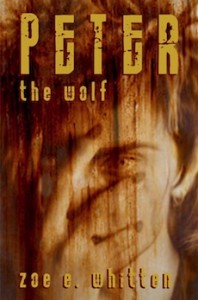
Alice Doesn’t Live Here Anymore, a spin-off story following several characters from the Peter the Wolf series. At the end of Peter’s fourth book, Thicker Than Blood, he chose to leave Dallas to give Alice room to heal without him. She’s come to terms with his abuse and with the torture she suffered after Peter’s mother kidnapped her and made her into a werewolf. But in the years after his absence, she’s also had to deal with problems of her own. The new book picks up three years after Peter turned himself over to the FBI, and it follows Alice through her problems with school bullies, exposure of her lycanthrope curse to a young child she’s babysitting, her budding exploits playing high school football on the boy’s team, and the arrival of a new werewolf who seems to be part of the same bloodline as Alice and Peter.

I wrote Alice’s story intending for it to stand alone. So if new readers wanted to get into Alice’s series without reading Peter’s, they wouldn’t feel lost. I looked for beta readers who had read Peter’s series, and those who hadn’t, and both agreed it had enough information to fill in the blanks without getting carried away with info-dumps.

AliceDLHA

Is your recent book part of a series?

Yes, the Alice the Wolf series has five books, and all five books were written long before I started editing the first for publication. Initially I planned the books around being one book for each of the four werewolf enemies Alice makes, but one of the four wolves turned out to be way more complex than I could contain in one book. The fourth book exploded out to a whopping 210K word count, forcing me to split it into two books. Even then, that last book is going to be a bit thicker than the first four.

peter_marketing

What are the special challenges in writing a series?

Finding a place to stop. The two words I dislike the most are The End, because I’m always curious and what to know what happens next to the characters.

What else have you written?

A little of everything. I’ve self-published over 40 ebooks since 2009 in a variety of genres. My eventual goal is to become one of the most prolific authors of my generation.

SoleSurvivorsClub_Mktg

How often do your characters surprise you by doing or saying something totally unexpected?

Every single day. I used to try and dictate dialogue and action to my characters, only to have to spend way too much time making massive rewrites when they complained, “That’s not what I’d do!” Now I just let them decide their own stories, and as a result, they rarely do anything close to what I’d expect.

After working for a very long time on a novel, many authors get to a point where they lose their objectivity and feel unable to judge their own work. Has this ever happened to you? If so, what have you done about it?

Somewhere between 60 to 80% through a book, I get into a self-loathing phase. Suddenly, everything I write is crap, I’m a hack, I’m a fraud, and why am I still doing this when I could be doing something less stressful and lonely with my time?

But then I remind myself that even great writers have these feelings around the same point in writing new books. So I suck it up, ignore the mean-spirited voices in my head, and get back to writing.

Over the years, many well-known authors have stated that they wished they’d written their characters or their plots differently. Have you ever had similar regrets?

No, and this is something I notice during my random spot inspections. I like to go back and reread my older titles to look for typos or lines that need tweaking. Stories are never truly done, I think. But even going back to my oldest work, I never think “I wish that story had gone a different route.” I think it’s because I do a lot of revisions before release, usually four or five. So once I put out a story, it’s already set down the way I want it. There may have been other directions the story could have taken, but this is the path I chose, and if anyone disagrees with me, well that’s what fan-fiction is for.

How much research was involved in writing your book? How did you go about it?

This depends a lot on the story. Sometimes I just need to do research on the story location to make sure what I’m writing fits the city or town I’ve chosen. But for instance I wrote a book about Jinn, The Sole Survivor’s Club, and that required roughly six months of studying the jinn in Persian myths and Biblical and Islamic texts. I didn’t just want to make up a western interpretation of genies who grant wishes and live in lamps, so I had to spend a lot of time learning about the marid, ifrit, ghul, and sila races. Once I had a clearer idea of how their societies worked, I was able to worry about the characters possessed by the jinn, their reasons for tormenting certain humans, and how the humans found a way to free themselves.

How would you define your style of writing?

Hack pantster. When I first started writing, I tried doing outlines. But I never got more than a quarter of the way into any new story before I was veering so far off the outlines that they weren’t helpful. Rather than worry about rewriting the outlines, I gave up on plotting everything out. Now I just know the general areas where I want to start and end a book, and everything in between is a journey of surprising discoveries.

Do you miss spending time with your characters when you finish writing them?

Yes, very much so, which is why I end up writing so many sequels. Even after I’m sure one book is the last, I get the urge to keep exploring. This is why Alice got her own series after Peter’s ended, because there were too many unanswered questions that I couldn’t leave alone.

A lot of authors are frustrated by readers who don’t understand how important reviews are? What would you say to a reader who doesn’t think his or her review matters?

I’m torn about this topic. I do think reviews are important, and I sometimes ask readers to post reviews for my books. But despite having something like 95% positive reviews, it hasn’t done much to improve my sales. Sometimes I wonder if there’s a certain number of reviews one has to reach before they begin to have a cumulative effect on sales, but if that’s the case, I still have yet to reach that point.

But mostly, I want to say to readers that all writers would like to know how they felt after finishing a book, and that even their shortest reviews let other readers know what to expect. I know writing reviews is a pain in the butt. I often struggle to write reviews for all the books I read, too. But if you make the effort to write an honest review, your thoughts will be appreciated by both the authors and the other readers.

Do you ever suffer from writer’s block? If so, how do you get around it?

I do, but I don’t really obsess over it the way I used to. If the words aren’t flowing well in a story, I just pick up someone else’s book and read until a solution occurs to me.

What genre have you never written in that you’d like to try?

I’m struggling to think of anything, but at this point, I’ve written in horror, fantasy, dark fantasy, sci-fi, and contemporary lit. There are genre fusions I might like to attempt in the future, but no one genre that I feel I need to write in. I think that’s the joy of having written so many books in so many genres. I worry less about what market I’m aiming for, and more about how the characters and story will appeal to me as a reader.

Where do you live now? If you had to move to another city/state/country, where might that be?

I live in Milan, and I love it here. But if I could move anywhere and afford to stay, I’d go to Amsterdam. There’s an amazing kind of calm that permeates the city, and they have a vast number of bookstores and art museums that I could never get tired of exploring. I’ve been to Amsterdam three times over the years, and I never left without wishing I could just move into an apartment and stay there forever.

Trains, planes, automobiles, or boats?

Walking! Heh, I guess I prefer trains, as they tend to be the least bumpy form of transportation I’ve ever been on. I may be biased against planes because I’ve rarely taken a plane ride that turbulence didn’t turn into a terrifying roller coaster. Boats are out of the question because I’m terrified of any body of water where I can’t see the shoreline, and I dislike cars because I was the passenger in no less than six automobile collisions. But if any destination is close enough to walk, I prefer to trust my own two feet.

What’s your favorite comfort food? Least favorite food?

Pizza. Doesn’t matter what toppings you put on it. I just love pizza. My least favorite food is liver. I never understand how anyone can enjoy that gamy flavor and nasty texture.

What’s the coolest surprise you’ve ever had?

I think it was convincing a new reader to try my sci-fi story, The Life and Death of a Sex Doll, and having them write to me the next day to ask if they could buy all of my books directly from me. At the time I had 36 titles out, and after I quoted them a discounted price, they paid me something like $20 over what I’d quoted them. I’ve since had other fans buy all my books in one go after reading the first, but that first time, it was definitely a pleasant shock.

What simple pleasure makes you smile?

I like watching people. Maybe it’s a side effect of being a writer, but whenever I go outside, I’m always looking at everyone around me and wondering what their life is like.

CONNECT WITH ZOE

Blog

Twitter

Goodreads

Amazon Author page

Amazon

Kobo

CHAT WITH GLYNIS ASTIE

GlynisAstie

After thirteen years in Human Resources, Glynis decided to make good on her promise to write a book. Rather than detailing the bizarre issues she had encountered over the course of her career, she elected to write about her real life French fairy tale: the story of how she met and married her husband, Sebastien, in six short months. She currently lives in Westchester, New York with her incredibly romantic husband, two angelic sons and two adorable kitties. 

Time to chat with Glynis!

What is your latest book?

I have just released French Toast, the second book in the French Twist Series. The books are based on my life and chronicle the very rapid development of my relationship with my husband, Sebastien. The first book in the series, French Twist, sets the stage with our adorable meet-cute, carries through our hilarious courtship and finishes with our first wedding. French Toast, picks up right where French Twist leaves off and shows the difficulty of the first year of marriage…and reveals our next two weddings. Intrigued, aren’t you?

FrenchToast

What are the special challenges in writing a series?

I think that it is important to link the stories across a series, but also to ensure that each book can exist as a stand-alone story. I always love it when I can pick up any book in a series and not feel like I am lost. J.K. Rowling did an amazing job with this in the Harry Potter series. She gave just enough detail in each book to catch you up to where you needed to be in order for the story to make sense. In the first chapter of French Toast, I made sure to provide enough background material so that readers would be able to jump right in to the story and not feel like they had missed too much. There is always time to go back and read the first book later!

If you were to advertise your book on a bumper sticker, what would it say?

French Toast: Will their marriage crash & burn or will they raise a glass?

How important is the choosing of character names to you? Have you ever decided on a name and then changed it because it wasn’t right for the character?

I think that I have a particularly unique experience in this case. Because my books are based on my life, there are several people who have a vested interest in my characters’ names. Choosing the name for my alter ego was easy. I had always HATED my name (I was teased a lot as a child) and I used to fantasize that my name was Sydney. The choice in last name came from one of my favorite books, Pride and Prejudice by Jane Austen. I just love the Bennett sisters

As for the names of my characters, I chose what I felt were solid names for my friends and family members, but I left the option open for them to change the names if they wanted to. Does it surprise you to know that every single one of them changed their names? It would seem that many people have a name in mind that they would have selected for themselves given the opportunity.

Can you tell us about your road to publication?

In my wildest dreams, I never imagined that I would end up as a writer. After I had my second child, I decided to be a stay at home mom. Once my son was about a year old – and actually started to sleep – I found myself getting restless. A few months later I had a dream that I wrote a book. It seemed like a crazy idea at the time, so I pushed it aside, dismissing the idea as an early mid-life crisis. (Very early!) But the idea just wouldn’t go away and one day I found myself writing down my ideas. Before I knew it, I had outlined the entire book!

I was completely shocked that it took me only two months to write my first book. I spent another month editing and sent the book on to my sister who is not only a gifted editor, but also the biggest fan of Chick Lit that I have ever come across. She quickly assessed where changes needed to be made and a month later, I was ready for proofreaders. While the finishing touches were being put on the book, my sister designed my book cover. (Does anyone else feel like she got most of the talent in the family?)

All I had left to do was upload my books! Both French Twist and French Toast were self-published. It has been a very interesting ride thus far!

Please, tell us about your experiences with social media. What are your favorite and least-favorite parts of it?

I am constantly amazed by the power of social media. With my first book, I did very little marketing and did not engage in any form of social media. I was blissfully clueless. However, with my second book, French Toast, I resolved to pull off a marketing blitz. I set up a Facebook author page, got a Twitter account, joined Pinterest, Google Plus, you name it! It was rather overwhelming at first, since there are so many channels to visit, but I found if I set a weekly schedule of posts for myself, things were a lot easier. .

By the end of my first day on Twitter I had met so many interesting people. That led to joining a number of Facebook groups for Chick Lit authors, which has changed my life immeasurably. (It is where I met you, Lisette!) I am so grateful for the vast number of authors out there who are willing to share their experience with me. I am also grateful for the readers who have opened up their lives to me! I believe that social media in general has allowed the development of a number of very rich communities. Being involved with all of these communication channels is not for the main purpose of selling books, but for forming relationships with people who will enrich your life.

Do you write anything besides novels? Care to share?

Yes, I do! I have just started blogging in the past month. For years, my sister has told me that I should start a blog about my sons. They are certainly the most colorful characters in my life. One day I will devote a book to them, but for the time being, you will be able to hear my musings on what it is like to be the mom to two energetic (and sometimes maddening) boys. I guarantee that you will crack a few smiles!

Are you an early bird writer or night owl? And do you have any must haves like coffee, chocolates, wine, music or something else?

I used to be a night owl, but since I have had kids, I have become both an early bird and night owl writer. When you are a parent, you have to fit in your tasks whenever you can. My three-year-old will often get me up before 6:00 am, which means I need a gigantic vat of coffee. He is then content to sit and watch cartoons while I first get sucked into the social media vortex and then try to gather my thoughts for the day in terms of writing. I don’t usually fit in too much writing during the day, so after my little one and his older brother have gone to bed, I consult my Darth Vader notebook (where I have scribbled random thoughts during the day) and get to work on my latest chapter. This is when I grab a glass of wine and settle in with my laptop and two cats. They are my companions into the wee hours as I plug away on my storyline.

We all know the old saying; you can’t judge a book by its cover. This is true. However, how much importance do you place on your book cover design?

I am so incredibly lucky to have someone as talented as my sister, Megan Eisen, designing my covers. I have received so many compliments on my cover art and am grateful to her for setting me up with such a brilliant brand. I use her images in all of my social media and have even had bookmarks made to match the covers as giveaways. I know that when I am looking for a new book to read, the cover is the first thing to catch my eye – an attractive cover leads me to read the book description, which often leads me to buy the book. The book cover is responsible for the instant attraction of the reader and your brilliant writing is responsible for the relationship (hopefully long-term) that you build with that reader.

Do you ever suffer from writer’s block? If so, how do you get around it?

Often! I get very little time to write since I have two active boys to keep up with. So many times, I will have a short window in which to write and nothing comes to me! It can be very frustrating. When I draw a total blank, I start taking care of items on my household to-do list. Five minutes into whatever task I chose, an idea comes to me and I frantically run to my laptop and start tapping away. Never underestimate the inspirational power of mundane tasks.

What’s your favorite comfort food? Least favorite food?

Mashed potatoes are my absolute favorite. Rich, creamy and delicious! I do not like sushi. I detest fish, so the idea of eating it raw makes my stomach turn.

If you could have one skill that you don’t currently have, what would it be?

I have always wished that I could sing. Unfortunately, I am completely tone deaf. It doesn’t stop me from belting a tune at the top of my lungs in the car though! I just make sure that a) I’m alone in the car and b) the windows are shut tight. No one needs to hear that kind of cacophony.

What music soothes your soul?

Billy Joel will always put me in a good mood. My favorites are “Only the Good Die Young” and “It’s Still Rock and Roll to Me.” I could listen to his albums all day. In fact, he now has his own station on Sirius XM. Color me excited!

What simple pleasure makes you smile?

Making chocolate chip cookies with my boys. Not only do we end up with a tasty treat, but we have a wonderful time dancing around the kitchen (because you have to have music) while we prepare the cookies.

CONNECT WITH GLYNIS

Facebook

Twitter

Website

Google+

Pinterest

Goodreads

BUY LINKS

Amazon

Google Play

CHAT WITH PAT McDONALD

PatMc

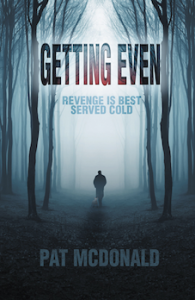
Pat McDonald is the author of the crime novel Getting Even: Revenge Is Best Served Cold the first book in her Crime Trilogy. Her career as a researcher, project manager and programme manager began initially in the Health Service – in Medicine, Mental Illness and Learning Disabilities; after which she spent 17 years working for a police force where she gained experience across all areas of law enforcement and the justice systems.

Time to chat with Pat!

What is your latest book?

My book Getting Even: Revenge Is Best Served Cold is the first published crime novel in a trilogy. The second Rogue Seed is currently being proof read and the third one Boxed Off is at the stage of finalisation of bringing together all the plots and being edited. My writing limitation is the inability to end a story and I usually amass a number of alternative endings – sometimes choosing is a problem for me and I tend to write them all in, usually leaving a ‘cliff hanger’ which naturally takes the book over into the start of another book, hence I found myself writing this trilogy. Although deciding to finish and finding a suitable ending for the trilogy, I would not definitely say that is as far as this group of characters go. Maybe I will take it up again, but that is not my current plan.

PatMcGettingEven

What are the special challenges in writing a series?

Starting as I have new to crime fiction and beginning by writing a three book series, meant I was faced with difficulties that I did not foresee. It was quite a challenge remembering all my characters and those minor things that make continuity a really important issue. My style and process as a ‘free flow’ writer makes it important to re-read and edit continuously. By ‘free flow’ I am not sure whether that is a legitimate description for my vivid imagination. I do not plan a book and neither do I set out the plot beforehand – it emerges as each scene is revealed. Like a large quilted blanket each is stitched into place to form an orderly pattern. Somehow it seems to work.

How often do your characters surprise you by doing or saying something totally unexpected?

All my characters are a huge surprise to me because I have no idea where they come from! I find myself building them around snippets or impressions of a variety of people I meet or have met in life. It could quite easily be someone I met whilst travelling, at an airport or a bus station; I have a continued interest in ‘people watching’ and seem to attract an inordinate number of interesting people as if I were a magnate and some seemingly quite odd or strange make an impression and often become a trait of one of my characters. More oftentimes revealing itself in the dialogue between my characters that I love so much to write; or perhaps a mannerism, or piece of strange behaviour – one such character is Hugo Bott who enters at Rogue Seed and continues through to Boxed Off. He is a character I enjoyed creating and developing and it was difficult to decide whether he would emerge as ‘good’ or ‘bad’.

Do you have complete control over your characters or do they ever control you?

My characters are as real to me as those in everyday life. They are in fact unpredictable and often take me by surprise when a scene emerges and I write it to its natural conclusion. The hardest part is deciding whether they are ‘good’ or ‘bad’ because the basis of my crime stories is this underlying theme – some people are nice and some people are just plain bad. I have a tussle sometimes because you can get awfully fond of the wrong characters and even where you want to make them into better people, they just won’t change! As a writer I like to elicit a reaction from my reader and do have a tendency to want to shock – any kind of reaction is all we can hope for from our readers. I pride myself on including the full spectrum of emotions and nothing makes me happier than to have a reader tell me they cried at one of my scenes. I do and I write it!

What part of writing a novel do you enjoy the most and least?

This is an easy question and I think perhaps universally felt by all writers – I love just writing, letting the plot flow and take me with it, losing myself to my imagination and letting it pour out. The least is the processing for publication, the dreaded editing. This is made worse for me by a rebellious streak and a love of writing as an art form – I do not want to comply with convention and be told how long my books should be, how many chapters etc. I want it to be as close to how it flowed from me as it possibly can be. Or indeed to be told where I should put adverbs. Did anyone tell Picasso how to hold his brush, how much paint to apply or what each stroke should look like? My writing isn’t a Picasso, but to me it is my creation. I have a problem with the conventions of this process.

Some authors, like me, always write scenes in order. But I know some people write scenes out of order. How about you?

I definitely write scenes as they come out and often rearrange them according to the emerging story. Someone once said that there is a difference between being a writer and a storyteller; a writer plans what they are going to write whereas a storyteller sits in front of a blank screen or piece of paper and writes. Although I have been a writer all my life in my varied careers and academic writings, I am now a storyteller. It gave me a sense of freedom through writing that I have never known before. When I begin a book I have no idea how it will end and sometimes even what the next scene will be – it is gloriously addictive.

Is it important for you to know the ending or title of a book before you write it?

The ending of a book is my foible and I often have more than one which is why I probably write such long books and so many in a genre series. But when the end comes to me, I then work back and fit the plot into producing that ending. It is often like doing a jigsaw puzzle, but when I find a good ending (for it is a discovery not a plan) I know it is close to me fitting it altogether. My titles either come from the way the book flows as in the first one, or as the next two given to me by a chance conversation with a person I meet and I suddenly realise just how good a title it would make. The titles become the theme of the book and I explore the different facets of it, allowing my characters to describe through their exploits what that theme is. Rogue Seed came from a conversation about a strange plant that grew from a packet of chilli seeds! It allowed me to explore the botanical concept – something growing where it shouldn’t be found, or the police concept of ‘going rogue’ where an officer diverges into criminal association, or even the biological concept of a human seed growing in the womb. My characters link it together whilst criminal activity abounds. I often joke that I have more bodies than Midsomer Murders (which is a UK crime drama series).

How important is the choosing of character names to you? Have you ever decided on a name and then changed it because it wasn’t right for the character?

I find names fascinating and whilst in the beginning they came largely out of my imagination, as the number of characters and the different ethnic backgrounds emerged I found myself turning often to a Name’s Generator package which gives names randomly according to the gender and ethnicity. Where it fell short was when I needed a Jamaican name and found that in Jamaica there is a large emergence of different nationalities rather than that which was solely native to Jamaica. I resorted to pulling up the Jamaican national football and cricket team players and finding a first and last name I like that went together! I thought that was quite ingenious, for me. I like to explore the meaning of names, and some of my characters have meaningful names. The only time I have changed a name is when I think it might be misconstrued as someone in real life which none of my characters are.

Have you ever written characters that you truly despise?

Not being overly fond of murderers, rapists, child molesters and torturers I would have to say unequivocally yes. My main ‘baddie’ took some stomaching and he had this habit of calling the wife he abused ‘My love’ in a sarcastic and jeering way. When someone said this to me in real life I found it hard to take and asked them would they mind not using that! Quite funny, yet made me cringe. I have to say I do have a fair proportion of not very nice characters, but I do balance them out with some lovely ones too. Being true to real life, my despicable characters often get away with it!

Do you allow others to read your work in progress, or do you keep it a secret until you’ve finished your first draft? Can you elaborate?

I think most writers find it difficult to let their work be read – it took me a while to acclimatise to the concept that I was writing for others to read my work. I have now begun to overcome this and have Rogue Seed being proof read by a friend who has read the first novel. I have had the need to grow into this aspect of being a writer, but now wish I had let my first Crime novel be read. I read it eleven times and thoroughly hated it by the time it was released! There are a few typos even at the final revision, and one very hilarious mistake that only one person has spotted so far – maybe one day I’ll offer a prize to whoever spots it!

Were you “born to write” or did you discover your passion for writing later in life?

I think I realised as a child that I wanted to be a writer. I had an insatiable appetite for reading and as a member of my local library joined the children’s section and read my way through it. I was granted permission to the adult section before I was old enough (with Librarian vetting!) and proceeded to read classics, poetry, plays and just about anything. I started writing in early teens and when I read the short stories (not so short was my foible even then!) it still amazes me that I wrote them. I wrote poetry early on and published some of my poems in anthologies and I still write poetry, and now dabble with Haiku. Since joining social media and meeting a large number of very talented writers I also try my hand at Micro Fiction – but this is more as a therapy – to try and limit my tendency to lengthy prose!

I knew at 15 years of age I wanted to write fiction, spending years writing academic books, papers, reports, reviews and manuals of guidance. It was only when I finished full time work that I sat down and did what I had promised myself – became a writer of fiction.

Do you ever suffer from writer’s block? If so, how do you get around it?

I did suffer writer’s block early on in my first novel. I had spent every day writing a number of other genre before I began the crime novel and write fairly consistently straight onto a screen. I discovered quite by chance a way to dispel the problem when I went for a coffee in the coffee shop of my local garden centre. I sat reading a letter from a friend about her holiday and really loved being amongst people I didn’t know, a world of passing strangers. I took out a tiny note book I carried and wrote a whole chapter that came to me and I was off and writing once more. I became a frequent visitor and wrote most of my first crime novel and the second sat in the same seat; almost a minor celebrity I found people moved from the table to let me have it! It taught me to write anywhere and part of the book I wrote flying out to Dubai and a good chunk staying in Al Ain and Fujairah on the Indian Ocean – needless to say I wrote these places into my novel – research is research!

If you could add a room onto your current home, what would you put in it?

There is really only one room that I would love to have in my home and that is a library. I have spent my life collecting books for the time when I own such a room. I can visualise what it looks like with the walls floor to ceiling with book shelves, a large oak desk in front of French doors that open onto a wonderful garden and it would contain a large and very comfortable couch for me to sit and read and review other people’s books. What I actually have is a house where most of the walls in most of the rooms have book shelves, so much so that I think they are now lode bearing! People often ask me why I keep all the books and did I know that I could sell them on eBay. I politely hold on to my inner voice and just smile – for if they don’t know why, then then don’t understand.

What simple pleasure makes you smile?

There is a lot about life that is joyous. Someone once told me that I seemed to enjoy the simplest of things, but I probably didn’t understand what they meant then. I think the world is a beautiful place and most people let it pass them by unnoticed. There are such fascinating natural occurrences that I feel fortunate to have seen. For me happiness and contentment has always been about how I felt; partly the feeling of being free, partly of experiencing to the full some of the real things in life. Breathe the air, feel the sun on my face, watch a sunset, sunrise, a total eclipse, a wild storm, a huge flock of swarming birds, the Northern Lights; all of which I can appreciate and which make me feel good to be alive. Scotland drew me and gave me pleasures I could never imagine; sitting on a rock overlooking Loch Muick with deer roaming in the heather and the sun on my face was such a wonderful almost spiritual feeling – a place to soothe the soul.

If you could be invisible for a day, what would you do?

I think people who know me would expect me to give an amusing example of what I would like to do if I became invisible. The truth is that over time it is something I have often felt and have written about the need to withdraw and recoup from the world; on days like this you hope to go about your business unnoticed and ignored. I have a tendency to attract the attention of some of life’s strangest of people whilst out. They come up to me in the most unlikely of places and tell me their life’s story; and yes of course I listen because they have a need to do so and it might be important for them at that moment in time. But I am a people watcher and like to sit in terminals and observe the daily round of people going about their business, be it terminals for trains, buses, coaches, planes and such like. I think it is fuel for my imagination.

What music soothes your soul?

I have a wide taste in music, but love some classical music more than others. I have recently become reacquainted with the Viola which I once played in a couple of orchestras and lost touch with. I treated myself to one and began with the basics (still at that level), but found I love to listen to Vivaldi. I love Africa and Arabian music and find this very soothing and very moving.

What are three things you think we can all do to make the world a better place?

There are only three things that I believe would make the world a better place. The first is kindness, the second is kindness and the third is kindness. If everyone in the world indulged in one act of kindness each day the world would change because kindness grows and spreads when it is passed on. It’s like a ripple on the surface of a calm lake when you throw a pebble into it, the ripple moves outwards. Your act of kindness to someone you know or don’t know is likely to encourage them to be kind to someone else. It doesn’t have to be huge, just a smile, a card, a helping hand, a word of encouragement that might make their day. I try to live my life like that.

CONNECT WITH PAT

Facebook

Website

Twitter

Amazon (U.K.)

Amazon (U.S.)

CHAT WITH KATE JAMES

KateJamesKate spent much of her childhood abroad before attending university in Canada. She built a successful business career, but her passion has always been literature. As a result, Kate turned her energy to her love of the written word. Kate’s goal is to entertain her readers with engaging stories, featuring strong, likeable characters. Kate has been honored with numerous awards for her writing. She and her husband, Ken, enjoy travelling and the outdoors, with their beloved Labrador Retrievers.

Lisette, thank you for this opportunity to be a guest at your writers’ chateau.

You are very welcome, Kate! Delighted to have you here.

Do you have any advice for first-time authors?

Don’t give up on your dream!

There are so many viable options to getting your work published these days, you just need to keep at it and believe in yourself. If I have one regret, it is that I didn’t follow through when I first had the dream of writing. I got caught up in my professional life, and my first attempt, a half-finished manuscript, is tucked away in a storage box somewhere in our basement, possibly breeding some form of mold worthy of a sci-fi thriller.

Also, having someone who believes in you can be enormously helpful, even if you are a self-motivated individual like me. My husband buying me a personal laptop for my writing was the start of Silver Linings. I was wrongly convinced that I did not need another laptop, as I had a perfectly good one already. Psychologically, it made a huge difference. Thankfully, my husband has never said, I told you so—at least not directly!

This leads me to another bit of advice. If you have a “day job”, creating a clear separation between it and your writing may help, as a separate laptop for my writing did for me. As another example, an author friend works from home and has a home office. When she writes, she purposefully does it in a different room in her home.

Finally, read as much as you can, for enjoyment—of course—but also for learning! It’s a rare book these days that draws me in so much that I don’t at some level of consciousness analyze the writing to seek to improve my own.

SilverLinings

Can you tell us about your road to publication?

I either got very lucky, my business background came in handy or, more than likely, it was a combination of the two. There is the artistic, creative side to writing, but there is an entire business side to it as well. Publishing is a business and for an author to excel, I believe they have to be able to understand and effectively deliver on both the creative and business aspects. Querying agents and/or publishers requires a combination of creativity and business acumen.

I was fortunate to have my very first manuscript picked up by a publisher. Although the publisher is small, and thus doesn’t have a large budget for marketing and promotions, they were a dream to work with both for editing and cover art/design. It also meant that my first book was in print and in book stores in about eighteen months from when I first sat down at my new laptop to start writing Silver Linings. The experience also afforded me the opportunity to learn a great deal about publishing, which I believe was invaluable in securing my contract with Harlequin.

I consider myself extremely fortunate to be able to write for Harlequin, and have the privilege and pleasure to work with two of the most amazing people in the business: Victoria Curran and Paula Eykelhof.

Do you have any grammatical pet peeves to share?

This is an interesting question for me, and perhaps you’ll allow me to go on a bit of a tangent with it.

I had to “retrain” myself when I started writing fiction. Most of us have heard the axiom that in business we should write to the average grade eight intellect. I consider that a sad and demeaning statement. When I was in business, I always encouraged our communications teams—everyone in the organization, in fact—to strive to release high-quality, well-written, well-presented material. Annual reports, marketing materials, routine correspondence and e-mails all reflect on the brand of an organization. I was a stickler for proper sentence structure, grammar, spelling and so forth. When I first started writing fiction, I had to consciously retrain myself, for example, to not use “proper” sentence structure, especially where dialogue is concerned.  We don’t speak in proper sentences, and if my dialogue was constructed in that manner, I can guarantee it wouldn’t make for an enjoyable read!

Have you received reactions/feedback to your work that has surprised you? In what way?

Perhaps surprise is not the right word, but I continue to be amazed by and appreciative of the informal feedback and more formal reviews that Silver Linings has been getting. Reviews mean a great deal to authors, and I am grateful to everyone who takes the time to write one.

I was very pleasantly surprised and honored for Silver Linings to have received first place recognition in both readers’ choice contests it was entered in. The fact that people are reading my work and enjoying it is a thrill. The positive feedback is something I will never take for granted.

Do you dread writing a synopsis for your novel as much as most writers do? Do you think writing a synopsis is inherently evil? Why?

I am glad we’re not having this discussion in person at a writers’ workshop, as I expect some people may be inclined to throw things at me. I enjoy writing a synopsis. It may have something to do with my business background, but I enjoy switching gears and writing the synopsis. To me, writing a synopsis is also an organizational tool, as it is essentially my outline for the manuscript. Writing it, I challenge myself on the characters’ personalities and motivations, and the key plot elements, and then I expand and embellish as I write the manuscript. To be clear, with respect to this latter point, I am not referring to a two page synopsis, but rather a much longer version that my editor wants to see as a proposal for a book.

Some authors, like me, always write scenes in order. But I know some people write scenes out of order. How about you?

I generally write scenes in order from my synopsis. If I find that I am not progressing quickly through a particular scene, I may jump ahead. I do this for a couple of reasons. Inherently, I don’t like to waste time, and if I am belaboring the scene without making progress, that’s what I feel I am doing. Secondly, and perhaps more importantly, if the scene is not progressing well, there is a chance that it just doesn’t fit, and I have not yet admitted it to myself. If I jump ahead and finish the rest of the manuscript, I might find that it needed to be cut anyway. Once my first (rough) draft is complete, I go back and invariably add, remove, rework or reorder scenes before I venture to call it a completed first draft.

Are you an early bird writer or night owl? And do you have any must haves like coffee, chocolates, wine, music or something else?

All of the above! Okay, almost all. I was a full-time CEO when I wrote Silver Linings and my second manuscript. By necessity, that meant writing very early in the morning and late at night. I enjoy coffee, chocolates and wine. Add in tea (hot or iced) and more than likely one or more of those is within easy reach whenever I am writing. Music only enters the equation if my husband is home, as he loves to have it playing all the time.

We all know the old saying; you can’t judge a book by its cover. This is true. However, how much importance do you place on your book cover design?

To the contrary! I believe the cover can have a huge impact on the success of a book, especially for lesser known authors. I believe most of us have picked up a book by an unknown author because the cover appealed to us. Although I don’t think people pass up on a book by their favorite author because the cover isn’t appealing, I do believe that some excellent work by unknown authors doesn’t get the same uptake as it could, if the cover isn’t appealing or appropriate for the genre.

Have you ever written characters that you truly despise?

Despise? No. Disrespect, most definitely!

Where do you live now? If you had to move to another city/state/country, where might that be?

We live north of Toronto, and we split our time between our home and cottage. We are fortunate to have two large, scenic properties, but if we were to move, my husband would want to be somewhere without snow! Texas and Arizona come to mind. Kelowna in British Columbia’s Okanagan Valley is a beautiful spot, too. I would need to have a large property. I like to visit cities, but I love nature and the outdoors, thus I would need to live somewhere we could have significant acreage.

What’s the coolest surprise you’ve ever had?

My husband is really great at surprising me. The converse is much harder to do, as I have to get really creative with how and what I wrap for him, as he has an uncanny ability of knowing exactly what it is.  A particularly nice surprise, and one that is related to my writing, had to do with my contract with Harlequin. I was on a ten-day “world tour” and in Dubai when I received the e-mail from my editor with the good news. I, of course, shared the news with my husband immediately (time difference be damned!), and he was very happy for me.

Five days later, I arrived home at about seven in the evening after a thirteen-hour flight from Hong Kong, and very little sleep during most of the trip because of the full schedule, overnight flights and numerous time zones changes. I walked in to candlelight, a bottle of champagne on ice, a wonderful dinner, and a beautifully wrapped gift with a huge bow on it. If you have read my responses to the questions above, you may have guessed correctly that the gift was a new laptop!

CONNECT WITH KATE

Website

Twitter

Facebook

Goodreads

Amazon

Chapters

CHAT WITH KATIE OLIVER

KatieOliver

Katie Oliver currently resides in northern Virginia with her husband and three parakeets, in a rambling old house with uneven floors and a dining room that leaks when it rains.

She’s been writing off and on since she was eight, and has a box crammed with (mostly unfinished) novels to prove it.  With her sons grown and gone, Katie decided to get serious and write more (and hopefully, better) stories.  

She even finishes most of them.

What is your latest book?

Mansfield Lark is the latest, published on 3 March.

MansfieldPark

Is your recent book part of a series?

Yes, Mansfield Lark is the newest addition to the “Dating Mr Darcy” series. Other books in the series are Prada and Prejudice and Love and Liability. I have two more books in the works – one featuring Natalie and Rhys from Prada, and one with Gemma and Dominic from Mansfield.

What are the special challenges in writing a series?

Well, I didn’t start out to write a series. I wrote the first book, Prada and Prejudice, with no clue that I’d write another…and then another, featuring some of the same characters across the three books. It just sort of happened that way. As I wrote the first one, I thought, you know, I really need to tell Holly’s story…and Dominic’s story… and so I did.

I think the biggest challenge when writing a series is keeping everything straight from one book to the next! I might forget whether a character in book one had blonde hair or black, or where he/she was born. Where was Ian and Alexa’s house located? Did Natalie take one gap year, or two? Those little details will trip you up in a later book if you don’t track them. I keep a notebook for each book, and I jot down stuff as I begin writing, so I can refer to it later.

How often do your characters surprise you by doing or saying something totally unexpected?

All the time! For instance, (spoiler alert) I didn’t intend for Holly James to end up with Alex Barrington. He was meant to be a cad who breaks her heart. But it didn’t work out that way…

Authors, especially Indies, are constantly trying to understand why some authors sell very while their talented fellow authors have a hard time of it. It’s an ongoing conundrum. What do you make of it all?

What I make of it is this: it’s a crapshoot. There are many very excellent writers whose books languish unread. And there are many so-so writers whose books hit the bestseller lists.

Things that help get your book noticed are: a well-designed book cover; blog tours; and hosting a giveaway to stir a buzz and find you new readers. Establish yourself as a brand. Your writing name is your brand. Utilize social media. Don’t post non-stop “buy my book” Tweets – that’s spam, and no one likes spam. Engage with your followers. Use apps like Quozio to pull quotes from your book and post them on Twitter or Facebook. Pin pictures of your characters or locations to Pinterest and share on other social media. Think outside of the “buy my book” box.

Beyond that? It’s luck, pure and simple.

Do you have any advice for first-time authors?

Know that nothing happens fast in the publishing world. It takes time to get representation, land a book contract, navigate through the editorial process. Be patient. Learn. Listen to people who know what they’re doing – your editor, your agent, the art department, your publisher. But don’t be afraid to push back (politely) if you really hate the cover or don’t agree with an edit.

For indie authors – I recommend hiring a proofreader to copyedit your book before you format and publish it. And it’s worth hiring a graphics person to design a killer book cover, as well. Make social media work for you by connecting with readers, bloggers, and other writers.

Can you tell us about your road to publication?

Once my kids were grown, I wrote the book (well, two) that I’d always wanted to write. When I finished, I got an agent referral through the Elaine English agency in Washington, DC, based on the synopsis and first three chapters of Love and Liability. It took time to get a publishing deal, mainly because my books featured British characters and settings, which American publishers were hesitant to take on. But with time and perseverance it did happen, and my books – all three of them – were bought by UK Carina/Harlequin and published an ebook series.

There are so many conflicting opinions out there about everything related to publishing: e-book pricing, book promotion, social media usage etc. How do you sort through it all to figure out what works best for you?

It’s true, there’s a LOT to wade through and it can be overwhelming, especially to a new writer. Just try different approaches to find the one that you’re most comfortable with. If you hate Twitter, create a Facebook page instead. If you hate writing a blog post, let book bloggers know you’re available to answer interview questions or provide an excerpt from your book.

Many authors are happy to share what worked – and what didn’t – with other writers. Romance Writers of America publishes lots of useful tips on marketing and promoting your book. There’s also plenty of good information on the Internet.

You have to find what works for YOU, and for your book. Be creative. Themed giveaways that fit your book are a great approach. For the Dating Mr Darcy books, I offered a British Barbie and assorted “Keep Calm” notepads, page clips, and a pocket organizer, in addition to my latest ebook. Have fun with it, and your audience will have fun, too (and hopefully, buy your book!)

Do you have any advice to a new author if they asked you whether to pursue the traditional route to publishing or to start out as an independent writer?

Decide what works best for you. If you work well independently, if you want to control everything from the cover design to the formatting and pricing of your book, you might want to self-publish.

If you prefer to focus on writing and wish to leave book cover design, editing, and formatting to others, you might prefer the traditional publishing route. Just be aware that promotion is still largely your responsibility. You may be assigned a publicist or a marketing liaison; you may not. Be prepared to market your books yourself.

What have you done to market your novel and what did you find the most effective? The least effective?

I think blog tours are one of the most effective ways to gain new readers for your books. You get exposure to a whole new audience who otherwise might not find you. You can share an excerpt from your book, or provide teasers about an upcoming release. You can participate in cross-genre blog tours with other authors. It’s fun, and a win-win for writers and readers.

Least effective? DON’T run a constant stream of links to your books on Twitter or Facebook. Just. Don’t. And giveaways can either be very effective or a complete waste of time. Themed giveaways are good; so are those that are open to everyone. Keep the rules simple. Don’t make contestants jump through a lot of hoops to enter, or they won’t bother. Make it easy, and fun.

If you could have one skill that you don’t currently have, what would it be?

To play bass guitar! I’ve always wanted to do that. I want to be Tina Weymouth.

What might we be surprised to know about you?

That I suck at cooking. I’m an ace baker, and I make my own pizza dough and spaghetti sauce, and my lasagna is to die for. But beyond that? I’m hopeless.

What was the most valuable class you ever took in school? Why?

In my junior year of high school, I took a course called Film Production. For the first half of the semester we watched films – Showboat, The Night of the Generals, Singing in the Rain, Chariots of Fire – and then we discussed them. We examined how scenes were edited and paced – short and fast for action sequences, longer for quieter scenes, etc. We learned that the film editor took miles of footage and cut and spliced it all together into a cohesive, compelling whole.

I learned to look at movies in a whole new way. Why did the director choose black and white versus color? Why was a particular scene shot in slow motion? How did those choices affect the drama, the tension, the pace of the film?

I learned to apply those lessons to books as well. I’m a visual person, and I ‘see’ my books as films inside my head. So wherever you are, Mr. Singleton – thank you. You rocked that class.

CONNECT WITH KATIE

Website

Blog

Facebook Author Page

Twitter

Pinterest

Amazon Author Page

Goodreads

BUY LINKS for Mansfield Lark

Amazon U.K.

Amazon U.S.

Mills & Boon

iBooks

Kobo


CHAT WITH ALAN BEHR

AlanBehr

After college, Alan spent the next twelve years as a law enforcement officer, with a two-year hiatus in Berlin, Germany, contracted to US military. After law school, he was a prosecutor then a criminal defense attorney. He and his wife, Lillian, reside in the Austin, Texas area.

Time to chat with Alan!

What is your latest book?

My latest book is titled Cornered and is expected to be released by late spring or early summer. The story follows a Texas detective as he works to solve the mysterious disappearances of seven professional women while trying to exorcise a demon from his past. He faces off against an organization that always seems to be one step ahead. When he gets too close, he steps into the cross-hairs of a professional cop killer.

Is your recent book part of a series?

The manuscript I’m writing now, titled Rampage, is a sequel to my first title, Price of Justice. It’s set about three years after the ending time frame of Price of Justice. In it, the protagonist detective has to deal with temptation – he has a very pretty and single female partner – and trust issues – he’s in a long-distance relationship with the heroine/co-protagonist from the first novel, while working a series of murders committed by a gang. His worries ratchet up several notches when the gang attacks his home where he lives with an eight-year-old daughter.

Price_of_JusticeDo you use a pen name? If so, why?

I use the pen name of Alan Brenham. This matter arose when I discovered that another attorney named Alan Behr (New York) had also written a book. We’re probably distant relatives but I never explored it. He had the domain name of alanbehr.com so my wife came up with the name Alan Brenham, using my name and the name of a nearby Texas city where Blue Bell Ice Cream is made.

Is it important for you to know the ending of a book before you write it? The title?

I always plan out both the working title and the ending before I begin writing the manuscript. Most of the time, it doesn’t end up as planned. In my first novel, Price of Justice, I set up a non-Hallmark Channel ending but changed it to a satisfying ending after all the trials and tribulations I had put the protagonists through.

Some writers edit excessively as they write; others wait until a novel is finished to do the bulk of the editing. How about you?

I’ve done it both ways. Usually the first draft is finished before I’ll do any editing. But I have occasionally gone back to certain parts of the draft and either edited out aspects that don’t fit any more or add scenes to tie in with material written in later.

After working for a very long time on a novel, many authors get to a point where they lose their objectivity and feel unable to judge their own work. Has this ever happened to you? If so, what have you done about it?

That’s happened to me many times in the course of writing a novel to completion. Usually I’ll set the manuscript aside for a week or two and work on an outline for the next novel. During that hiatus, ideas and changes to the plot (epiphanies) emerge, sending me back to incorporate them into the manuscript.

Have you ever written characters that you truly despise?

There are two in Price of Justice – Tom Zarko and Dorian Winters – and one in my current project, Rampage – Justin Cooper, AKA Mad Dog, whom I despise. In Cornered, there are three who come close to being despised but have one or two redeeming qualities.

Do you allow others to read your work in progress, or do you keep it a secret until you’ve finished your first draft? Can you elaborate?

I have two readers who provide a lot of constructive criticism and suggestions to improve the story flow and plot as well as the fleshing of the characters. Other than my two readers, I do keep the manuscript a secret.

Are you an early bird writer or night owl? And do you have any must haves like coffee, chocolates, wine, music or something else?

My writing day begins about 7:00 in the morning and ends around 4:00 in the afternoon. My wife makes sure I take plenty of breaks within that time frame. Coffee is an absolute must-have. Music is second. Every other day, I have a scotch in the afternoon. The chocolates and the wine come at the end of the day.

Do you ever suffer from writer’s block? If so, how do you get around it?

Writer’s block raises its ugly head every so often. My wife is close by so I pester her for suggestions. If that fails, I set the work aside and do something else.

What genre have you never written in that you’d like to try?

I’m giving serious consideration to a fantasy/thriller hybrid with a totally different set of characters, social rules, laws, and government bureaucracy. I’m not going to delve into any greater details simply because I have none to give out at this point – no plot, title and ending. Another story I’m considering writing, in the same hybrid genre, would be a prosecutor with a whole different outlook on the criminal justice system.

What’s your favorite comfort food? Least favorite food?

My favorite comfort food would be crackers and wheat wafers smeared with peanut butter. I’ll pile mounds of crackers and wafers on a plate and munch on them while I’m writing.

My least favorite comfort food would be broccoli. I’ve had a lifelong distaste for that vegetable in any form. The family German shepherd and I formed a symbiotic relationship whenever my mother served broccoli at dinner. He’d get treats of broccoli under the table and I cleaned my plate. A win-win situation.

Have you ever played a practical joke on a friend? Ever had one played on you?

The best practical joke I ever played on someone happened when I worked at the police department. I used to smoke cigars then that my detective partner detested. One day, I had left a box of cigars on my desk that he supplemented with cigarette loads. I lit up and got the shock of my life when the thing exploded, spraying embers everywhere. Payback came at the greatest time. He smoked cigarettes so I bought a can of loads and waited until he slipped up, leaving his pack on his desk. I figured he’d find the first two so I did three. Later that day, all of us went to lunch with the Texas Ranger captain. When lunch was done, my partner, seated across from the Ranger captain, lit up. I almost couldn’t keep from laughing as the cigarette blew up, spraying embers on the captain’s crisp, pressed shirt. If exploding cigarettes were a capital crime, the look on the captain’s face told me he’d have shot my partner then and there. Needless to say, he and I made a truce after that.

Since I was on a roll, I went after another detective and scotch-taped the end of the telephone cord that ran from the wall to his desk phone. That enabled the phone to ring but when he picked up (and he did…a few times) neither he nor his caller could hear each other. When he threatened to have the sergeant call the phone company, I removed the tape. No sense in ending up in the chief’s office trying to explain the nature of a practical joke to a man who most of us felt had no sense of humor and I didn’t need a no-pay suspension.

My other police-related joke came when I worked uniform patrol. Then, each set of car keys operated every single patrol car. So, one evening when calls were slack, my then-partner and I spotted the downtown unit parked in the alley next to a couple of bars. We parked across the street from the alley and I snuck over and drove their patrol car around the corner and parked it. Then he and I sat in our car and waited. The look on the two officers’ faces when they saw their car was gone was priceless…well, not exactly priceless, I got a day off without pay for that stunt. Neither our sergeant nor the patrol captain saw the humor.

If you are a TV watcher, would you share the names of your favorite shows with us?

My favorite TV shows are: The Walking Dead, Game of Thrones, Bitten, The Blacklist, Banshee, Strikeback, Longmire, The Originals, Vampire Diaries, Grimm, Arrow, Major Crimes, Revolution, The Americans, Orphan Black, Intelligence, and Motive.

What’s the coolest surprise you’ve ever had?

The coolest surprise I ever had was a surprise party thrown by my wife, my older brother and my parents to celebrate my passing the Texas bar and getting my law license. I had decided not to wait on the Bar to mail me the documents so my wife and I drove to Austin to get them. We stopped at my brother’s house before driving across town to the State Bar HQ. Nothing anyone said or did gave me a clue as to what was about to happen. My nephew went with my wife and I to the Bar. I should have picked up on my wife’s asking a few times if I had obtained all the documents from the Bar, that maybe I ought to go back in and check to be sure. But when your mind is focused on something else, i.e., the bar card, things zoom right over your head. When we walked back into my brother’s home, I was greeted with a loud united shout of “Surprise”. And it was a surprise. A large banner of congratulations, signed by all in attendance, stretched from wall to wall. The dining table was covered with a huge carrot cake (my favorite), trays of cookies and other sweets plus a lot of beer. A great day indeed!

CONNECT WITH ALAN

Website

Twitter

Facebook Author Page

LinkedIn

Pinterest