CHAT WITH I C CAMILLERI

IC_Camilleri

I C Camilleri is a medical doctor and author living in the UK. Her novels include The Blake Soul, The Blake Curse, The Blake Mistake and Week of Lies.

Time to chat with Isabella!

What is your latest book?

Week of Lies was published just over three months ago. It is a revenge thriller and romance set in London and it spans a fateful week of lies and deceit. The opening chapter takes us to New Year’s Day where Beth Banks wakes up to find her father dead in their multimillion pound house in London. It appears to be a suicide, but Beth has her doubts. She looks back on her previous week, her introduction into the cryptic world of Rob Menezes, the righteous law graduate desperately seeking a living, the man she has grown to love and trust despite his many facets. She sets out in search of the truth and she uncovers a dark secret that could radically change her life.

What else have you written?

My first novel, The Blake Curse, was published in 2012. A year later it was nominated for The People’s Book Prize UK, a national competition voted for by the public. After a three-month vote The Blake Curse became one of the three finalists in the Summer 2013 Collection. The next two books in the Blake series, The Blake Soul and The Blake Mistake, were published a year later. Each book could be read as a stand –alone and they could be classified as supernatural thrillers with a romantic background.

BlakeCurse

How much research was involved in writing your book? How did you go about it?

I use my medical background to mould the backbone of all my novels. The susceptible young mind lost to alcohol and drugs features in The Blake Curse. The sanctity of human life is highlighted in The Blake Soul. The detrimental effect of childhood psychological trauma features in The Blake Mistake. And the dangers of internet pornography are highlighted in Week of Lies. I try to raise awareness…whether I succeed to do this in all my novels remains debatable, I guess, but the intention is there.

BlakeMistake

What part of writing a novel do you enjoy the most? The least?

I absolutely love that first eureka moment when the idea for a plot starts to germinate. I shut myself in my own world and start to craft scenes and characters. That is where I’m at my best, my happiest moments….which will eventually shatter as soon as the novel is finished and I have to market the book. I absolutely abhor marketing and I’m pretty bad at it too. I guess I was born lacking sales techniques but I try to fumble along, learning from experiences and believing, perhaps naively, that the books will sell on their own if they are good enough.

Is it important for you to know the ending of a book before you write it?

No, not really. I usually have a skeleton outline and the story often adapts and changes as I go along. But that’s the way I do it, others might prefer otherwise.

Some writers edit excessively as they write; others wait until a novel is finished to do the bulk of the editing. How about you?

I think I do a mixture of both, adapting as I move along the storyline. But generally I try to give it a good edit in the end.

Do you dread writing a synopsis for your novel as much as most writers do? Do you think writing a synopsis is inherently evil? Why?

Yes, I dread writing the synopsis, those few precious sentences that are meant to capture the soul of the whole novel. I think that ideally it should be written by someone with a business marketing brain rather than the creative author who knows too much about the story to express it so succinctly.

Do you have any advice for first-time authors?

Writing a good book is the first crucial step…but that is not enough. A business strategy and marketing experience is equally as important. So yes, I would advise to research that side of publishing a book.

Please, tell us about your experiences with social media. What are your favorite and least-favorite parts of it?

Twitter is my main marketing tool. I like socializing and getting to know different people across the globe in between tweets about my novels as well as promoting other authors. I do Facebook too but I find it a bit dry and restricting. I have no websites of my own, I’m still trying to get down to it but time is a commodity these days.

What do you like best about the books you read? What do you like least?

I like a good storyline with powerful characters whatever the genre, be it thrillers, romance, historical novels etc. I am extremely versatile. I read anything and everything and I try to see the beauty and art behind every little book or article I read. There is always something to learn. However, I hate waffling and technical jargon and I tend to skim read over that. I’ve got a science oriented brain and I tend to prefer novels that get straight to the point without a lot of unnecessary words.

Where do you live now? If you had to move to another city/state/country, where might that be?

I was born on the Mediterranean island of Malta but I moved to the UK more than sixteen years ago. Do I regret the move? No, not really. I miss my little island in the sun but I love the rolling green hills of Britain too. I might go back to my roots when my end is near but I’m still thinking about it!!!

If you could be invisible for a day, what would you do?

You would probably find me immersed in a book had I had the luxury of being invisible and doing whatever takes my fancy. And I would probably read all day too. I wish I could say I would also go cycling or swimming or something equally active but I guess I can’t lie. I should be promoting exercise but alas, listening to music and reading are my only other interests.

What are three things you think we can all do to make the world a better place?

Tolerance, kindness and consideration….in other words to think hard about the consequences of your own actions and always do to others what you would like them to do to you.

CONNECT WITH ISABELLA

Twitter

Facebook

Amazon U.K.

Amazon U.S.

CHAT WITH NICHOLAS C. ROSSIS

NicholasRossis

An architect by training, Nicholas is the holder of a PhD in Digital Architecture from the University of Edinburgh. He’s an avid reader, a web developer, and now, an author.

Nicholas loves to write. He lives in Athens, Greece, in the middle of a forest, with his wife, dog and two very silly cats, one of whom is always sitting on his lap, so please excuse any typos in his blog posts: typing with one hand can be hard. Mercifully, all his books are professionally edited.

Time to chat with Nicholas!

You write sci-fi, epic fantasy, and children’s stories. How did you choose the genres you write in? Or did they choose you?

I love the way you put it –our genres choose us! You’d be surprised how many authors have told me that they start writing with one genre in mind, only to end up with something completely different.

In my case, Jules Verne was my first love and I grew up with sci-fi and fantasy (and children’s books, obviously), so I feel pretty comfortable with those genres. Also, I can allow my creativity and imagination to run wild. A planet with blue trees and green skies? Not a problem… 🙂

What is your latest book?

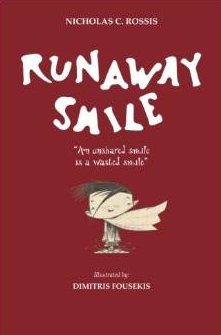
I know you asked about just the one, but I have two coming up. I just published my first children’s book, Runaway Smile. It will be traditionally published in Greek, but self-published in English.

Screen Shot 2014-12-08 at 12.45.07 AM

Runaway Smile was released yesterday, and to celebrate I have a link to allow friends and bloggers to read the whole book online. If they like what they see, I hope they will help generate some buzz.

Then, I hope to publish my fourth book of my epic fantasy series Pearseus shortly afterwards.

What are the special challenges in writing a series?

I have the memory of a goldfish, so naturally I assume that my readers do, too. I discovered it’s hard to remind readers who everyone is and what their backstory is every now and then, without the book becoming one long exposition.

Particularly at the beginning of a book, or when you reintroduce a character who’s been absent for a book or two, you have to jog the reader’s memory. I use simple descriptions when we first meet an absent character. For example, I might say the character’s name in one sentence and their relationship to another character in the next (for example, “ ‘Hey Bob,’ I said, glancing at Mary’s father”).

Since book 3, however, I have also included a list of characters at the beginning. I also submitted the list to Shelfari, thus enabling X-ray (a Kindle feature that allows one to be reminded of names and characters) in my books.

Cover Box Set (1-3) 500

Do you write under a pen name? If so, can you tell us why?

As I’m notoriously shy, I inserted my middle name initial as a pen name, thus creating author Nicholas C. Rossis. I theorize that only a criminal mastermind will be able to tell that it is I in fact, Nicholas Rossis, who pens the books.

If you were to advertise your book on a bumper sticker, what would it say?

Buy my books and I’ll give you cookies*.

* By that I mean the little files that lurch in browsers, but no one reads the fine print, right?

What else have you written?

I love short stories, and have published The Power of Six: 6+1 short science fiction stories. I have also translated the Tao Te Ching into Greek, and have published that as well. I give away the book in electronic format for free through www.taoteching.gr to encourage people to read it, as I love it.

Several short stories of mine have been published, as well.

Po6-3Dcover500

What do you think some of the greatest misconceptions about indie authors are?

That we have it easy. In fact, it gobbles up most of my time, especially since I’m determined to do it properly.

At the same time, the second misconception is that it is an expensive hobby. There are many people who are more than willing to help new authors, and it can be almost cost-free to self-publish.

How often do your characters surprise you by doing or saying something totally unexpected?

Too often for my liking! As the joke goes, you do everything you can to raise them right, and as soon as they hit the page they do any damn thing they please!

The worst case of this was with one of my characters in my second Pearseus book. I had his whole future all planned out, then he went and got himself killed. It took me weeks to iron out the consequences.

Is it important for you to know the ending of a book before you write it? The title?

I have tried to plot everything in advance, I swear. But as soon as I sit down, the characters start going their own way and things get out of hand pretty fast. With my third Pearseus book, I thought I finally had the process figured out. In fact, I even wrote the ending first.

Needless to say, when I reached it again, after writing the rest of the book, I had to change everything…

As for the title, it’s usually the very last thing I come up with. If you know of a good title for my fourth book? It’s almost ready, and I’m still undecided. I think I’ll ask my blog followers…

After working for a very long time on a novel, many authors get to a point where they lose their objectivity and feel unable to judge their own work. Has this ever happened to you? If so, what have you done about it?

Absolutely. In fact, I doubt that any of us is capable of judging our own work. That is why I use beta readers and a professional editor/proofreader. Their insight is invaluable, and they never fail to pick things I had missed.

However, one of the risks is using too many beta readers. For my first book, I used as many betas as I could find. Literally, dozens of people.

Now that I have penned half a dozen books, I only use five people. My rule of thumb is that I change without a second thought anything they have all commented on; with a second thought anything four have commented on; grudgingly anything three mention and only if I agree whatever is mentioned by two people. I listen to anything mentioned by just one person, but feel I can safely ignore.

Please, tell us about your experiences with social media. What are your favorite and least-favorite parts of it?

By far, my favourite social medium is my blog. I’m very active in most social media – Facebook, Twitter, Google+, LinkedIn – but when I blog I feel at home.

My social media secret recipe is simple: be real, be fun, be helpful. If you do that, you don’t even need to discuss your books.

The other day I was hosting a Facebook event for one hour. I had invited my friends, and decided to use that hour to promote their books. So, I asked them one after another as to what their books were about, then we chatted about the future of publishing. The hour flew by, and I still hadn’t mentioned my books.

With five minutes to spare, I pasted the links to my books, saying a simple, “if you want to know more about me or my work, check this out.”

I sold eight books that day, without even trying. How many do you think I would have sold, had I pestered people with “buy my book” messages for an hour?

Do you have any advice to a new author if they asked you whether to pursue the traditional route to publishing or to start out as an independent writer?

Yes. Try both and see what works for you. But don’t waste years waiting for an agent or a publisher to come back to you. It’s just not worth it anymore. Besides, you have better chances at being picked by an agent or a publisher if you already have an established presence.

In fact, the other day I was reading this in an interview by the founder of Blurb (a self-publishing service):

“Traditional publishing is becoming a hits business like Hollywood. They want to bank on box office, so if you’re a mid-list author, God help you if your last book didn’t sell a bunch, because you’re not going to get a deal.

“If you’ve never published before and are handsome or beautiful and 21 and have a big social network, they might take a flyer on you because your book could be the next Hunger Games.

“And if you’re a bestselling author, they’ll take you, too, because you’re the Brad Pitt of the publishing industry and people will just buy your book because it’s by you. But for everyone in the middle, good luck.

“That’s a huge population of people coming to Blurb now because they’ve had it up to here. They know they’re not going to get any marketing. There are no more advances so they’re not even making any money on the front end and they figure they’re going to have to do all the marketing anyway.”

Having our work out there to be judged by strangers is often daunting for writers. Do you have any tips on handling a negative review?

Sure! Don’t! 🙂

Seriously, don’t bother. Some people will hate your books. Other will love them.

I have a one-star review for Pearseus: Schism. This person felt so strongly about it, that they published their review in every single Amazon shop there is, from India to Japan. They said the book was so bad, that they stopped reading when the giants showed up.

There aren’t any giants in any of my books.

I still don’t know what happened there…

What are the most important traits you look for in a friend?

I have a very simple criterion: I like someone who’s happy for me when I’m happy, and sad for me when I’m sad.

If you are a TV watcher, would you share the names of your favorite shows with us?

Two series are my favourite when it comes to writing: Gilmore Girls and West Wing.

As for what I currently watch, the list is rather eclectic and includes, among others:

Sherlock, Castle, NCIS, Game of Thrones, Bones, Suits Unforgettable, Big Bang Theory, Mike & Molly, 2 Broke Girls… and many more!

Do you have any guilty pleasures?

I have quite the sweet tooth, I’m afraid. I’m especially partial to milk chocolate, in any of its infinite variations and forms.

As I just returned from a dentist’s appointment, I can assure you it’s a guilty pleasure indeed!

What are three things you think we can all do to make the world a better place?

The easy answer would be, love. However, I’m reminded of Schopenhauer’s hedgehog dilemma.

This concerns a number of porcupines huddled together for warmth on a cold day in winter; but, as they began to prick one another with their quills, they are obliged to disperse. However, the cold drives them together again. At last, after many turns of huddling and dispersing, they discover that they would be best off by remaining at a little distance from one another.

In the same way the need of society drives the human porcupines together, only to be mutually repelled by the many prickly and disagreeable qualities of their nature. The moderate distance that they at last discover to be the only tolerable condition of intercourse, is the code of politeness and fine manners; and those who transgress it are roughly told—in the English phrase—to keep their distance.

Therefore, I will go with another thing; respect. So, my answer is: respect for each other, self-respect and respect for the planet and all living beings.

What simple pleasure makes you smile?

Having a cat on my lap. Whenever I sit down on my computer, one of our cats (we have two) will take it as his cue to jump on me. It always brings a smile to my face, even if it means I’m always cramped from having to stretch my arms in order to type.

CONNECT WITH NICHOLAS

Website

Twitter

Facebook Author Page

Google+

LinkedIn

Goodreads

The Power of Six

Pearseus: Schism

Pearseus: Rise of the Prince

Pearseus: Mad Water

Pearseus: Bundle

Runaway Smile

CHAT WITH THERESA SNYDER

TheresaSnyder

Theresa Snyder is a multi-genre writer with an internationally read blog. She grew up on a diet of B&W Scifi films like Forbidden Planet and The Day the Earth Stood Still. She is a voracious reader and her character-driven writing is influenced by the early works of Anne McCaffrey, Ray Bradbury, Robert Heinlein and L. Ron Hubbard. She loves to travel, but makes her home in Oregon where her elder father and she share a home and the maintenance of the resident cat, wild birds, squirrels, garden, and occasional Dragon house guest.

Time to chat with Theresa!

What is your latest book?

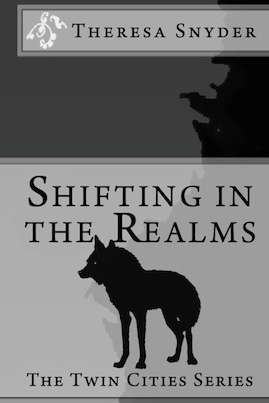
My most recent publication is Shifting Agony & Ecstasy, the second book in the Twin Cities Series.

What are the special challenges in writing a series?

I have three series I am writing – the Twin Cities Series, my paranormal series, The Farloft Chronicles, my fantasy series, and The Star Travelers, my science fiction series. Each has its own particular challenges.

The Twin Cities are novellas, very fast paced. In those I want to not only tell a story with each, but I also endeavor to give the reader more information with each book about the setting, which is a place called The Realms. Several Indie authors and I got together to create The Realms. We wanted a setting we could all write in with some of our own characters and some cross over character – like the authors who write the Star Trek books. We all hope to write in this series for many years to come. Right now between all the authors there are seven books in the series and we have only been writing for a year as of this December.

JamesAndTheDragon_CVR by Sarah

Farloft, my dragon from the fantasy series is very well known on Twitter. He tweets the last Friday of the month. Folks know him, they look forward to his visits, they expect the same Farloft in the books as they find on Twitter. Because he is in his own kingdom in the books and not in modern times I have to be vigilant and not let his character drift far from how he would react to any question on Twitter. It has made his tweeting very interesting. He is over a thousand years old and very wise. He has been asked to solve problems, mediate disagreements and give sage advice on Twitter.

The major challenge for my science fiction series is consistency and continuity. I have been writing in that series since 1990. There are so many characters, that age at different speeds due to their alien heritage, and places they have been, that they go back to periodically from book to book. I have made a huge glossary of hundreds of terms, places, characters, plus a star map. Their universe is astronomical.

How did you choose the genres you write in? Or did they choose you?

I write science fiction because I love creating characters and building new worlds. Science fiction is a great genre to play in. My works are not highly technical. They are character driven like Josh Whedon’s Firefly series.

Farloft was created out of a desire to teach, but not preach to my nine-year-old nephew. What are the consequences if I steal? How do I be the best friend to someone? How is honesty and truthfulness rewarded? I mean, who wouldn’t listen to a wise old dragon?

My paranormal chose me. When we authors got together and started brainstorming The Realms we all decided paranormal was the way to go. The Realms is the place where all things humans think are paranormal, mythological or fanciful live. The other authors picked vampires. I decided I wanted to write a shape shifter. Cody changes from human to wolf – not werewolf, just wolf. I really enjoy my time crawling into a wolf’s skin and seeing the world through his eyes.

Some authors, like me, always write scenes in order. But I know some people write scenes out of order. How about you?

I used to think I had to write in order, but then I woke up one morning and had this great idea for a scene totally out of order – much later in the book. I debated with myself about writing it or not, but the characters were talking to me, so I wrote. You know, it worked out just fine. When the time came in the regular flow of the story, I just inserted it.

Since then I have purchased a program called Scrivener and it literally has you write in chapters that can be physically moved within the program to rearrange as needed. I hate to sound like an advertisement, but it is far superior to Word or any other word processes program for writing books. I would never write with any other program now that I have used it.

How important is the choosing of character name to you? Have you ever decided on a name and then changed it because it wasn’t right for the character?

I simply cannot write a character unless they have a name. I cannot get words down on paper, or think of the way that character should act unless they have a name. I am the same way about a book’s title. I cannot write it without it having at least a working title. My latest book went through three different working titles before I settled on Shifting Agony & Ecstasy.

I don’t think I have ever changed a character’s name once I wrote about them. It has to be right from the start.

TS_Cover

Do you dread writing a synopsis for your novels as much as most writers do? Do you think writing a synopsis is inherently evil? Why?

I have fifteen published books. Every synopsis I have written has been like pulling a dragon through a keyhole backwards. A synopsis is extremely difficult for me. If there was a service I could subscribe to that would write mine, I would pay a fortune to have someone else do them. It is so hard to put into three to five sentences what you have been writing on for months. To consolidate it down, make it interesting and yet not give anything away. It is an exercise in futility. Yes, they are inherently evil!

Please tell us about your experience with social media. What are your favorite and least-favorite parts of it?

Before I became a published author last year in May of 2013, I did a little Facebooking and that was all. I would rather speak with my friends personally then post something. When I published my first book my students at school (I run the print shop at our local community college) told me I should get on Twitter to promote and build a community of followers for my books. They said it would be a perfect medium for me. I love to chat. They were right. It is like a constant party. I stroll in and someone is always there waiting to chat about anything from dragons to what they had for lunch. I love it. You dip a toe in the pool and the ripples spread. I have been on twitter less than a year and a half and have over thirteen thousand followers. On Facebook I have a couple of hundred and most of those are ones who followed me over from Twitter. Facebook is just not my style. I heard someone compare Twitter to a cocktail party and Facebook to having friends over for dinner at your home. I far prefer cocktail parties in social media. If I want to have someone over for dinner, I will invite them.

A lot of authors are frustrated by readers who don’t understand how important reviews are. What would you say to a reader who doesn’t think his or her review matters?

I would tell that reader, as an indie author in particular, we need their reviews to help us find our audiences. When you do a review for an indie author you are giving them one of the biggest boosts they can have to promote their work. So, if you love something you have read, write a line or two, it doesn’t have to be a huge review. We authors are all taught the list of things a reader looks at once you get them to your page to buy your books: 1) The cover 2) The description 3) The reviews. If the reviews are not there a great book will often not sell.

What is the coolest surprise you’ve ever had?

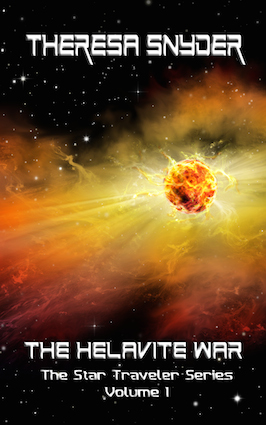
About a month or so after I published my first book that was The Helavite War in May of 2013, I received a message on my Facebook page from a man named Max in Italy. He said he was lying in bed reading my book. Imagine that? A guy halfway around the world lying in bed reading My Book! That was the coolest. Still makes me smile.

HelaviteWar_Final_Kindle

What might we be surprised to know about you?

I am probably older than most of you think from looking at my photo, even though the one posted here is only two years old. I have had the opportunity to do many interesting jobs in my lifetime. Those jobs, and the people I met through them, have provided a wide range of experiences for me to pull from to write my books.

I used to say I had everything, but been in prison or been a nun. Now I just say I have never been a nun. I have held the follow jobs to today: dog groomer, zoo keeper, Fotomat attendant, hostess in a restaurant, make-up artist (this is where I went to prison to do the make-up for a documentary), retail store manager, retail toy buyer, book buyer, jeweler, diamond salesman, bookstore manager, teacher, dispatcher for an elevator company, librarian, law librarian, dispatcher for a Ford dealership, bookkeeper, paperback book distributor’s sales rep, legal assistant, marketing coordinator, print shop manager, and always in the background, ever present, author.

Is there a question I haven’t asked you that you would like to answer? If so, what is it?

YES: What do you believe sets your work apart from everyone else’s?

All of my work is very character driven. I also think it is very well rounded. They all contain elements of humor, romance, adventure, and reflection. Like a fine wine you can savor on many levels.

CONNECT WITH THERESA

Website

Amazon Author Page

Smashwords

Twitter

Facebook

CHAT WITH KATHRYNE ARNOLD

Kathryne_Arnold

Kathryne Arnold holds a master’s degree in counseling psychology, is a licensed mental health therapist and a nationally certified clinical hypnotherapist. Ms. Arnold provides full-time therapy services at an outpatient counseling center in Tampa, FL. She is currently working on her third book in the Samantha Clark Mystery Series, which features the same protagonist as she moves through unexpected life adventures. Ms. Arnold lives on the water in sunny Clearwater, Florida, with Zoe, her toy poodle muse.

What part of writing a novel do you enjoy the most? The least?

What I like most about writing is that I can turn into myself and get in what is termed “the flow”- an emotional and creative place where time melts away. I become one with my writing space and the written word, hours fly by without a notice. I had a longing to shape a tale based around individuals in my life that I believed would make engaging characters. I had a strong desire to experience a higher level of creativity, to literally produce something out of nothing – a fascinating and challenging endeavor I couldn’t ignore. The part I like the least, and the biggest challenge for me is finding a block of uninterrupted “me time” to engage in writing when I’m not mentally drained, or too physically tired. I work at a demanding full-time job, and being single means I have to take care of every other aspect of my life, leaving little energy left over for creative undertakings. I’ve been very fortunate in that I never experienced the dreaded “writers block.” I’ve been fleetingly stuck here and there, but mostly because something else was going on in my life that was taking precedence. But usually a good night’s sleep or some fun clears my fuzzy brain, and I can get right back into the work of writing.

Do you have any advice for first-time authors?

Follow your own voice, your intuition and style of writing. Develop your unique method of putting words to paper, listen and pay attention to your inner callings. Don’t be swayed by others. If something doesn’t feel right, it probably isn’t. This also holds true for editing, promotion, developing presentations, etc. It is obviously important to pay attention to experts in the field, those who have your best interest at heart. Learn to really know yourself, and then to believe in your talents, but do take sincere direction, recommendations, lessons from those who have gone through their writing journey before you. Be open, but cautious. Try not to be influenced too much by other writers that you admire, stay true to yourself. You will hear a hundred different ways you should do something. When overwhelmed or unsure of which road to take, and trust me, this will occur many times in your writing life, I suggest that you stand still, breathe, lighten up and guide yourself toward what feels genuine and honest to you.

Were you “born to write” or did you discover your passion for writing later in life?

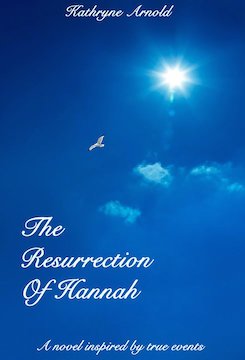
That is a tough question, sort of like nature vs. nurture, and I have no definitive answer. But throughout my earlier school years, I did dabble in poetry and short stories, purely for personal self-expression. I experimented with a creative writing class in college, but never pursued my secret desire of a writing career, feeling the vocation was too self-indulgent, not sensible enough for my German blood. Over the next twenty years, I concentrated further on my work in counseling and social services, later becoming a licensed practitioner. Several years ago, due to a deep yearning to express my feelings in a more artistic manner, I literally sat down one day and began writing my first novel. The resultant book, The Resurrection of Hannah, a paranormal mystery, had been based on a series of powerful dreams, along with compelling and coexisting experiences that inspired me to create a story that would capture the strength of my emotions. Once bitten, I could not help but write my second work of fiction, The Fear of Things to Come, a suspense/thriller. I am finally in the process of writing another novel in what I consider a unique collection of adventure stories, the third in the Samantha Clark Mystery Series.

Res-of_Hanna

How do you plan your storyline?

With the initial writing, I don’t really map out a storyline. In the beginning I’m often just kind of daydreaming about my book, questioning where it might go. I sort of meditate and clear my head; then think about the past challenges with my writing that I want to resolve before really diving in again. I let ideas flow in and out and try not to censure myself too much, keeping my mind open to new thoughts and possibilities of where the book might go. After all that, I end up with a rough draft in my head, and then I really buckle down and start seriously documenting a major theme, character details, plot(s), point of view, etc. I use Word and make files for characterization, research, short descriptions of chapters, etc as I’m developing them. I’m big into organization and prioritizing generally in life, so this goes also for reviewing and editing as the story evolves.

Fear_of-Things

How much research was involved in writing your book? How did you go about it?

Quite a bit of research and study goes into formulating the plot/subplots, overall theme of the novel, character development and any historical elements that might be of importance. I want any subject or activity mentioned in my books to sound realistic, and that I am relatively or quite knowledgeable about that which I write, depending on the topic. For example, when writing about the incredible garden at the manse in Massachusetts where the character Hannah lived (in The Resurrection of Hannah), I researched extensively the flowers, greenery, trees, etc. that would have been indigenous to the area back around 1785. It was important that I describe every aspect of the garden in a convincing manner, and it was necessary to find pictures/drawings of everything that was to be in this garden in order to be as accurately descriptive as possible.

Do you have complete control over your characters or do they ever control you?

I became aware a long time ago that I am following the writing much of the time, that I do not have complete control over the characters. Not with blind faith, but with a knowing that’s hard to describe. When I take my head out of the whole process and go more by gut instinct, the story and characters point me to where I need to go, the path it should naturally take. It’s exciting and fun to see where my mind and ideas lead me. Often this is when I write my best work and it usually makes the most sense, and if for some reason I later discover that it doesn’t, I can just delete it!

Many authors do giveaways; have you found them a successful way to promote your book?

For the most part, yes. It’s always been beneficial to engage in Kindle direct publishing giveaways for my second novel, The Fear of Things to Come. A few times it hit No.1 in Psychological Fiction and Suspense, as well as the Thriller category in several countries in free ebooks. After the giveaways end, my ebook often stays fairly high up in the ratings, in the Top 100, for a length of time afterward, so I am now considered an international bestselling author! I also did a Goodreads giveaway for my first novel, The Resurrection of Hannah, and I sent signed copies to the winners, and in return I received more sales and several reviews from happy readers. I also do signed book or gift card giveaways during my book tours, and this is effective in increasing exposure, interest in my books, reviews and sales. Mostly, I just have fun doing it.

Do you feel your latest book is your personal favorite or one of your previous novels?

It’s a toss-up. My first novel, The Resurrection of Hannah, is a paranormal mystery inspired by true events. It was my baby, born out of a real need to tell my story of incredible experiences that happened to me, which still feels surreal after all this time. I wanted to write a completely different type of book for the sequel, which includes a serial killer, lots of twists and turns, murder and mayhem. I really wanted to know if I could write a diabolical character and sound convincing. Both books were a challenge in their own right, but I got to use several of the same characters in the sequel, which I loved because I ended up feeling very comfortable with them, like you do with old friends.

Is it important for you to know the ending of a book before you write it? The title?

Not at all. To me that would be stunting my creativity. I want to allow my imagination to lead me by the hand, and take me to places that I didn’t know existed. I feel like the story and characters have the say in matters, not me. But I’m a very willing participant! The title is the one thing I most struggle with during the writing process, especially since I know how important the title is to drawing people into wanting to read your story. It has to make just the right impact.

Have you ever written characters that you truly despise?

Yes. Donnie Brickman, the serial killer in my second novel, The Fear of Things to Come. He was bent on revenge and wanting to destroy everything in his path, primarily the protagonist, Samantha Clark, which is basically me at a younger age, and her beloved boyfriend, Todd. It was fun and thought-provoking to make him an evil and pathological character, yet filled with many emotions and traits that Samantha also possesses, such as regret, fear, a relentless drive to succeed, a love of animals, etc. Two sides of the same coin.

What might we be surprised to know about you?

I am Pennsylvania Dutch, born in Bethlehem, Pennsylvania. My father was a well-known and respected reverend, and he founded his own church in Bethlehem when he was in his early twenties. At times when younger, I railed against the deeply conservative and religious roots into which I was born. In the end, however, that lifestyle served me well, figuring prominently in the development of my writing and belief systems.

What simple pleasure makes you smile?

I love the outdoors, so after work I love sitting on my porch with my toy poodle, playing and cuddling with her, and staring at the wide-open bay, a cool breeze flowing over me, with the wind chimes clinking around, just decompressing. Listening to the sound of nature all around.

What’s your favorite comfort food? Least favorite food?

I have so many comfort foods I can’t list them all here. I would say very cheesy pizza loaded with veggies, lobster pie and a perfectly cooked steak are my favorites. My choice for deserts would be white wedding cake and warm apple pie with vanilla ice cream. Least favorite foods are some of the PA Dutch dishes I was raised to eat, like chicken corn soup and turnip stew. Sorry Mom!

Where do you live now? If you had to move to another city/state/country, where might that be?

I now live in Clearwater, FL but have lived several places throughout my life. I would love to move back to Lancaster, PA where I graduated from high school, but that isn’t feasible right now in my life. I will always miss New England and living in Gloucester, MA, but I have no friends or family left there. I would presently choose Savannah, GA and Tybee Island, where my brother and his family live. In fact, if it works out with my new job, perhaps I can relocate there one day as they have an office in Savannah. My dream!

I love to hear from readers! The links to my websites/profiles are listed below:

CONNECT WITH KATHRYNE

Website

Facebook Author Page

Twitter

Goodreads

Amazon Author Page

LinkedIn

The Resurrection of Hannah (Amazon US)

The Fear of Things to Come (Amazon US)

CHAT WITH TAMARA FERGUSON

Tamara

Tamara Ferguson is the author of the award-winning Tales of the Dragonfly Romantic Suspense Series, and a member of the Romance Writers of America. Her new romance, That Unforgettable Kiss, has just been released.

Time to chat with Tammy!

What is your latest book?

That Unforgettable Kiss (New Adult Romance)

KissedByFate

I hear you have some very exciting news! Can you share it with us?

Tales of the Dragonfly Book II: In Flight was recently announced a Romance Suspense Winner in The Readers’ Favorite International Book Awards.

Tales_Dragonfly.png

Is your recent book part of a series?

Yes. Kissed By Fate (Book 1)

How often do your characters surprise you by doing or saying something totally unexpected

All the time! I write up a broad outline of my story, first, and then I usually go from there.

Over the years, many well-known authors have stated that they wished they’d written their characters or their plots differently. Have you ever had similar regrets?

Definitely. I wish that I hadn’t been in such a hurry to publish my first book without better editing and making more changes with the story (I was targeting YA when I first began, too, and then I changed my mind.) Those reviews still stick with the book even after it’s been revised and reedited.

How important is the choosing of character names to you? Have you ever decided on a name and then changed it because it wasn’t right for the character?

Yes, the names I use are important to me. But I do something very silly—I relate my stories and characters with my favorite songs. And my stories actually run through my mind like a movie!

Have you ever written characters that you truly despise?

Oh, yes. And, for some reason, these characters are easy for me to write about. But my favorite characters to develop are those who appear to be unlikable on the outside, but actually have redeeming qualities on the inside. Maybe they were abused or molested … usually there’s a reason for their attitude or behavior. I guess because I search for the best in people, I want my reader to be able to find it as well.

Do you have any advice for first-time authors?

First-time authors should listen to their peers. Reviews are great, sure, but not always accurate if you’re asking family and friends. Although there are many award contests for indie writers, very few of them offer critiques. How do you know what you’re doing right—or wrong? The best thing I ever did was join the RWA. The advice and unbiased critiques I’ve received, after entering my books in several of their regional contests, have been invaluable, and (I hope) have helped me develop into a better writer.

Have you received reactions/feedback to your work that has surprised you? In what way?

EVERY time I’ve been a finalist or received an award, it’s surprised me. It usually comes at a time when I’m feeling low and asking myself—what makes me think I’m any good at this? My last RWA contest probably shocked me the most, though. The rough draft for That Unforgettable Kiss was nearly a finalist (2 out of 3 judges) & I received the best scores I ever have from an RWA contest. They are usually my harshest critics. (One of the judges indirectly used the p word J by mentioning she expected to see this one on the shelves.)

Do you dread writing a synopsis for your novel as much as most writers do? Do you think writing a synopsis is inherently evil? Why?

I absolutely hate writing a synopsis. I think because my stories actually do have a lot of complications and subtle undertones that can’t be detailed in the bare bones of a synopsis.

Having our work out there to be judged by strangers is often daunting for writers. Do you have any tips on handling a negative review?

For every one person who doesn’t like your book, there are usually about five or six others who will. Also, there are people out there who are just mean-spirited. Keep in mind, you can’t please everyone!

Do you miss spending time with your characters when you finish writing them?

That’s what’s fun about writing a series—you can bring back your favorite characters in supporting roles. Although it’s discouraged, because it can confuse the reader, I do tend to include a lot of secondary characters because I think it’s important for the flow of my, particular, series. I try to give my secondary characters a little more depth because many of these characters will be the heroes or heroines in my future novels.

Do you ever suffer from writer’s block? If so, how do you get around it?

Oddly enough, no writer’s block. My problem is not having enough time to write all the stories revolving around in my head!!

What do you know now that you wish you’d known five years ago?

The important mechanics—like immediately catching your reader with action and dialogue, watching the POV, using too much backstory. I kind of jumped right into the writing after not writing for several years, too, so I had to relearn grammar and punctuation.

Where do you live now? If you had to move to another city/state/country, where might that be?

Anywhere but Illinois!! But this has largely to do with the funding & services available to my disabled son. Illinois ranks 51 in the nation with their ability to provide services and care.

What might we be surprised to know about you?

I’m the full-time caregiver for my severely autistic and mentally impaired son, who also has Type I Diabetes. My life hasn’t been my own for several years. That’s why I’m usually at home to tweet the authors every night. But this makes it difficult to write and concentrate when editing. My son is constantly interrupting me J

What makes you angry?

The lack of regard for funding for the disabled, particularly in Illinois. My son is on nearly a twenty-year waiting list to enter a facility that will be able to provide him with proper care. And, even then, I’m concerned about the quality of that care. L I take each day one at a time, and try not to worry about the future.

What music soothes your soul?

Light rock & classic rock.

What’s your favorite film of all times? Favorite book?

I’ve loved old movies since I was a kid. But Random Harvest and Mrs. Miniver are particular favorites.

I usually have favorite authors, as opposed to books—Mary Balogh, Linda Howard (I’ve read Open Season three times—I still laugh each time I read it), Nora Roberts & Grace Burroughs—among many, many others.

What simple pleasure makes you smile?

My son, when HE smiles; although sometimes his giggling can drive me nuts when I’m trying to concentrate on writing or editing!

CONNECT WITH TAMARA

Tales of the Dragonfly

Kissed By Fate

Twitter

Facebook Author Page

Google+

LinkedIn

Pinterest

Novel Engagement

The Romance Reviews

Amazon Author Page


CHAT WITH AMANDA GALE

AmandaGale

A graduate of Vassar College and Boston University, Amanda Gale taught high school English before she began writing women’s fiction. The four novels of her Meredith series explore love, growth, and the flaws that make us human. A lover of history, classic literature, and quiet nights at home, she lives outside Philadelphia with her family.

What are the special challenges in writing a series?

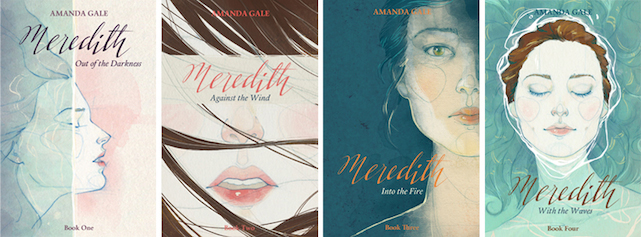
I wrote the books one after the other and published them at the same time, so thankfully I was able to revise the earlier books if something in the later books needed clarification. For me, the greatest challenge was allowing each book to be unique while connecting them all with a common message. My series follows a woman through four stages of her life. She’s in a different mental place in each book, and the lessons she learns depend on where she is in her journey. One book may have a more ethereal feel while another is more straightforward. But the importance of each stage has to be clear as a reader moves from one book to the next, and it all has to come together in the end. Finding that balance took a lot of work.

Meredith_facebookcover

What do you think some of the greatest misconceptions about indie authors are?

I’d say the greatest misconception is that indie authors bang out a book with no planning or editing and then spend ten minutes uploading it to a website before washing their hands of it. This couldn’t have been further from the truth for me. I was solely responsible for everything, from editing to working with the artist who was designing the covers. I accepted feedback and constructive criticism and went through dozens of rounds of revision before deciding the books were ready for the public. Once it was time to publish, I had to research all my options and meticulously format the files myself if I wanted the books to be professional.

Is it important for you to know the ending of a book before you write it? The title?

I didn’t have titles in mind when I began writing, and I considered several titles before settling on the titles I chose. I don’t think I could have come up with appropriate titles until the series was finished. My story evolved so much as I was writing, and I would have undermined it by being rigid. Flexibility is important; you don’t want to write the story to fit the title. I did have an ending in mind when I began writing, but many of my characters changed in the translation from my imagination to the page. As a result, the plot also underwent massive changes, and I took the story in a very different direction than I had originally intended. I never forced or imposed something that didn’t feel right. That being said, I do need an ending to work toward. I feel lost if I don’t have a vague idea where I’m going.

Over the years, many well-known authors have stated that they wished they’d written their characters or their plots differently. Have you ever had similar regrets?

Yes! As I said, I initiated a dramatic plot change during the writing process. This change necessitated that a character who should have been happy in the original version instead was left suffering. Though I am absolutely certain this was the right decision, a small part of me has dreamed about what would have happened had I stayed true to my original plan. To compensate, I’m planning a sequel in which the character’s story has closure. I think that will satisfy my need to rectify the injustice I inflicted on him.

How important is the choosing of character names to you? Have you ever decided on a name and then changed it because it wasnt right for the character?

The names were so important to me. I had been imagining the characters for years, but none of them had a name. When I began writing, I chose Meredith for my heroine because she needed something elegant, classic, and strong. It also had to lend itself easily to a nickname, and it had to begin with an M. (I always saw her with an M name.) Most of the names came to me right away, and they never changed. One or two I had to wrestle with for a long time, however. A couple of the last names gave me trouble. The only name I ever changed was that of an important secondary character, in favor of a name I liked a little better.  It didn’t work, though, because the new name simply wasn’t his name. I ended up changing it back.

Have you ever written characters that you truly despise?

Some of my characters are not nice people, and they behave badly. I like these characters. They’re interesting to me, and they were fun to write, maybe because it was a release for me, to write words on a page I’d never say to anyone in person. The one character I’m not fond of is well-meaning. She’s impulsive, though, and thoughtless, and she is more concerned with looking good and being funny than with considering the feelings of those around her. I have no patience for her.

Can you tell us about your road to publication?

I began by searching for an agent or publisher, but I soon realized that I wouldn’t be able to go the traditional route unless I sold the first book on its own and hoped the others in the series were picked up later. I wasn’t willing to separate them like that, so I decided to self-publish. It’s just as well because the best editing took place after I made the decision not to pursue traditional publishing. I didn’t realize at the time how much work I still needed to do. When I knew I was going to do it all myself, I sought reader feedback and made difficult choices that helped shape the books. I’m happy with my decision to self-publish because I had complete control over all the decisions. Also I was able to publish them simultaneously, which was important to me.

How much research was involved in writing your book? How did you go about it?

I researched places I had never visited or had visited but didn’t know a lot about. If I was describing someone’s house or dress, I looked at houses or dresses online so I could have something visual to reference. In one or two cases, to make sure my facts were correct, I sought the help of friends who had certain professional experiences. Also, a couple of delicate issues are discussed in the final book, and I needed to know if these passages were sensitive to those who had been through it. I put a call out for people who could offer advice, and I received some feedback that assured me that my handling of these scenes was appropriate.

Have you received reactions/feedback to your work that has surprised you? In what way?

I am always surprised by people’s reactions to one particular character. Some love him, and some hate him—and I never can predict which it will be. People also have different interpretations of the heroine’s interactions with him. When I wrote this character, I knew he would be somewhat controversial, but I never imagined the intensity of the emotions he’d elicit. At first I worried over it because I love this character, and I wanted everyone to love him, too. Eventually I grew to appreciate the fact that if he was making people feel so strongly, in either direction, I probably had done something right.

Were you born to write or did you discover your passion for writing later in life?

When I was little, I wrote short stories and even began a couple of novels. In high school, I wrote poetry. Once I grew up, though, I thought that part of my life was over. I accepted that what tends to happen to children had happened to me, that the demands of adulthood had stifled my creativity and that I would never write any fiction ever again. I had been imagining characters for many years, developing plot lines around them, but I was almost embarrassed by it, and I never told anyone this was happening, even those closest to me. One day I decided to sit down and write out their story, just for myself, never expecting anything to come of it. Four books later, I realized I was still a writer after all and that my ideas actually had a purpose. In a way, the series happened not because I had a desire to write but because I felt compelled to bring my characters to life. I’m not sure whether being born to write made the characters come to me or whether being born to create characters made me a writer. Either way, once I began the process, I couldn’t stop. I was up all night writing and editing, I humbled myself asking for feedback, and I worked harder than I ever had. I hadn’t thought I was strong enough to pull this off. I think if anything makes me a born writer, it’s the willingness to make those sacrifices for the sake of the books.

We all know the old saying; you cant judge a book by its cover. This is true. However, how much importance do you place on your book cover design?

So much importance. I always felt strongly that I needed original art for my books. They don’t fit neatly into one genre, and they don’t always follow traditional rules. I wanted something that would reflect them completely, something that would mirror the mood I’d like readers to feel when they read them. I found an artist whose work I love, and she did a beautiful job. The covers are everything I hope the books are—elegant but sexy, delicate but bold, and maybe a little mysterious. Also, I find personal satisfaction in the fact that I have something unique and special to represent my books after all my hard work.

How would you define your style of writing?

I’m heavily influenced by Victorian literature, so my writing tends to be more formal. It’s definitely accessible, though, and I think my dialogue is realistic for each character. I’d say that, like the heroine herself, the writing is proper but modern, and not without humor.

Do you miss spending time with your characters when you finish writing them?

This is my favorite question because it so encapsulates my feelings about my characters. The characters are so much a part of me, and I think of them every day. I mourn the loss of the writing. My primary goal was to give them life and to make people fall in love with them the way I love them. One of the hardest parts of the process was moving on, recognizing that I had no excuse to read through the series again and that I had to let that part of my relationship with them go.

Whats the coolest surprise youve ever had?

The day after my grandfather passed away, I went to Barnes & Noble. I was walking by a table and saw the children’s picture book The Fantastic Flying Books of Mr. Morris Lessmore, by William Joyce. I had seen the book before but knew nothing about it, and for some reason that day I felt compelled to buy it. That day, I spent most of my time going through old photographs of my grandfather and thinking about his life as a young man. That night I read the book to my kids. I was stunned to discover that it was about a man who grows old as he writes the pages of his own book and returns home when he finishes the last page. He leaves his book behind, and it is picked up and read by a little girl. Later I learned that my grandfather had written a book about his life. This was only discovered after he had passed.

What was the most valuable class you ever took in school? Why?

In college I took a course called “Prejudice and Policy in Victorian England.” We read some of the most vitriolic works of the Victorian era and discussed why such intense fear of “the Other” was so prevalent. This class taught me not only the dangers of prejudice, both in one’s mind and in the law (the more obvious lesson) but also the importance of remembering the more shameful parts of history. It made me brave enough to discuss controversial topics and to reference words and subjects that are not polite. Honest, uncensored conversation is necessary if we are to understand ourselves, if we want to make sure the most horrific acts perpetuated by the human race are not repeated. I will always be grateful to my professor for teaching me that progress requires embracing all knowledge, no matter how unpleasant, not hiding from it.

What are three things you think we can all do to make the world a better place?

  1. Listen to each other.
  2. Act with integrity.
  3. Never stop learning.

Author photo: Lisa Schaffer Photography; Cover design: Adara Sánchez Anguiano

CONNECT WITH AMANDA

Website

Facebook Author Page

Twitter

Instagram

Pinterest

Goodreads


CHAT WITH PAUL HOLLIS

Paul_Hollis

Paul Hollis grew up during a time when the notion of a shrinking world was still in its infancy. People lived in rural communities or in city neighborhoods, rarely venturing far beyond the bordered rim of their lives. But as a kid, Paul tumbled off the edge of the yard reaching for greener grass. Having lived in twelve states and eventually working in all fifty, he fell in love with seeing the world on someone else’s money. Since then, he has lived abroad nine years while working in forty-eight countries, spanning five continents. These experiences helped inspire the novels in The Hollow Man series. From traveling throughout Europe as a young man, to flying three million miles which took him nowhere near home, to teaching companies worldwide about coming global implications, as a world tourist Paul Hollis brings his own unique viewpoint to his mesmerizing thrillers.

 Time to chat with Paul!

What is your latest book?

The Hollow Man is based on true events during the early 1970s, and traces some of my experiences as a young man traveling in Europe. At the time, terrorism was on the rise and I had been assigned to learn as much as I could about it. Most early acts of terrorism were specific to political and social leaders who represented offending ideologies. But terrorism was beginning to change its strategy to the familiar, senseless chaos we recognize today. The death of political figures no longer seemed to bother us as much as these new, random attacks against our children. Targets of innocence became preferable because they hit closer to our hearts and the fear inside us grew larger with each incident.

The Hollow Man is the first in a three-part series dealing with the growth of terrorism. The second in the series, London Bridge is Falling Down, centers around IRA and UVF activities during ‘The Troubles’ and is due out by year end. Surviving Prague is the third installment.

Hollow_Man

You have seen far more of the U.S. and the world than most people. How has your vast experience influenced your work?

Early on, traveling awakened a massive awareness in me when I realized how much more lay beyond the limits of my own existence. And, my first life lesson was the simple understanding that a certain maturity and wisdom inevitably comes with the basic need to accommodate and accept lifestyles different from the northern Midwest where I grew up. Seeing new sights and exploring new places increased my knowledge and enriched a global perspective for me – one that’s more intertwined with each day. As a result, opposing political views, cultural differences, regional geographies, and the people themselves all find their way into my writing.

Are there places you haven’t visited that you would still love to see?

I’ve lived in some exotic places: Paris, London, Brussels, Tokyo, Sao Paulo, and more. I’ve even made two complete circuits around the world before returning home but somehow I’ve never found myself in New Zealand. It’s top of my list right now.

What are the special challenges in writing a series?

There are three important challenges I encounter in writing a series.

First, sustaining a character arc can create difficulties. A character begins a series with certain viewpoints that change through events in the initial narrative. As the second narrative begins, the character should reflect the impact of the first novel and the third installment needs to show continued growth.

It’s also not easy to maintain the story arc across multiple books while ending each with a resolution that leaves the reader satisfied. Try to plan a high level view of your series then plot convenient ending points.

Lastly, the tone of each book should reflect the series but not serve as a rerun. There should be something that surprises but at the same time, the reader is reentering the same world left at the end of the last book. If it is too different, the reader may feel betrayed and stop reading.

What part of writing a novel do you enjoy the most? The least?

I love writing dialogue. This is where characters come to life. We can describe their idiosyncrasies and characteristics. We can position them with thoughts and feelings. We can thrust them into circumstances to watch them squirm. But what comes out of their mouths immediately adds a third dimension to the script and the character jumps off the page.

I enjoy most aspects of writing a novel except possibly the inescapable frustration of procrastination and distraction that comes with a daily routine. But I’ve found ways to minimize these disturbances. A regular regimen and daily goals help me stay on pace. Sometimes.

Is it important for you to know the ending of a book before you write it? The title?

Both are important to define the bounds of the book for me. I want to know the ending in general terms and the title specifically. The title sets the tone, mood and theme of the book and the ending sets the direction.

Some writers edit excessively as they write; others wait until a novel is finished to do the bulk of the editing. How about you?

I seem to do both types of editing, while I write and at the end when I can see the novel as a whole. When I come to a natural breaking point, in thought or content, I usually go back over the last few chapters and spend some time editing. It helps me to make sure the storyline and characters remain consistent. After the first draft has been completed, I go through the manuscript as many as 10-20 times editing for specific things each time, such as overuse of particular words, complex sentence structures, and tensing. Editing and improving each draft is fun and relaxing for me. Yup, I’m weird.

How important is the choosing of character names to you? Have you ever decided on a name and then changed it because it wasn’t right for the character?

A character’s name should fit the personality, the story, the genre, the events, the setting, and the era. I want the names to reflect the intricacies of the characters and the realities of the characters’ worlds. Many names carry preconceptions, images, and connotations with them. Several times, I’ve had to change a name that created the wrong expectation for the reader.

Have you ever written characters that you truly despise?

I haven’t written a character that I despise. A writer should step back from a story, see a character for what he/she is, and tell the story as an impartial observer. Otherwise the story will demonstrate an obvious bias against the hated character which might cause unexpected consequences – like, a sympathetic bad guy.

Do you have any advice for first-time authors?

First-time authors may be overwhelmed by the amount of conflicting information that’s going to be flying at them. Try to tune the noise out and write. Write the story you need to write with your own style and voice, not the one you think agents, publishers, and readers want. Find the time to write on a schedule, every day and write until your story is drafted.

Proof it, edit it, stylize it, or whatever until you’re satisfied with the result. Then hire a professional editor. An editor will raise your work to the next level. You will hate her, disagree with her, and argue with her but listen to your editor and make the suggested changes. In the end your book will be much better for it.

During the writing process, join social media and make friends, not followers. Ask questions on your social networks and I guarantee we will answer from personal viewpoints of experience, knowledge, and strength. Avoid most of the Googled ‘how to’ articles which ask your same questions but never seen to get to the ‘how to’ part.

How much research was involved in writing your book? How did you go about it?

The Hollow Man series is based on facts and other incidents that occurred forty years ago. As a result, my research is extensive. I want to be as historically correct as possible so I explore everything from actions prior to documented events to reactions in the aftermath to local cuisine and currencies, and so on.

I use the internet for most of my research. Over the past twenty years, the web has grown from an enigma of secrets and codes to a modern oracle of answers. Ask a question and I’m immediately presented with pages of explanations, observations, interpretations, comments, and justifications. And honestly, if you’re writing fiction, it generally doesn’t even matter if the information is true or not. It’s all about the spark of curiosity that ignites the wildfire of your imagination.

Do you allow others to read your work in progress, or do you keep it a secret until you’ve finished your first draft? Can you elaborate?

I do allow others to read my work in progress because I’m looking for honest reader perspectives and understandings as early in the process as possible. I want to know what’s working and what isn’t. The exercise is very helpful when I remember to disregard most of the accolades unless they are very specific to, for example, a particular passage or character. I’m looking for disconnects in time and thought, character weaknesses or inconsistencies, and plotting errors. I believe each of these discoveries increases the quality of my writing.

Do you have any advice to a new author if they asked you whether to pursue the traditional route to publishing or to start out as an independent writer?

Being a practical guy and more than a little impatient, my suggestion for new writers is to self-publish your first book. The odds of landing an agent in a reasonable timeframe are incredibly daunting. A study a few years back cited the following statistics. Each year, about 275,000 new titles are published by representative publishers in the U.S. alone and within this sea of new books, fewer than 50,000 are new fiction titles.

Or look at it another way. A literary agent may get 5,000 query letters a year. Only a fraction of these will lead to the agent requesting the manuscript. If you think about it, an agent reading one out of a hundred submissions must read 50 books every year!

My advice is to save yourself a bucket full of frustration, and anger, and self-defense. Unless you truly believe you have just created Son of Harry Potter or 100 Shades of Red, start by self-publishing your book. Here are the positives behind this. First, your book gets published quickly and you are free to market it with all the passion it deserves or go about writing the next book. Second, you will get feedback on your book’s market value through reviews and sales. Lastly, you can begin to grow a reader fan base. None of this happens while you are waiting for your cannon blast of queries to come back to you.

Having our work out there to be judged by strangers is often daunting for writers. Do you have any tips on handling a negative review?

My first reaction is always denial, followed closely by the urge to throat-punch the reviewer for not understanding the book. Eventually though I have to go to plan “C” because the first two options do no one any good. It’s very difficult to separate oneself from the situation because someone just called your baby ugly. But the review isn’t personal, usually.

Honestly ask yourself three questions. Do I want to make my novel the best it can be? Is what the reviewer saying legitimate? What can I learn from this? I’ve learned that both bad and good reviews can be helpful, and I learn something every day.

We all know the old saying; you can’t judge a book by its cover. This is true. However, how much importance do you place on your book cover design?

I believe the cover is extremely important to your book’s success. As a reader, I look at the cover first, then the title, possibly a glance at the author’s name and finally turn it over to read the back cover blurb. The cover has about three seconds to capture my attention. If it does, I pick it up. If I’m not convinced I look at the title for another three seconds if I’m a slow reader to determine how the title fits with the cover imagery. If I don’t pick it up now, it stays on the shelf.

How would you define your style of writing?

My writing style is very visual. It’s important for me to completely immerse the reader, drawing him/her totally into each scene. I want the reader to see what’s going on around them, feel the excitement, and hear the voices. When readers say The Hollow Man should be on the big screen, I feel like I’ve made the story completely real.

A lot of authors are frustrated by readers who don’t understand how important reviews are? What would you say to a reader who doesn’t think his or her review matters?

Most indie writers don’t have much luck getting decent book reviews, but I’ve found it’s one of the best ways to generate sales. Reader reviews are the electronic version of word-of-mouth. Nothing says ‘buy this book’ better than a personal recommendation. Reviews control rankings, impact the buying decision, and ultimately sales on sites like Amazon, Barnes & Noble, Goodreads, etc.

And, if you’re worried about giving a less-than-stellar review, an author should be able to learn something from every review no matter which star count is attached to it. So either way, a reader’s review is critical to a book’s success.

If you had to move to another city/state/country, where might that be?

As you know, I have traveled extensively over the years and I’ve had an opportunity to see many of the most wonderful places on earth. If I had to move now, two immediate choices come to mind. I’ve always felt comfortable in the English countryside with its rolling hills, friendly small towns, and of course its history.

My other option is the southern coast of France. With the growing Alps behind, the Côte d’Azur offers a shoreline to suit all wants. Everyone finds what he needs on the Riviera, whether it’s strolling on a stony beach or soaking up gentle sunrays, dining with locals or simply people-watching from the comfort of an outdoor café, shopping with supermodels or partying with rock stars.

Trains, planes, automobiles, or boats.

Lisette, I believe you’ve found my passion with this question. I love any kind of vehicle that doesn’t back up very well, and all of these keep me moving forward toward some new adventure. I grew up around trains. My father worked with the Chessie System for 30 years and I played in the train yards as a child. I’ve flown over three million miles on every sort of airplane imaginable, cars were made for the open road, and I’m an accomplished seaman on 36’ sailboats.

If you could have one skill that you don’t currently have, what would it be?

I’ve been taking guitar lessons for ten years and I’m still the “world’s okayest player”, as the saying goes. I would love to be able to play really well and I would also love to blame my lack of skill on the fact I’m left-handed playing in a right-handed world. But the truth is, playing the guitar well requires a huge level of practice. Strangely, that’s very similar to writing.

What music soothes your soul?

I have eclectic tastes in music. Though the rock and roll explosion of the sixties still owns my heart, I also enjoy pop, jazz, blues, reggae, and even the occasional cowboy song.

 CONNECT WITH PAUL

Website

Amazon U.S.

Hollow Man Trailer

Twitter

Facebook

Goodreads

Smashwords

CHAT WITH JAMES L’ETOILE

JamesLEtoile

James L’Etoile specializes in gritty crime fiction. Little River is his debut release and his complex, edgy stories are fueled by two decades of experience in prisons and jails across the country. Realistic crime fiction requires an eye for detail while immersed deep within the darkest criminal elements. James brings these stories to life with his background in probation, parole, investigation and prison operation. An experienced Associate Warden, Chief of Institution Operations, Hostage Negotiator and Director of Parole, James is unique among crime fiction authors.

Time to chat with Jim!

What is your latest book?

My debut novel, Little River, is a human trafficking thriller, set on the island of Jamaica. Two college girls fail to return from vacation and their parents set out to rescue them after the local government gives up on the search. The parents soon discover the girls are trapped inside a deadly human trafficking network. They face a parent’s worst nightmare: how far would you go to get your child back?

LittleRiver

You state that you tend to weave social themes into my stories. Can you tell us more about the different themes you’ve chosen for your books and what drew you to make those choices?

I do incorporate major social issues in my stories, not only for the character connections they bring, but they provide a lynchpin for the readers to get into the story. It raises the stakes, the tension and the consequences to all of the characters. I’ve written stories with human trafficking, homelessness, domestic terrorism, black market organ transplants, and prison gang drug rings. These social elements are real, and everyone can find something to identify within these issues.

During your two decades working in the criminal justice system, did you plan to become a crime fiction author one day? How did it all come together?

I didn’t start with the idea of becoming a writer. When you work in prisons and in probation or parole settings, you come across every personality type imaginable. In this corner, you’ve got your serial killers, over there you have the Mexican Mafia shot callers, you have hundreds of men serving life on the installment plan and every single one of them is working an angle to beat the system. It’s a high stakes game with lives in the balance.

You see a very different side of human behavior and motivation in a cell block as opposed to the shopping mall. I mean, do you know a man who stabs someone and pours hot sauce in the open wounds? I do. Trying the explain stories like that got me thinking about writing, to share the behind the scenes picture that no one sees.

What part of writing a novel do you enjoy the most? The least?

For me, the best part of writing is when I start a new novel. A blank slate, where the characters can go do what they do is liberating. Initially, I was a no-structure “Pantser” kind of guy, letting the characters loose on the page and seeing where they end up. I found that left to their own devices, the characters often didn’t play well with others, skipped over important plot points, or dug themselves into deep little corners.

Following a rigid outline, for me, is not fun. It feels like I’m doing data entry work and the passion evaporates from the words. Blah, blah, blah, then this happens, blah, blah, blah. If I can’t get the feel of the story while I’m writing it, I sure as heck know a reader isn’t going to connect with it either. So, the challenge was to find a middle ground to balance the freewheeling seat-of- the-pants creative mode and the attention to detail of the plotter.

A general outline of beginning, ending, and important plot points is enough of a leash to keep the characters on the path through the story. Enough freedom to let the protagonist find his, or her, way through the maze to the conclusion, without going off to sniff for truffles. How the character gets from scene to scene is loose enough to satisfy my creative urges and the outline serves as a guidepost to show the character the intended path. Free enough to allow for a new scene idea, or plot twist, but structured sufficiently to avoid the mess of plot hole quicksand.

Some authors, like me, always write scenes in order. But I know some people write scenes out of order. How about you?

I’m a very linear writer. With the guidepost outline, I typically work scene to scene and it helps me keep continuity in the story, the right tone, tension, and character development. The downside of writing scenes in order is that your characters conspire against you and will do the lemming walk off the plot cliff, if you aren’t careful. I’ve spoken with a number of other authors and this seems to be a point where writer’s block can take root. You’ve written a great chapter, but it takes the story in a new direction, but one inconsistent with the one the author anticipated. Self-doubt and fear creep in and the brakes come on. Where do I go from here?

Is it important for you to know the ending of a book before you write it? The title?

I have a general picture of what the ending of a book will look like. I know who will come out on top, what they have sacrificed to get there and how the story impacted their lives. The final product has enough wiggle room to develop the ending as I go, and allow the opportunity to offer one more twist, or nugget for the reader to chew on. The possibility that my antagonist ends up dead, disgraced, or gets away, is less important to me.

I’ve changed titles from draft to draft. The first label is a working draft title, so I can save the document, nothing more. One example is a book I first titled Highway, because the opening scene in the story takes place on an isolated stretch of road. The final title became, Justice Delayed, Justice Delivered, the screenplay version of which received some recognition by the Creative World Awards, and a couple of other screenwriting competitions.

Similarly, Little River started out as Trapped, then Trafficked until the final version settled on Little River, after a river in Jamaica that features prominently in the story.

After working for a very long time on a novel, many authors get to a point where they lose their objectivity and feel unable to judge their own work. Has this ever happened to you? If so, what have you done about it?

The dark demons of self-doubt whisper in every author’s ear. When I’m months deep into a manuscript, I’ve heard those same whispers, the “You aren’t going to finish this,” or, the more common, “Who are you trying to kid? No one’s gonna read this.” In my experience, it is more than self-doubt, it is self-doubt with blinders on. You’ve been in the tunnel for so long and the light at the end scares you. You’ve invested time, effort and what if no one ever reads it? I think I’m overcritical when it comes to judging my work, where it should have been tighter here, or a different direction there.

I heard Michael Connelly speak at a mystery writer’s conference a few years ago and one of the things he said that really hit home with me was, “I write stories that I want to read. If they interest me, chances are there’s someone else out there that might like them too.” He’s done pretty well with that line of thought, so I’ve tried to adopt my own version and write stories that I’d want to read.

Have you ever written characters that you truly despise?

Oh, sure. That’s half the fun of writing a crime fiction book. Working in prisons, I got a front row seat of the most vile, cold and methodical criminals. I use many of the personality traits in my villains. Jean-Paul Baptiste, the human trafficker in Little River, is a cold, methodical manipulator, who views human life as another tradable commodity. He preyed upon the victims of the Haitian earthquake before he established a human trafficking network in the Caribbean. He is not a man you’d invite over for a weekend barbeque.

Can you tell us about your road to publication?

I think my path to publication is fairly typical. I sent Little River queries to publishers who seemed like a good fit with the holdings they had in their catalogs. I had some interest, a couple of requests for a full manuscript, then a year later, nothing. So I went on and wrote another novel, then another, learning more about my writing process and becoming, I think, a better writer.

A small publisher was interested in the second and third novels and we were in contract discussions when the publisher decided that the company was going to shift to children’s books. So where did that leave my darkish crime fiction? Not in little Johnny’s reading list, that much was certain. As it happened, the publisher shared the manuscripts with a new start up publisher, SALT Media Productions and through our discussions, it was decided that Little River best fit what SALT wanted to produce, fiction with a message.

Please, tell us about your experiences with social media. What are your favorite and least-favorite parts of it?

My publisher pulled me, kicking and screaming, to the social media world. Oh my God, I don’t care what Ashton Kutcher had for breakfast. Twitter? Really? You’re really going to make me do this? Pinterest photos of grilled cheese sandwiches, honestly? At first, it was painful, scrolling through thousands of kitty videos and book spam. Gradually, I started to see some examples of how to connect on social media from the likes of Kristen Lamb and Rachel Thompson.

I’ve come to get a kick out of interacting with readers, who want to know more about the story behind the story. The questions and comments readers come up with took me by surprise. Readers identified with one character or another for something that I didn’t even notice, or they wanted to know what will happen next (I hadn’t originally planned a sequel). Interacting with other writers helps make a connection and provided confirmation that others have experienced the same ups and downs in creating a manuscript. I’ve discovered and shared marketing strategy, passed on tips I’ve learned submitting a document for print distribution (hint not all PDFs are equal).

So, fast forward to today and I’m active on Twitter, Facebook, LinkedIn, Google+, Goodreads, Pinterest, and Ello. Then there is my blog, where I share what ever seems to be going on in my mind, writing related, or not. Drop on by and chat…

The downside of social media is the time it takes to be present in the various platforms. I don’t automate random tweets or posts into the interwebs, that’s as bad as spamming, at least in my view.

How much research was involved in writing your book? How did you go about it?

People are often surprised by the amount of research it takes to flesh out a good story. “It’s fiction, isn’t it?” “Just make it up, isn’t that what you do?” There is a limit to how far readers are willing to suspend disbelief. The story must have enough “true-glue” to hold it together while you hook the readers into your fictional account.

I visited Jamaica a few times and the culture of the island is captivating. The people are open and inviting, but there is an undercurrent of crime and corruption on the island that many accept as, “the way it is.” I spoke with many locals and felt their frustration and powerlessness to make meaningful change. Out of respect to the Jamaican people, Little River’s antagonist is not from the island.

In drafting the human trafficking angle in Little River, I poured over hundreds of pages of United Nations Human Rights reports, individual accounts from trafficking survivors, and law enforcement organizations. In the process, I found that several good non-profit organizations are making strides in the fight against human trafficking. It’s a $32 Billion dollar underground economy and many governments find themselves unable to take meaningful steps to interrupt the flow of modern slavery into and out of their borders. I donate a percentage of all my sales to the Not For Sale Campaign, a global non-profit fighting all forms of human trafficking.

Do you dread writing a synopsis for your novel as much as most writers do? Do you think writing a synopsis is inherently evil? Why?

The synopsis is the child of the Devil.

You’ve invested months, perhaps years, in the crafting of your novel, with attention to every word choice, inflection and tease. Then, you’re directed to squeeze three-hundred plus pages and wring it down to the size of a post it note. Clearly, the world of dark minions is involved in this wizardry.

Seriously, I get it. Agents and publishers have only so much time to sort the uncut gems in their slush piles. You need to be able to convey your story and stand out from the rest. That dreaded synopsis is your one shot to get in the door. You may not like it, but ignore it at your own peril.

What genre have you never written in that you’d like to try?

Until now, I have focused in crime fiction. Bad guys doing bad things, in bad ways. Something I’ve recently started tinkering with is a story with a paranormal twist. Without giving up too much, the basic premise of the story involves a fireman critically injured in a warehouse blaze who sees people differently than he did before the fire. He’s able to see greed, hate, and deception from those around him, even his friends and family as well as their true intentions. There might be something there…

Where do you live now? If you had to move to another city/state/country, where might that be?

Northern California is home, but one place that really appeals to me is the Greek island of Corfu. It doesn’t have that living on the edge of a volcano vibe that Santorini possesses, and there is less of a tourist vibe on Corfu. One local custom, which occurs on Easter, is tossing terra cotta pots from the balconies out to the street. It symbolizes hope for the coming year and that is something I can get behind. The whole place is laid back, relaxed and I can see myself parked overlooking the Ionian Sea with a cup of strong Greek coffee.

What’s your biggest pet peeve?

I have a pack of peeves, actually. I’m easily peeveable. But, the one that makes my skin crawl is when I hear someone use the “words” supposibly, or pacifcally. Oh, good God people. Supposibly sounds like a cross between a suppository and a billy goat. And pacifically seems like a place with saltwater, sharks and kelp. Shudder.

What might we be surprised to know about you?

I’m pretty much an open book. But you might not know I grew up in prison. Seriously. When I was a child, my father worked in several prisons in California and I lived on prison grounds through my high school years. Some of my earliest memories were learning about raising pigeons from an inmate and rescuing bears from garbage pits with an inmate crew. It gave me a different perspective on life behind prison walls. I later taught college classes in prison and eventually worked in the prison system, all experiences I draw from for my writing.

What simple pleasure makes you smile?

Anytime I feel stressed, all I need to do is look to our Pembroke Welsh Corgis. How can you not smile when you see those faces. Tanner and Emma are both titled performance dogs and registered Therapy Dogs. My wife and I take them to Memory Care facilities, Senior Citizen homes, and Assisted Living facilities to provide a little comfort to the residents. Reading To The Dogs is another therapy activity we are actively involved in, where children practice their skills, reading to a non-judgmental dog, who won’t make fun of their ability.

JamesLEtoileCorgi

CONNECT WITH JIM

Amazon Author Central

Blog

Facebook

Facebook Author Page

Twitter

Pinterest

Goodreads

CHAT WITH DARLENE ARDEN

Darlene

Darlene Arden is an award-winning writer and author who lectures on Toy and Small dogs, Wellness for pets including nutrition training and behavior. She’s a lively guest expert on radio and television.

 Time to chat with Darlene!

Welcome, Darlene. I’m delighted to have you at the chateau. Please tell us how you became a certified animal behavioral consultant. You’ve written several wonderful books on pet care, including The Complete Cat’s Meow which I read and enjoyed few years ago. Can you tell us about your different titles before I overwhelm you with questions about animal behavior?

My first book, The Irrepressible Toy Dog, (Howell Book House) was the first book of its kind, written about dogs 21 lbs and no matter which Group they fit into with any dog registry. The readers dubbed it “The Bible for Toy Dog Owners,” and veterinary behaviorist, Dr. Nicholas Dodman, called me “The Toy Dog Authority.” The publisher kept my working title even though it wasn’t totally accurate. When I updated, expanded and revised it several years ago, the title was changed to, Small Dogs, Big Hearts.

Small Dogs Big Hearts

Among my other titles are The Angell Memorial Animal Hospital Book of Wellness and Preventive Care for Dogs (MacMillan) was written with the cooperation of the hospitals staff and the president of the Massachusetts SPCA. The hospital is world renowned. The book is out of print but still available as an e-book. It is as accurate today as it was the day it was published because they are so far ahead.

Unfortunately, my agent didn’t retain e-rights. No one really was expecting this e-book revolution so soon. Rover, Get Off Her Leg! (H.C.I.) is a behavior book written with my warped sense of humor. It’s solid behavior information but I believe that we learn best through humor; we retain it. Animals are very sensitive to us and they will pick up on our stress and frustration. In that book I list the most common behavior problems, what to do, what not to do and I give real-life examples of what happened to someone else with the same problem, so laugh and let’s get on with resolving the issue. At the end is a chapter on everything you can do with your now well-mannered dog. I changed most of the names to protect the guilty. People who don’t own a dog have read it and loved it. Go figure. There were other books along the way. The full list is on my website.

Rover, Get Off Her Leg

My first cat book, The Complete Cat’s Meow, was written to do for cats and cat owners what I had done for small dog owners. I had been pitching a cat book for years. When I finally heard “Yes,” from Howell Book House, I thought they said no! It won three awards even though I never entered it or promoted it for anything except cat owners.

CompleteCatsMeow

My latest book, Beautiful Cats is a coffee table book published by Ivy Press in England. I didn’t realize that some of the information I would need was not readily available so I asked if I could bring in a British co-author. With permission, I brought Nick Mays aboard and he was able to fill in the blanks. When the coffee table book arrived I was more than a little surprised to see that it was soft cover. It is, however, beautiful.

Beautiful Cats Cover

My dog gets jealous every time I show my cat affection, but she couldn’t care less if I show him any affection. Is this typical? Is it ever the other way around?

Yes, it can happen the other way around. It depends upon personality and bonding. Your cat may very well care but will show it in other ways. Watch their body language. They are masters at reading our body language, but we’re not as good at reading theirs.

Why do dogs go completely crazy after a bath?

They want to dry off and, frankly, they prefer to roll in something smelly. Unlike cats, dogs don’t bathe themselves. Considering what they roll in given the chance, they have to be bathed or we probably couldn’t tolerate the smell. They also get dirty and need a bath. They also need weekly groom unless they have a long coat. In that case, daily grooming is required.

Everyone laughs when dogs greet one another in the most interesting ways. Thank goodness humans don’t do this. Why do dogs sniff one another’s butts?

They learn about each other that way. That’s also why dogs in the home sniff crotches. It’s perfectly acceptable behavior for dogs but not humans so we teach them an alternate greeting behavior.

Some dogs get very frightened by thunder, lightning, fireworks, etc. What can the owner of a neurotic dog do to reduce the trauma? Along the same lines, what can a pet owner do to reduce separation anxiety?

It would take more space than you have to answer that. Dogs with separation anxiety are stressed. Steps should be taken to prevent it as soon as you bring the dog or puppy home. You want them to bond but you also want them to feel secure and confident at all times.

Is it early-on training, innate characteristics, or some other trait that allows different species of animals to become best pals?

Every species has different characteristics that appeal to different people. And there are differences and characteristics even within a species.

What makes some rescued animals become fun and sweet while others stay fearful and mean? Is it the degree to which they have been abused?

Michael Vick’s dogs were turned around but, like people, some are more sensitive than others. Some can never trust again, while others, with time, patience and love can be turned around. They all need positive training. Aversive training is more abuse.

When some people hear a bird’s morning song, it conjures up pleasant, good-day vibes. I’ve heard, though, that every note is a message to other birds in the area, kind of territorial warning. Is this true?

LOL! I have no idea. I’m a certified animal behavior consultant for dogs and cats. I don’t know anything about birds except that I had a parakeet when I was a child.

Many people don’t believe that indoor cats need to keep their claws. I disagree. What do you think?

They absolutely have to keep their claws! Declawing is animal abuse. It’s the equivalent of cutting off each of your fingers at the first joint. Do you think you’d enjoy that? It also causes behavior problems, most frequently litter box issues since they can’t tolerate the feel of the litter. There are alternatives. HUMANE ones! The cat can be taught to use a scratching post. They also need a tall, sturdy cat tree so they can stretch out to their full body length. There are claw caps that can be put on so the cat doesn’t feel anything when she scratches. If someone’s furniture is more important, then they don’t deserve to have a cat. Did you know that this procedure is illegal in Europe? The Mass. SPCA will not perform it. I wish it were illegal here. I hate big government and I don’t like the government interfering in our lives but I will put up with it to end this abusive, painful, hideous practice.

What is the most common question you’re asked about animal behavior?

Depending upon the species: small dog owners ask about housetraining, while cat owners ask about litter box issues.

What advice would you give to someone going to the pound to rescue a dog or cat?

Remember that these pets usually come with “baggage” and will need time, patience and love. You have to treat them as a new puppy or kitten no matter what their age when you bring them home. Spend some time getting to know the potential new family member in the room they have set aside to get acquainted. Does the pet follow you, does the pet want to be touched by you, near you, will the activity level fit in with your lifestyle? Expect a period of adjustment. It usually takes a full year before the pet feels he is truly “home.”

Is your recent book part of a series?

No. All of my books are stand-alones meant to help pet parents, except Beautiful Cats. It has breed information and pretty pictures as well as a description of British cat shows and cat history.

If you were to advertise your book(s) on a bumper sticker, what would it say?

Building the Bond Between Pets and Owners

What else have you written?

More magazine and newspaper articles than I can count! They are mostly celebrity profiles. I was a travel writer for awhile. I’m a true eclectic. Of course I’ve also written about dogs and cats.

After working for a very long time on a book, many authors get to a point where they lose their objectivity and feel unable to judge their own work. Has this ever happened to you? If so, what have you done about it?

I stay pretty focused. Once I get the galleys I can look at it as a brand-new project.

Authors, especially Indies, are constantly trying to understand why some authors sell very while their talented fellow authors have a hard time of it. It’s an ongoing conundrum. What do you make of it all?

I wish I knew. Even in non-fiction I see some really dangerous information out there because self-promoting “celebrities” get a big bucks advance and then more money is thrown at the book for publicity in order to justify the advance. That leaves some really good authors and books out in the cold. Shameless self-promoters also get attention. That doesn’t mean that what they write is good.

Do you have any advice for first-time authors?

Don’t expect anything and be prepared to do a lot of promotion yourself. It’s a second full-time job.

Can you tell us about your road to publication?

I’m a graduate of the School of Hard Knocks. I started with magazine articles and never really cared about writing books. Really. It was while I was writing an article I had pitched on the AKC Gazette on Toy Dogs that I realized I really didn’t have enough space. It hit me like the old V8 Commercial. I muttered to myself: This should be a book. And then sort of hit myself on the forehead and said THIS should be a book! I ultimately wrote a book proposal and pitched it to a niche imprint and sold it.

Please, tell us about your experiences with social media. What are your favorite and least-favorite parts of it?

I have a love-hate relationship with Facebook where I have a Timeline, a fan/public page, a Group, and a page to represent the Donor Directed Behavior Fund I started at the American Kennel Club’ Canine Health Foundation in my Mother’s memory. I did everything wrong when I joined Twitter. Now I just stumble along and sort of enjoy it. I’m on Pinterest and I’m still not sure if I’m doing it correctly. I’m also on LinkedIn and Google+. It can take entirely too much time but I think it’s useful in book promotion and getting to know readers.

What do you like best about the books you read? What do you like least?

I like losing myself in fiction and accurate information in non-fiction. The least would be the self-published books that haven’t been properly edited. That drives me nuts. I’ve seen it happen with publishing houses, too, when they throw the book online without formatting it properly.

How much research was involved in writing your book? How did you go about it?

There’s a tremendous amount of research that goes into writing each of my books. All except the coffee table book took a year each to be written because of the extensive research. I go to the best experts I can find in the field and interview them. I also use my own experience where appropriate. My name is on each book and my reputation is on the line with each of them.

Is there a question I haven’t asked you that you would like to answer? If so, what is it?

I don’t know what the question would be but the answer is that The Chicago Book of Style drives me crazy! They insist that when writing a dog or cat breed’s name that you only capitalize the word representing the place. For example: toy Manchester terrier. It is correctly written as Toy Manchester Terrier since it is a proper noun. Dog and Cat writers have fought for this and you’ll see it in books and magazines but not in the mainstream thanks to CMS. How can we change that?

Do you allow others to read your work in progress, or do you keep it a secret until you’ve finished your first draft? Can you elaborate?

No. My editor reads it. Unlike fiction, there has always been trouble when I’ve allowed someone to read even part of a manuscript. Some of the comments I have received from some veterinarians are enough to make me bang my head against the wall. I asked them to check accuracy and someone will invariably make comments that are something other than helpful and miss the point that I’m writing for the layperson, not for veterinarians.

Have you received reactions/feedback to your work that has surprised you? In what way?

The positive: The Complete Cat’s Meow won three awards and I never entered it for anything. The negative: The Angell Memorial Animal Hospital Book of Wellness and Preventive Care for Dogs received a review from a dog writer in which she pushed her own opinion of one topic that was not something Angell Memorial would promote and complained about something else that was in committee when she knows that a book takes an entire year in production so it almost felt as if she was attacking rather than objectively reviewing the book. On Amazon someone complained that The Complete Cat’s Meow didn’t teach how to toilet train your cat. To begin with that’s an unnatural position for a cat. There is also the issue that you only have X number of pages and I prefer to fill them with what is useful and helpful.

Are you a fast typist? Does your typing speed (or lack of it) affect your writing?

No. My mind races ahead of my fingers and I always have to go back and correct what I’ve typed.

Were you “born to write” or did you discover your passion for writing later in life?

I could always write but never thought of it as a vocation. It was the furthest thing from my mind. I sort of fell into writing.

What have you done to market your novel and what did you find the most effective? The least effective?

I don’t have a novel but social networking is one of the least expensive ways but, frankly, I think the best thing is a reasonably priced publicist unless you can shamelessly self-promote without feeling as if you want to slap yourself in the face.

Having our work out there to be judged by strangers is often daunting for writers. Do you have any tips on handling a negative review?

Forget it. Remember that the people who write negative reviews, especially on Amazon, are sad little people who feel brave behind a computer screen and make themselves feel more important by knocking someone else. If they could do what you do, they wouldn’t be sitting around writing negative reviews.

Many authors do giveaways; have you found them a successful way to promote your book?

To an extent. I give away a signed book to a charity using it as a fund-raiser. The charity is invariably my audience; they are dedicated to dogs or cats. When they see the book they will often buy it. Or when someone sees the signed book in the winner’s house they will occasionally buy it. I also realize that a signed book will bring in more money than I could afford to contribute.

Are you an early bird writer or night owl? And do you have any must haves like coffee, chocolates, wine, music or something else?

Night owl, always. Since I’ve developed insomnia I find it very useful because there’s less chance of my train of thought being interrupted. I’m an avowed coffeeholic.

We all know the old saying; you can’t judge a book by its cover. This is true. However, how much importance do you place on your book cover design?

I place a lot of importance on a book cover. It’s what will often make a potential book buyer pick up the book or select it online. Think about celebrities on magazines or singers on albums (are they still called that?). They are looking off the cover at you. The reader makes eye contact with the cover.

How would you define your style of writing?

I write in my own voice as if I were talking to a friend.

A lot of authors are frustrated by readers who don’t understand how important reviews are? What would you say to a reader who doesn’t think his or her review matters?

For every written review there are many people thinking the same thing who don’t say it. This is what tells publishers what to buy, including promoting the author to publishers and it helps other readers choose books they will also enjoy.

Do you ever suffer from writer’s block? If so, how do you get around it?

Doesn’t everyone? I put it away and drive to a quiet place or a coffee shop and stop thinking about the book so I can come back to it with a fresh eye and attitude.

What do you know now that you wish you’d known five years ago?

Spend some money on publicity. I’m sure there’s much more than I need to know but we usually find out the hard way because no one shares this information. I’m grateful to you, Lisette, for giving us a place to share through interviews with authors.

Where do you live now? If you had to move to another city/state/country, where might that be?

I’ve spent my life in New England. I’d like to be someplace where I’d never have to deal with snow and ice again.

Trains, planes, automobiles, or boats?

Planes before they became so cramped.

What’s the coolest surprise you’ve ever had?

I hate surprises but the day my “chosen sister” flew in without telling me was the world’s best surprise!

What are the most important traits you look for in a friend?

Loyalty and a warped sense of humor.

What might we be surprised to know about you?

I hate to write.

What was the most valuable class you ever took in school? Why?

Typing. I learned more on my own than in school or college. Typing was practical and I never stop using it.

If you could add a room onto your current home, what would you put in it?

A sunroom.

What’s your favorite film of all times? Favorite book?

Film: Seven Brides for Seven Brothers. I can’t choose just one book.

What’s your biggest pet peeve?

Abuse.

What’s the best gift you’ve ever received?

Love and trusted friendship.

DarleneAimee

CONNECT WITH DARLENE

Website

Blog

Facebook Author Page

Twitter

LinkedIn

Pinterest

Google+


CHAT WITH ROBERT BIDINOTTO

Robert_B

Robert Bidinotto is the author of HUNTER, a #1 Kindle bestseller in “Mysteries & Thrillers” and “Romantic Suspense.” The recent sequel in his Dylan Hunter thriller series, BAD DEEDS, is garnering scores of five-star reviews from enthusiastic Amazon readers. As a former Staff Writer for Reader’s Digest, Robert earned a national reputation as an authority on criminal justice with his investigative crime articles. His nonfiction books, articles, essays, and magazine editing have won top national awards. He lives on the Chesapeake Bay with his musician wife, Cynthia, and their stridently individualistic cat, Luna—who plays a supporting role in the Dylan Hunter thrillers.

Welcome, Robert.

Hi, Lisette. Thanks for inviting me to chat.

You call yourself “the vigilante author.” Can you tell us why you adopted this label for yourself?

Well, all my life — since I watched The Lone Ranger and Zorro on TV, and read Batman comics as a kid during the Fifties and Sixties — justice has been a central motivating interest. In fact, that was the dominant theme of my prior career work as an investigative journalist, commentator, reviewer, blogger, editor, and nonfiction author. So I suppose it’s no surprise that it would become the central theme of my fiction-writing, too.

Like me, the hero of my Dylan Hunter thrillers is motivated by a fierce passion for justice. He can’t walk away when injustices are committed against those he cares about. And you can’t always get justice from “The System”; in fact, quite the contrary. So that’s why Dylan Hunter became a vigilante — why I refer to him as “the new face of justice” — and why I refer to myself as “The Vigilante Author.”

Were you “born to write” or did you discover your passion for writing later in life?

I have been writing since I was a little kid and first fell in love with language.

What is your latest book?

It’s titled BAD DEEDS. It’s the second in the Dylan Hunter thriller series. It picks up where the first book, HUNTER, leaves off.
BadDeeds

In HUNTER, the two main characters, Dylan Hunter and Annie Woods, meet and fall deeply in love. However, both are hiding things from each other — and it turns out that those secrets inadvertently propel them into a wrenching personal conflict. He is a crusading newspaper reporter, but on a deadly, private mission. She is a CIA officer, on the trail of an unknown assassin. Neither knows these things about the other . . . or that a sadistic predator is hunting them both.
Hunter

In BAD DEEDS, the two lovers are recovering, physically and emotionally, from their previous ordeal. Dylan now wants desperately to live a normal life with Annie. But he’s the kind of man who simply can’t walk away when his friends become victims of injustice. This puts a huge strain on their relationship — and it also puts both their lives in grave danger.

What are the special challenges in writing a series?

We’ve all read series that go stale, where the author seems out of fresh ideas, starts to repeat tired old tropes, and is just “mailing it in.” The biggest challenge is to prevent that from happening.

In my case, Lisette, I hope to avoid that in three ways. First, to come up with a startlingly fresh “high concept” for each book’s plot. Second, to reveal more and more about the key characters, and to have them evolve and grow to meet the new challenges. Third, to spice things up by introducing interesting new characters.

If you were to advertise your book on a bumper sticker, what would it say?

For BAD DEEDS, I’ve actually advertised it on a business card. It says: What price would a hero pay in his quest for justice?

How often do your characters surprise you by doing or saying something totally unexpected?

All the time. Because as they take form on the page, they reveal more and more of themselves. One of my favorite characters in the novels is a morbidly obese research genius nicknamed “Wonk.” I had only a vague impression of him when I introduced him in HUNTER. But in the debut scene, everything he said and did was so damned funny that I nearly fell off my chair laughing. He continues to surprise and amuse me—and readers—in BAD DEEDS.

What part of writing a novel do you enjoy the most? The least?

Much to my surprise, Lisette, I find that I really love writing dialogue. Before I began, I thought that would be my biggest challenge; but instead I find that it flows easily and authentically. Again to my surprise — because I have a very organized, logical, methodical mind — I find that plotting is a huge challenge, at times grueling. My plots are devious and complex, so I can’t write them “seat of the pants”: I have to plan them out meticulously in advance. That early planning stage is an ordeal. But once I get started actually writing, the process becomes thoroughly enjoyable.

I organize my projects using a novel-writing software program called “Write It Now.” (www.ravensheadservices.com)

Some authors, like me, always write scenes in order. But I know some people write scenes out of order. How about you?

As I just indicated, I’m completely methodical — almost OCD about it. I plan and write linearly and sequentially, chapter by chapter.

Is it important for you to know the ending of a book before you write it? The title?

Yes. Both. I know at least in general terms what the ending will be; I work out the details of actions and dialogue on the fly. And for me, the title either symbolizes or is somehow integral to the theme or plot of the book, so I like to choose it ahead of time.

Some writers edit excessively as they write; others wait until a novel is finished to do the bulk of the editing. How about you?

There’s no “one right way” to write a book. But again, because I’m an obsessive planner, I edit a lot as I go. That means I write only a single draft, and I have only polishing and proofreading to do when it’s done.

After working for a very long time on a novel, many authors get to a point where they lose their objectivity and feel unable to judge their own work. Has this ever happened to you? If so, what have you done about it?

I had no expectations with HUNTER, since it was my first novel. It felt good, but I wasn’t totally certain. The reader response and reviews were sensational, though, to my surprise and delight.

But that put enormous pressure on me as I wrote BAD DEEDS. At first, I wondered if I had only one story in me. I had great trouble being objective about the book as I wrote; I was second-guessing many of my choices.

Finally, I had to order myself to forget all expectations, my own or my fans’, and just finish the thing. I did, not knowing whether it was any damned good. Well, to my huge relief, reader response to BAD DEEDS has been even better than it was to HUNTER. It’s sustaining a cumulative Amazon customer rating of 4.9 out of a possible 5.0. At the moment, 96 out of 101 reader reviews are “5-star” raves. Which still stuns me.

How important is the choosing of character names to you? Have you ever decided on a name and then changed it because it wasn’t right for the character?

Very important. Somehow, names evoke certain images and emotions. Sometimes a character’s name can subtly suggest things about his or her personality and nature. You also want them to be distinctive and memorable. That’s why I had the hardest time naming my hero character. I knew that I had to get that right, above all. I went through scores of possible name combinations before I settled on Dylan Lee Hunter.

Do you have any advice for first-time authors?

Write for yourself: Don’t compare yourself to, or try to imitate, anyone else.

Follow your passions: Write the story you have to tell.

And, finally, honor your craft: Don’t settle for the second-rate in anything connected with your book’s content or its production values.

How much research was involved in writing your book? How did you go about it?

Tons of research, for both novels. For HUNTER, I had to learn a lot about the spy business, tactics, and gadgets. I already knew a lot about the news business and the legal system, but not everything I needed to know. I had to learn about sniper weapons, handguns, ammunition, and “silencers” (suppressors); about a variety of vehicles and their capabilities; about a host of locations in and around Washington, D.C.

For BAD DEEDS, I had to add to all the preceding store of knowledge, but add arcane research about explosives, all kinds of aircraft and flight procedures, electronic surveillance and jamming devices, computer hacking techniques, cold-water snorkel diving, landmark buildings and sites in Washington, locales around the Allegheny National Forest in Pennsylvania, and a lot more.

For all of this, I read a lot of books and articles; I did detailed online research; and I vetted specific scenes past various experts. I also used Google Maps and its “street view” to “visit” many locations that I couldn’t visit in person.

The real art of fiction writing is to drop this accumulated knowledge into a story judiciously, without getting pedantic and overly detailed, just to show off. The goal is only to add authenticity to the story, making it credible for readers.

Do you allow others to read your work in progress, or do you keep it a secret until you’ve finished your first draft? Can you elaborate?

I keep it entirely to myself. Finishing a book is very difficult. I think an author can fritter away his motivation to continue if he prematurely shares with others the tale as it emerges.

You’re a big advocate of self-publishing over traditional publishing. This is a topic of endless fascination for many people. Can you elaborate?

Up until the past few years, if a writer wanted to find and reach readers, there was only one route: traditional publishing. And traditional publishing, built on paper-and-ink books, existed in a world of limits. Limited shelf space in bookstores meant only a limited number of authors and print titles could be accommodated. So publishers and agents came to function as “gatekeepers,” vetting what could and couldn’t be published and sold. And success was fleeting: The minute a book’s sales began to decline, it would be remaindered, pulped, and usually placed “out of print,” to be replaced on those jammed shelves by something new. Traditional publishing was and remains a zero-sum world, where the success of one book or author comes at the expense of others.

This arrangement left countless writers out in the cold. Regardless of their talent or their works’ merits, they were at the mercy of publishing’s gatekeepers, who stood between them and their readers. It was a buyer’s market, where contracts were skewed heavily in the publishers’ favor, and most writers could only earn a pittance.

But with the emergence of online retailing, suddenly we had unlimited “virtual” shelf space to display and sell books. Next, the emergence of inexpensive ebooks provided another way of transcending the inherent limitations of the paper-and-ink book world. Online retailing, ebooks, and “print on demand” technology have, in turn, sparked the Self-Publishing Revolution. Now any writer can reach his readers directly, with no gatekeepers standing in the way. And she can keep all her rights and the lion’s share of royalties, too. Self-publishing is rocking the foundations of the print-book publishing model, to the long-term benefit of both authors and readers.

Do you have any advice to a new author if they asked you whether to pursue the traditional route to publishing or to start out as an independent writer?

For all the reasons I’ve mentioned, you lose nothing if you choose the self-publishing route, at least first. If you later want to pursue a publisher, you’ll have an easier time of it if you can show some self-publishing success.

Your website is a fantastic resource for authors planning to self-publish. What are some of the most common mistakes that self-published authors (especially new ones) make?

Thanks. Many of the fatal mistakes that indie authors make arise from impatience. Because it’s so quick and easy to publish now, too many rush their work into the world without proper preparation. They don’t take enough time to first learn the ropes of self-publishing. They release books with amateurish covers, or without getting adequate editorial or “beta-reader” feedback and proofreading. They don’t take time to carefully craft the “product description” for their book’s online sales pages, to make it a sizzling sales pitch. All these things blare “AMATEUR!” to prospective online buyers. Then these writers wonder why their books don’t sell.

Above all, many don’t take time to learn their craft. Writing a book, especially fiction, is challenging. If a writer wishes to succeed, he or she must devote the time to study the art of storytelling and to practice. Many now-bestselling authors who wrote a lot of manuscripts before they ever sought to publish anything.

What advice can you give to the author who has self-published and made these dreaded mistakes and wants to start anew?

Great question! One cool thing about self-publishing is that no mistake is ever permanent. In traditional publishing, if you somehow blew it or your books stopped selling, you might never again get a publishing contract. But as an indie author, you can “unpublish” a flawed novel, totally rework it, give it a new cover and title, then reissue it to give it a second chance. Or a third. You can change your product description, experiment with pricing, try new marketing concepts — even publish new work under a pen name. My advice is to treat mistakes as a learning experience rather than a disaster, and just move on.

It must be very gratifying to help set so many authors on the right road. What motivated you to become such an advocate for your fellow authors? How has doing so impacted your life?

Lisette, before I ever wrote or published my first novel, HUNTER, I sought out advice from highly successful self-published authors. The indie community is extraordinarily generous in sharing information. Among those who were hugely, personally helpful to me were bestselling fantasy author Michael J. Sullivan and his wife Robin, who gave local seminars on self-publishing to writers, and who spent time with me answering questions and giving advice. I also voraciously read the blogs of indie superstars like Joe Konrath, Bob Mayer, and Dean Wesley Smith.

As I compiled for myself all the wisdom and tips they shared, it felt only right to “pay it forward” to other struggling and aspiring authors. I put together an informal 20-page document I call “New Paths to Publishing,” which I send as an email attachment to any writer who asks for my help. I have also posted a great deal of self-publishing and marketing information on my blog, “The Vigilante Author.”

The rewards? Writing is a very tough gig. Success is rare and the path to it can be heartbreaking. Though I’ve been lucky enough to win a measure of success, I’ve struggled for years and been exactly where most writers are. So, I empathize with them, and I take great personal satisfaction whenever they tell me that something I’ve shared has really helped them.

Authors, especially Indies, are constantly trying to understand why some authors sell very well while their talented fellow authors have a hard time of it. It’s an ongoing conundrum. What do you make of it all?

Even though some hot-selling authors may not be as talented, or as careful craftsmen, they almost always share one quality: They are great storytellers. Readers will forgive a lot of flaws and deficiencies if an author can keep them spellbound and turning pages.

Promotion is a thorn in the side of most authors. How does an author figure out how to promote and where to promote—especially authors with limited budgets?

Promotion is important. Books don’t just sell themselves. But authors who think that a publisher will take all the marketing off their shoulders are in for a rude awakening. If you want your books to sell, you will have to devote some time to marketing.

As to “how”: The book marketplace is evolving so quickly that anything I say here is going to be dated in six months. I offer a lot of advice on “The Vigilante Author,” and as I learn new things, I try to share them there.

One of the key things I believe an author should focus on is to develop her own unique “brand,” something that distinguishes them and attracts their target readers. Their brand ought to be based on their personal “why” — their motive for writing. Your why will determine your how, the means you employ to implement it — and also your what: the specific works that embody your how.

For example, my “why” is justice. My “how” is writing. My “what” is the Dylan Hunter vigilante thriller series. It sounds simple, almost banal. But understanding this has allowed me to focus my marketing and develop a clear brand. I know that all my marketing has to center on the “justice” theme. And when I do that, it attracts readers who share that interest.

Please, tell us about your experiences with social media. What are your favorite and least-favorite parts of it?

I use Facebook a lot. I make friends there, writing about a variety things that interest me. People who share my interests and views show up and comment, and we all seem to enjoy it. On my blog, I try to be helpful to fellow writers, with a lot of specific topical advice posts, and to thriller readers, with items of topical interest.

Generally, if people like you and appreciate your assistance, they’ll become invested emotionally in your own work and success, as well. To me, it’s all about making friends and being a good friend.

I do think you have to be selective. Don’t try to promote on a lot of platforms; it’ll drive you crazy and rob you of writing time. Focus on just a few — maybe a blog, plus one social media site (Facebook, Twitter, Google+, etc.), plus one genre discussion board. Try to put something new up regularly, so people keep coming back to visit.

Having our work out there to be judged by strangers is often daunting for writers. Do you have any tips on handling a negative review?

No book can or will appeal to everyone. Think of your favorite three books. Now, go on Amazon and look at the reviews. I guarantee that they will have at least some very negative reviews. If the great books you love get negative reviews, you’ll realize just how silly and unimportant they are. Ignore them.

We all know the old saying; you can’t judge a book by its cover. This is true. However, how much importance do you place on your book cover design?

It is hugely important. The cover signals to your prospective reader the genre and style of the book. A bad cover can deter that reader from exploring any further. A good one can attract thousands of the right kind of readers.

What do you know now that you wish you’d known five years ago?

That I should have started writing fiction thirty years ago, instead of five years ago.

Care to brag about your family?

Absolutely! I have some adorable ladies in my life. First, my dear, patient wife, Cynthia. She is an extraordinarily talented musician with a heart bigger than the planet. I don’t know how she puts up with me, but she does, and she makes me a better human being. Without her, I’d become a misanthropic recluse. Second, my daughter, Katrina — a dazzling young woman of remarkable beauty, intelligence, sensitivity, and grace. Third and fourth, her daughters: my teenaged granddaughter Doria, and little two-plus-year-old Enid. Both are brilliant, talented, spirited, and clever. I am a lucky, lucky man.

What might we be surprised to know about you?

I love singing, and my voice isn’t half-bad. I sang Sinatra to my wife at our wedding reception, with a jazz quintet backup, and I’ve done that on other public occasions since. If I weren’t a writer, who knows? I might be a club singer in the Poconos.

What was the most valuable class you ever took in school? Why?

A junior high history class — and not for its content, but because it was taught by a teacher whose gentle encouragement and direction changed my life. His name, for the record, was Bob Gardner. He died years ago, but I’ll never forget him.

If you are a TV watcher, would you share the names of your favorite shows with us?

I love “Person of Interest” and “The Americans,” as you might expect of a thriller writer. I also love the inspiration of young talent, so I really enjoy “The Voice” and “America’s Got Talent.” I enjoy other shows, but those are my top tier.

What’s your favorite film of all times?

A Man for All Seasons. A flawless film with consummate production values. The writing, direction, and acting by an incredible cast simply couldn’t be improved upon. It’s deeply inspiring, with a profound and timeless message about personal integrity.

Favorite book?

Ayn Rand’s The Fountainhead. The inspiring, iconic novel of individualism and integrity, filled with penetrating psychological insight. You never look at the world quite the same way after reading that book.

Do you have any guilty pleasures?

Shhhhh! Anyone listening? Okay . . . the movie Twister. Lisette, I’ve seen the stupid thing many times, but still can’t stop tuning in whenever I spot it on TV — even though it is filled with every lame cliché imaginable. It’s just an addictive roller coaster ride, ingeniously paced. No redeeming social value whatsoever.

Just don’t you dare tell anyone I said so.

Your secret is safe with me, Robert. Thanks for a wonderful and informative interview.

CONNECT WITH ROBERT

Website

First book: HUNTER

Second book: BAD DEEDS

Amazon Author Page

Twitter

Goodreads

Facebook Author Page

Google+

Email: RobertTheWriter@gmail.com