CHAT WITH UVI POZNANSKY

Uvi

Uvi Poznansky is a poet, artist, and author. Her versatile body of work includes novels, poetry, short stories, bronze and ceramic sculptures, oil and watercolor paintings, charcoal, pen and pencil drawings, and mixed media. She has published a poetry book, Home, two children books, Jess and Wiggle and Now I Am Paper, a novella, A Favorite Son, and a novel, Apart From Love.

Time to chat with Uvi!

What is your latest book?

My latest release, which is now available in e-book, print and audiobook editions, is a new twist on an old yarn. The title is A Favorite Son. Inspired by the biblical story of Jacob, I describe the story in first person narrative, as if this is happening here and now. He and his mother Rebecca are plotting together against the elderly father Isaac, who is lying on his deathbed. They wish to get their hands on the inheritance, and on the power in the family. This is no old fairy tale. Its power is here and now, in each one of us.

Listening to Yankle telling his take on events, we understand the bitter rivalry between him and his brother. We become intimately engaged with every detail of the plot, and every shade of emotion in these flawed, yet fascinating characters. He yearns to become his father’s favorite son, seeing only one way open to him, to get that which he wants: deceit.

UviBook2

I hear you have some very exciting news! Can you share it with us?

Two of my books—Apart From Love and A Favorite Son—have now come out in audiobook editions! This is the new way to read books—which is also the oldest way: to listen to a story. And unlike writing a novel, which is a solitary endeavor, here we have a creative collaboration between my narrators and me.

The audiobook of Apart From Love is truly special, because unlike most narrated stories, the reader can take an intimate listen to two voices, describing events in a “he said, she said” exchange: Anita (narrated by the warm, sultry voice of Heather Jane Hogan) and Ben (narrated by the incredibly versatile voice actor David Kudler, who does many other voices in this story, including conversations with the hilarious aunt Hadassa.)

What else have you written?

My novel, Apart From Love, was received by readers with high acclaim: 5-star rating, 48 beautiful, eloquent reviews on Amazon, and more reviews on Goodreads, Barnes & Noble and elsewhere. The novel is an intimate peek into the life of a uniquely strange family: Natasha, the accomplished pianist, has been stricken with early-onset Alzheimer’s.

Her ex-husband Lenny has never told their son Ben, who left home ten years ago, about her situation. At the same time he, Lenny, has been carrying on a love affair with a young redhead, who bears a striking physical resemblance to his wife–but unlike her, is uneducated, direct and unrefined. This is how things stand at this moment, the moment of Ben’s return to his childhood home, and to a contentious relationship with his father.

The story is told from two points of view, Ben’s and Anita’s, which gives me an opportunity to illustrate how the same events, seen from different angles and through difference experiences in life, are interpreted in an entirely different way.

How much research was involved in writing your book? How did you go about it?

At times, the research is based on my past professional experience. For example, as a software engineer I developed software for medical devices, including ultrasound machine. This experience allowed me now to write the scene with Anita watching the ultrasound image of her baby:

“With a soft, squelching sound, little specs glitter in the dark fluid. And there—just behind them specs—something moves! Something catches the light and like, wow! For a second there I can swear I see a hand: My baby’s hand waving, then turning to float away.

This isn’t exactly what I’ve expected, ‘cause like, not only is that fluid kinda see-through— but to my surprise, so is the little hand. Like, you can spot not only the faint outline of flesh on them, but the shine of the bones coming at you, too.”

Other times, I do extensive research. For example: every time Natasha, the mother character, appears in Apart From Love, it is to mark the distance between what she is and what she used to be, a distance that is expanding in time. I was somewhat familiar with Alzheimer’s from watching the last year of my father’s life, and from visiting patients in a home–but in addition, I did extensive research about how it is diagnosed, how do you solve the problem of placing a loved one at such a home, and the emotional roller coaster ride of blame and guilt that takes place in a family. Here is an excerpt from the moment Natasha is diagnosed:

The doctors, they point out the overall loss of brain tissue, the enlargement of the ventricles, the abnormal clusters between nerve cells, some of which are already dying, shrouded eerily by a net of frayed, twisted strands. They tell her about the shriveling of the cortex, which controls brain functions such as remembering and planning.

And that is the moment when in a flash, mom can see clearly, in all shades of gray blooming there, on that image, how it happens, how her past and her future are slowly, irreversibly being wiped away—until she is a woman, forgotten.

Do you allow others to read your work in progress, or do you keep it a secret until you’ve finished your first draft? Can you elaborate?

I welcome feedback, it lets me reflect on how my words are understood by readers. So as my work is being written I bring a chapter every week to my writers group, and read it aloud in front of them, or let someone else read it aloud. The first thing I listen for—even before the reading is complete and comments are offered–is the breathing patterns of the audience. Do they laugh at the right moment? Do they hold their breath when the character is in dire straits? Do they utter a sigh of relief when my writing comes to its resolution? If so, I’m on the right track.

Do you write anything besides novels? Care to share?

My poetry book, Home, was published soon after. It is a tender tribute to my father. Home. A simple word; a loaded one. You can say it in a whisper; you can say it in a cry. Expressed in the voices of father and daughter, you can hear a visceral longing for an ideal place, a place never to be found again.

Imagine the shock, imagine the sadness when I discovered my father’s work, the poetry he had never shared with anyone during the last two decades of his life. Six years after that moment of discovery, which happened in my childhood home while mourning for his passing, present a collection of poems and prose, offering a rare glimpse into my most guarded, intensely private moments, yearning for Home.

Were you “born to write” or did you discover your passion for writing later in life?

I started telling stories and composing poems before I know how to hold a pen. My father would write these snippets for me, and when he passed away I found a stack of papers in his archives with these early stories, with his notes at the margins
.
Do you dread writing a synopsis for your novel as much as most writers do? Do you think writing a synopsis is inherently evil? Why?

Evil? No way! The synopsis is the way you would tell about your story to a person who has just met you and is open to listen to you describing your work. If you dread doing it, you are not ready for prime time!

What have you done to market your novel and what did you find the most effective? The least effective?

I have explored many different venues, and I think that rather than grade them in terms of success, I believe in the accumulation of results from all of them. I truly enjoy reaching out to readers. For example, I have a Q&A group on Goodreads (which is a social network for readers) where I invite readers as well as writers to share their thoughts about the creative process.

Have you ever wished that you could bring a character to life? If so, which one and why?

In my mind, the characters are alive! And they chatter so much that it is hard for me to keep up with them. So from time to time I throw an obstacle their way, to see how they negotiate their path around it, over it, or through it. This makes for surprising twists in the plot.

And now, I am so lucky that two of my books are now in the process of becoming audiobooks! So every evening I listen to the voices, no longer inside my head–but out here, reverberating in midair. I am deeply grateful to my two narrators, David Kudler and Heather Jane Hogan, whose talent and incredible interpretation flesh out the characters.

Do you ever suffer from writer’s block? If so, how do you get around it?

Knock on wood, I never suffered from writer’s block, but I have experienced another kind of difficulty. How do I explain it to you? First, let me say that the important thing to know about your characters is that each one of them is gripped in some emotion, has an overwhelming need which may be at odds with another character. While your mind “embodies” this character, you must live in her skin and see things through her eyes. At every moment, you must be totally committed to the point of view of the character whose skin you have just entered.

The difficulty, then, is this: when you move to embody another character, you must “swim” out of one skin and into another. This is not an easy thing to do, because the first character is still holding on to you, holding as firm as can be, because she still has more to say… So you must promise to come back to her, as soon as you can.

Have you ever started out to write one book and ended up with something completely different?

No. But then again, I do not “start out to write a book”—I write a story, which may evolve into a book, depending entirely on the voice of the characters.

What do you know now that you wish you’d known five years ago?

I must admit: I have gained absolutely no wisdom. Just collected more and more mistakes…

Would you like to write a short poem for us?

Sure… This is in the voice of a Plucked Porcupine! Here goes:
I miss the swish of grass and clover
The crunch of twigs, no pangs, no hunger,
That place is far—I must not pine—
For a poor, plucked porcupine
I watch out for the angry poet I stumble back, too late to exit,
She glares at me, at these sharp spines
Her ink has spilled, so here she whines
I hate, I hate to wish her ill
She writes this poem with my quill

What’s your favorite comfort food?

Chocolate! is that food? For me, it is…

What are the most important traits you look for in a friend?

Honesty and being an interesting thinker.

If you could have one skill that you don’t currently have, what would it be?

Singing. Can’t do it for the life of me! But I love introducing musical themes into my stories, just as though I were writing the music for a movie based on my novel. I also enjoy describing the ways my characters sing–some of them have a flat voice, some gruff, some melodious.

CONNECT WITH UVI

Blog

Website

Amazon

AuthorsdB

Pinterest

Facebook

Goodreads

Twitter

CHAT WITH AMY SUE NATHAN

AmySueNathan

Amy Sue Nathan lives and writes near Chicago where she hosts the popular blog, Women’s Fiction Writers. She has published articles in Huffington Post, Chicago Tribune, and New York Times Online among many others. Amy is the proud mom of a son and a daughter in college, and a willing servant to two rambunctious rescued dogs.

Time to chat with Amy!

Tell us about your new novel!

The Glass Wives is about Evie Glass, a divorced mom, who invites her ex-husband’s young widow and baby to move in after he dies in a car accident. The story focuses on the problems, and hopefulness, that comes from creating a brand new kind of family against all odds.

GlassWives

How often do your characters surprise you by doing or saying something totally unexpected?

More often that you’d think! I have a habit of closing my eyes and typing away when I’m really involved in a scene that I’m writing. When that happens I’m really not in control of where the story goes. I have learned to let my characters be themselves and go back to edit or revise their words and actions later. I learn more about the story I’m writing when I let my characters do most of the work!  In The Glass Wives I never intended for one character to befriend another, yet she did, no matter how much I protested. In the end there were very good reasons for this alliance, but I didn’t know about them at first either!

What part of writing a novel do you enjoy the most? The least?

What I like the least is not being able to get the ideas out as quickly as I’d like. I can know the entire story in my head, but know it’s vital to get it written, and as I write, things change, but I just want to GET IT OUT!  I think what I enjoy the most is the actual deliberate, laborious writing where every word is chosen carefully and every nuance of a scene is intentional.

Is it important for you to know the ending of a book before you write it? The title?

Yes! I always know the end, or I think I do. Strangely, what was the end of The Glass Wives for a long time is now a scene in the middle of the book.  The ending after that one no longer exists, and the ending as you can read it, was once about page 100.  But—I did know the ending when I started. But the ending changed!

Some writers edit excessively as they write; others wait until a novel is finished to do the bulk of the editing. How about you?

I try to find a happy-median between the two. If I don’t edit at all, I might not remember things that pop to mind. If I edit too much, I have a polished chapter or two or three, but that’s all.  I make a lot of notes as I write so I can remember to go back to certain spots. Then I can move on because I know I won’t forget.

Do you have any advice for first-time authors?

My advice would be to be proud of yourself without being boastful.  Enjoy yourself while being responsible. And keep writing. Book #2 won’t write itself. (I tried. Nope, it doesn’t.)

Can you tell us about your road to publication?

Absolutely! I spent a few years learning all about publishing as I was writing. I figured out the best route for me was to find an agent and publish traditionally.  I queried agents for months while still revising based on some feedback.  After I signed with my agent, his feedback meant more revisions!  After a year of revising the book and freelancing writing and editing and raising two kids, my book was ready to go out on submission to editors, and it sold to St. Martin’s Press.

Do you allow others to read your work in progress, or do you keep it a secret until you’ve finished your first draft? Can you elaborate?

I have one or two critique partners who read everything from my ideas to my first draft to my polished pages. For me, these are published writers who know me and my writing very well, who understand what I need when I ask them for specific feedback, and who are honest.  I think the most important thing is that I respect what they say 100%, whether or not I agree with it.

Have you ever wished that you could bring a character to life? If so, which one and why?

What a fun question and I assume you mean my characters!  I’d bring Evie to life because she bakes and I don’t. I’d love to get my hands on some of the cookies she is famous for in the novel.  Other than that, I’d like to meet Sandy who’s a minor character because in my mind he’s a cross between George Clooney and…well, no, just a Jewish George Clooney. That’s reason enough, don’t you think?

Where do you live now? If you had to move to another city/state/country, where might that be?

I live in the suburbs of Chicago. In a dream world I’d live in Montana, near a lake and a mountain, in a big log cabin. In my real world, if I ever move, I’ll probably head back East. I’m originally from Philadelphia.

Trains, planes, automobiles, or boats?

Trains. I don’t have to drive but we get to stay on land.

CONNECT WITH AMY

Blog

Website

Facebook Author Page

Twitter

Amazon

Barnes & Noble

ibooks


CHAT WITH JULIA MUNROE MARTIN

JM_Maison(Julia Munroe Martin as J.M. Maison)

Julia Munroe Martin writes The Empty Nest Can Be Murder series as J.M. Maison. For many years Martin was a work-at-home writer and stay-at-home mom to two (now young adult) children. These days you’ll find her at her dining room table, in an old house on the coast of Maine, where she is happiest and most comfortable with her family or when writing or researching her next story.

Time to chat with Julia!

What is your latest book?

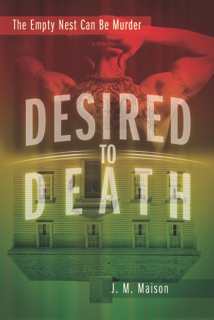
Desired to Death is a mystery featuring Maggie True, an amateur detective. This book answers the question: “What am I going to do with the rest of my life?” After her daughter leaves for college, and former-SAHM Maggie True is faced with an empty nest, she doesn’t know what to do with herself. Never in her wildest dreams does small-town Maggie imagine the answer will come in the form of a middle-of-the-night call for help from an estranged friend who has just been arrested for murder. But it does, and as Maggie solves the mystery of who killed A.J. Traverso, a sexy kickboxing instructor, she also solves the mystery of what to do for the rest of her life.

DesiredtoDeath

Is your recent book part of a series?

Yes, I’m already busy on the second book featuring Maggie True, The Empty Nest Can be Murder mystery series.

If you were to advertise your book on a bumper sticker, what would it say?

The Empty Nest Can Be Murder

What else have you written?

I just finished a manuscript, historical time travel. I also have one adult novel and four middle grade novels “in the drawer.” I’ve had short romantic fiction published in Woman’s World magazine, creative nonfiction published in a variety of regional publications, and I’m a long-time freelance technical and business writer and editor—a glamorous way of saying I’ve written a lot of dull computer manuals and annual reports.

Please, tell us about your experiences with social media. What are your favorite and least-favorite parts of it?

I love social media. I started blogging two years ago (and love it), and it helped me kick all my writing into high gear. Tweeting is a big part of my daily life, and The Writer magazine named my twitter handle (@wordsxo) as a top Twitter feed to watch in their July 2012 issue. It’s been wonderful way to meet other writers—like Lisette—who are an important support system to me everyday in my rather solitary writing world. The downside of social media is the time it takes away from writing, and it does tend to get fairly addictive for me, and I have trouble breaking away from it to focus on writing.

If you were to write a non-fiction book, what might it be about?

First, I love, absolutely love, good non-fiction. I’ve thought of writing a couple of books. My top choice would probably be a cookbook because I love cooking and it would allow me to merge two of the things I enjoy. My second choice would probably be something about houses and homes because I’m fascinated with the concept of home and how we define it. Perhaps not coincidentally, most of my novels have had the theme of home in them as well.

Do you feel your latest book is your personal favorite or one of your previous novels?

I love this novel and the series because it is near and dear to my heart, but I have to say the novel I am currently working on is my personal favorite. It’s an historical time travel novel, and although it has no connection to my personal life (like Desired to Death does) – this current WIP’s two main characters are just 19 years old – it is a really personally significant project in many unexpected ways. I think as I grow as a writer, I am finding more and more connections to my fictional characters in more subtle ways. I love that.

How would you define your style of writing?

Spare. Approachable. And very introspective, and by that I mean my characters often spend a lot of time “in their heads.”

Do you miss spending time with your characters when you finish writing them?

Very much. First, I don’t know if this is weird, but I always cry when I’m writing the end of my novels. I don’t’ know if it’s the sadness of saying good-bye or not, but it very much feels like that. Also, when I finished the novel I wrote before this one (women’s fiction, in the drawer for now), I spent a good week seeing my main characters everywhere I went. As I write, it’s like I’m watching a movie in my mind, and I can visualize my characters going about their daily life. I also write about small towns in Maine (like I live in) so I fully expect to see my characters at the grocery store. With this current novel (Desired to Death), since it’s a series, I will see the main characters many more times, so I don’t need to miss them. However, I will miss the sexy victim in this book—A.J. Traverso—he kind of got under my skin.

Trains, planes, automobiles, or boats?

I traveled a lot as a child—a lot. I was born in France and by the time I left for college I’d lived in Belize, Kenya, and Uganda, as well as in three states. It was a bit of a struggle as a child to move so much, and I really didn’t enjoy saying good-bye so often, but now as an adult I can look back and really appreciate my varied geographic life. So to answer this question… I’ve traveled extensively by all of the above!

If you could have one skill that you don’t currently have, what would it be?

I would love to be able to draw and/or paint. I have zero (and I mean zero – stick figures challenge me) visual art talent, and it’s something I’ve always felt sad about.

What makes you angry?

What makes me angriest is when people are disrespectful, mean spirited, rude, or cruel (intentionally or not), especially when it involves people different than themselves. It frustrates me that people can’t be kind and good hearted and get along, and I often think of Maya Angelou’s poem, Human Family, especially the words: “We are more alike, my friends,/than we are unalike.”

Have you ever walked out of a movie? If so, what was it?

Funny story, actually. My husband (then boyfriend) and I went to see The Shining when we were college students. And I was TERRIFIED. I got up about ten minutes into the movie (first scary scene), and I thought my husband heard me say I was leaving, but he didn’t. I went outside and about five minutes later he came out, saying, “Where were you?” I guess he was so engrossed in the movie that he didn’t even notice I was leaving. I think it’s the only movie I’ve ever walked out on!

What’s your biggest pet peeve?

People at the grocery store who are so impatient that they reach around me to reach an item on the shelf.  In general, I have zero patience for impatient people, LOL.

What are three things you think we can all do to make the world a better place?

This ties into my earlier answers (about what makes me angry and my pet peeves). I think if everyone just slowed down and took the time to be kind to one another, I think the world would be a better place. A few years ago, I threatened my family that I was going to start a “just say hi” campaign because I think we all get so busy and focused on our own little worlds that we lose sight of the fact that there is a big world out there full of lots of “quiet lives of desperation,” as Thoreau said. And we all need to just take the time to be good to one another. So three things? 1-Be kind. 2-Be patient. 3-Be tolerant.

CONNECT WITH JULIA

Amazon

J.M. Maison Blog

Website

Twitter (J.M. Maison)

Twitter (Julia Munroe Martin)

Facebook (J. M. Maison)


CHAT WITH SIMON HAY

SimonHay

Simon is a healer, a medical intuitive and a medium. Simon travels throughout Australia, and the world, undertaking healings and connecting people to spirit. Consistently, amazing health responses occur during healings, and he’s well respected in the field of energy healing.

What is your latest book?

The Disciple is a biography about Jesus’ birth, childhood and death. After a life-altering encounter with spirit, I revisit and remember my past life as the disciple, Judas.

My life, my family, the processes of communicating with spirit and the roles of spirit guides are interspersed amongst the stories from Jesus and His family.

Disciple

I hear you have some very exciting news! Can you share it with us?

I glimpsed my abs this morning! Sadly, they disappeared by evening. 🙂

Is your recent book part of a series?

As I continue to remember more about Judas’ life, there’s the option to write further about Jesus and Judas, but my clients and supporters want me to write about healing and working with spirit. I’ve already started that book.

If you were to advertise your book on a bumper sticker, what would it say?

Honk if you love Judas. 😉

What do you think some of the greatest misconceptions about indie authors are?

I think if you look for misconceptions you’ll find them. The indie authors I interact with are professional and committed to being successful. Successful people work hard and smart. Whether indie or traditionally published, success always follows perseverance and passion.

How often do your characters surprise you by doing or saying something totally unexpected?

My characters are ghosts. They always surprise me. The backstory that didn’t make it into the book is filled with quirky, heart stopping and emotional encounters with spirit: Ghost pets jump onto my bed, flop at my feet and follow me around. Ghost people wake me at night and watch me on the toilet. It get’s a little crazy. 🙂

Some writers edit excessively as they write; others wait until a novel is finished to do the bulk of the editing. How about you?

I’m an excessive editor. Since I’m always writing about my life, I’m able to jump from chapter to chapter and organize the scenes in an eclectic fashion. I’m not creating characters or worlds, I’m describing them, and this allows some flexibility. I’m a mood writer, but as my work schedule increases I have to be more disciplined … or eat tim tams. Bye, bye, baby abs. 🙂

Do you have any advice for first-time authors?

Don’t give up! Everyone has a story to tell. The secret is to tell that story in a unique way.

Can you tell us about your road to publication?

I started the book in 2001 and rewrote the narrative around the material from spirit more than twenty times. Over the last 5 years I queried agents 110+ times. Two agents read partials, but declined representation. Surprisingly, I now have a friendship with an agent and a place to stay when I visit the USA.

I paid three editors and after every edit my writing improved. After rewrites, rejections and time, I rewrote and edited again. In between, I wrote articles for my blog, other blogs, and short stories. I believed in my story and writing, so I self-published.

Please, tell us about your experiences with social media. What are your favorite and least favorite parts of it?

The writing community online is more spiritual by behavior than the field I work in. Social media is a never-ending rave party, an interactive social experiment exploring and highlighting human behavior. The world is smaller than we think, and online, we’re noticed and remembered. Don’t be an ass.

My favorite part is meeting beautiful people; my least favorite, the time drain.

How much research was involved in writing your book? How did you go about it?

I sat down, closed my eyes and became someone else. Exorcism? I think I’m okay. 🙂 I didn’t do any research until after the book was finished. I didn’t want my experiences with spirit to be influenced by something I’d researched.

Have you received reactions/feedback to your work that has surprised you? In what way?

The story is contrary to Christian beliefs and I’d expected some negative feedback, but I’ve received emails from Catholic readers praising my courage and integrity. For most of their lives they’d been disheartened and confused by the stories in the bible. They wanted Jesus and family to be regular. They found the dysfunctional aspects of Jesus’ family liberating.

Spirit advised, during the events in the book, that the book would emit a frequency. Some readers have experienced healing responses while reading and have had encounters with spirit. One reader, while reading, looked at her arm and Judas’s scars were visible. She also heard my voice, not her own, reading in her mind.

Were you “born to write” or did you discover your passion for writing later in life?

I was born to dig holes! If I sell as many books as shovels of dirt I’ve moved, Oprah will call. I wrote a poem when I was teen that I now know describes my death in my last past life. I’ve noted that throughout my life whenever I’ve dabbled at writing a dog dies. Usually, my heart gets broken, I write, and I have to euthanize a dog. My dogs are happiest when I’m digging holes.

“Max! Here boy! It’s okay, it’s just an interview.”

Do you have any advice to a new author if they asked you whether to pursue the traditional route to publishing or to start out as an independent writer?

Go independent. In time agents will seek authors out and querying will be obsolete. The dream is to have an agent and sign with a big publisher; the reality is that only 3% of authors make a living. Take control of that. Write well, find an editor and cover artist, and build an online community.

Find and follow mentors: traditionally published YA author, Maggie Stiefvater is a writing and community builder mentor, literary agent, Janet Reid, and author, Rachel Thompson, are writing and branding mentors, Melissa Foster is a writing and social media mentor. There are many more. Online, be yourself and do more for others. Being connected online isn’t the same as an in-person friendship. Be respectful. No one owes us anything.

Having our work out there to be judged by strangers is often daunting for writers. Do you have any tips on handling a negative review?

Bourbon! I haven’t had a negative review yet, but I know that I will get one. In my opinion, people who write scathing reviews are miserable bastards: we couldn’t make them happy if we turned the pages for them and told them they’re sexier than Jason Bourne.

The best thing authors can do to prevent this is to write well. Don’t publish too soon. Not everyone likes me. I’m cool with that. Writing is the same.

Surround yourself with supportive people and watch and learn from successful writers/people.

Many authors do giveaways; have you found them a successful way to promote your book?

I’ve given away the paperback, but I don’t believe it’s created any sales. I haven’t had free days for the e-book yet. I’m considering it … okay, here it is: I get that we need to create visibility and giving away the e-book will potentially shift my Amazon ranking and then I’ll come up in readers searches and sell more books (gasp), but I’d rather scratch the tattoo off my chest with a wire brush while juicing lemons … I’m thinking about it.

We all know the old saying; you can’t judge a book by its cover. This is true. However, how much importance do you place on your book cover design?

My book’s genre is mind body spirit; my cover is not. This was intentional. My initial market was the inspirational/spiritual market, but Jesus’ story doesn’t fit the beliefs of that community. The story is about the truth, not belief. Some people have told me they won’t buy the book because the cover is too confronting, but I wanted to do something original.

The hands on the cover are mine. I took the photo and told the artist, Robert Baird, what I wanted. The image is representative of, look what I’ve done.

Have you ever wished that you could bring a character to life? If so, which one and why?

Dean Konntz’s, Odd Thomas. He’s psychic, talks to Elvis and sees bodachs, shadowy spirit creatures who appear only in times of death and disaster. So do I. 🙂

What do you know now that you wish you’d known five years ago?

Sports boxers prevent chafe! Mother’s, don’t let your sons grow up to be cowboys … unless you’ve raised boxer-men.

Where do you live now? If you had to move to another city/state/country, where might that be?

I live in Nth Brisbane, QLD, Australia and I love it, but if I had to move I’d return to New Zealand. My dad’s house is on the beach and the fishing is amazing. I’d like to live on farmland, mountains and forest behind me, with ocean views.

If you could be invisible for a day, what would you do?

Follow Pink around. She’s an angel. 🙂

What’s the coolest surprise you’ve ever had?

My family gave me a dog for father’s day. My previous dog had died tragically and I didn’t want to go through that again, but I’ve always had dogs in my life. I cried.

If you could have one skill that you don’t currently have, what would it be?

The power of invisibility.

What might we be surprised to know about you?

I did karate for twelve years, boxed, kick boxed, and did some jujitsu. Now, I’m only dangerous to myself.:) I think I can … oops! No I can’t.

What makes you angry?

Child protection. Here, in Australia, legal and social systems are failing. The perpetrators of abuse are protected and the victims overlooked. 40% of my clients are victims of child abuse and I’d estimate that 99% of the abusers got away with it. Systems of law are political and strategized and truth and justice have little merit. If we can’t protect our children, future generations will experience abuse in epidemic proportions.

If you could add a room onto your current home, what would you put in it?

Pink.

What’s your favorite film of all times? Favorite book?

Man on Fire, starring Denzel Washington and the Bourne trilogy with Matt Damon. I cry every time I watch Man on Fire.

I have favorite books from different parts of my life, but I love Dean Koontz’s Odd Thomas series and anything by YA author Brenna Yovanoff.

What’s your biggest pet peeve?

Disrespectful teens and people who believe they’re entitled to wealth and security without working for it.

What are three things you think we can all do to make the world a better place?

Be responsible, be forgiving and be kind.

Lisette and community, thanks for having me here. Much love, Simon 🙂

CONNECT WITH SIMON

Website

Twitter

Facebook

Goodreads


CHAT WITH DEB NAM KRANE

-1

Deborah Nam-Krane was born in New York, raised in Cambridge and educated in Boston. You’re forgiven for assuming she’s prejudiced toward anything city or urban. She’s been writing in one way or another since she was eight years old (and telling stories well before that).

She first met some of the characters in The New Pioneers series when she was thirteen years old, but it took two decades—and a couple of other characters—to get the story just right.

Time to chat with Deb!

What is your latest book?

My latest and first book is The Smartest Girl in the Room. It’s about Emily: nineteen, very driven and trying to graduate from college immediately. As crazy as that looks, she actually has a very good reason for what she’s doing. Emily doesn’t have time for romance, but it falls into her lap with Mitch and they end up on the perfect all-night date in Boston. Unfortunately, after that Mitch makes a really stupid decision that breaks her heart.

Emily’s still reeling from that when her mother kicks her out, and she ends up with someone who seems safe—but appearances are not what they seem, especially when you’re vulnerable. When she realizes just how off her judgment was she becomes very protective and very controlling. That’s certainly going to be a complication when Mitch comes back for a second chance with her, but she’s also going to find that not everyone is going to thank her for taking charge.

I’m calling this both Romance and Chick-Lit. As much as the story is about Emily and Mitch getting together, it’s also about Emily’s relationships with her friends Zainab, Jessie and Miranda. I’m also calling it New Adult because the characters are nineteen to twenty-six. Hopefully everyone else will just call it a good story!

DebSmartestGirl

Is your recent book part of a series?

Yes, it’s the kick off book for The New Pioneers series. All of the characters, in their own way, are driven by episodes from their past and we spend some time looking back, but it’s also about dreaming of a better future and moving forward.

Above all, this is an American story— newer and older Americans. I’m the daughter and great-granddaughter of immigrants, so that’s definitely a perspective I’m bringing to the table, but my other ancestors were here for hundreds of years before, and some thousands of years before that. America absolutely benefits from the constant infusion of new people, ambitions and ideas. But new ideas can also come from the people already here, and in my opinion it’s the interaction of old and new that creates something really interesting. That’s America, and that’s part of what I tried to imbue into these stories.

Some writers edit excessively as they write; others wait until a novel is finished to do the bulk of the editing. How about you?

I write out the entire first draft before I go in and make any major edits. I need to power through when I write so I can make sure I get it all out the way I want it. Once I’ve hit everything I go back and make my changes. It’s usually adding in a bunch of things, walking away for a little bit, then taking out even more. (Isn’t that the way everybody edits?)

Please, tell us about your experiences with social media. What are your favorite and least-favorite parts of it?

I was skeptical about social media a couple of years ago and didn’t understand why all of the adults were rushing to use something my young teenager was using. But when I joined and started reconnecting with people I hadn’t seen in decades I immediately understood the attraction. It’s also been a great way to meet people with similar interests, and I don’t just mean writers. On top of that, I’ve been able to connect with journalists and media outlets I wouldn’t have known about otherwise. Considering how much of my story has been inspired by news stories, that’s a big deal.

Social media and social networks are great marketing tools if we’re trying to sell something, but we have to use them for public relations, not advertising. PR is the long game, but it’s fun! It’s your opportunity to craft the public image you want, as opposed to having something foisted on you. And it’s free (basically).

What I have tried to do through the various networks I’m on is share items that highlight my interests in education, history, politics, art, publishing, technology and social justice (among other things). What I’m hoping I’ve done is convince people that I’m someone who thinks before she speaks. Does that mean that everyone would or should rush to buy something from me? Of course not, but hopefully it makes people interested in what I have to say.

I’ve found a great group of people to follow and share with (although I’m always looking for more) but what worries me is all of the filtering these sites use. It’s worst on Facebook; I’m guessing I see about a third of my feed on a regular basis, and not because of any changes I’ve made. But Twitter is also offering the ability to “tailor” what you see. I don’t like that at all. It’s really easy to get caught up in your own narcissistic bubble, and that’s exactly the opposite of what we want as writers— or people.

We all know the old saying; you can’t judge a book by its cover. This is true. However, how much importance do you place on your book cover design?

A lot. Most of us aren’t selling our book at a high price point (anywhere from free to $4.99) so in a way these are like the impulse buys people make at the bookstore register. Hopefully the final decision is being made because of the excerpt, but I think the cover is the first thing people use to decide whether to read the excerpt. Get the best cover you can afford, and you might be surprised at what you can get even if you think you can’t afford anything.

Every day brings forth new changes and shifts in the world of publishing. Any predictions about the future?

I think the analysts and bloggers are right: Barnes and Noble as we know it won’t be around in another three years. And in a way that’s crazy, because the ones near me are always busy. (So were the Borders stores.) But the superstores haven’t figured out a way to keep up with the changing marketplace. And Barnes and Noble is shooting itself in the foot by making things so inexpensive online but so much more expensive in the stores.

Having said that, people clearly have a desire to go into a bookstore and browse. I think we’re going to see a return to smaller bookstores, and they’re probably going to be attached to something else. But it’s going to be a while before they come back to the level that we had them a decade ago.

In the meantime (and this is admittedly more of a wish than a prediction) I think more people are going to come to libraries to get their browsing “fill”, and I think libraries are going to start offering more services for the reader who wants more of an electronic experience. We’re already seeing that. But everyone would do well to remember that many if not most people still want the tactile, skin-on-page experience and shouldn’t plan on converting everything over to e-readers.

Do you miss spending time with your characters when you finish writing them?

Absolutely! These characters lived in my head so long that I really didn’t want to stop writing them, and that was after going through four books with them. I haven’t been able to stop thinking about them. I’ve written a couple of short stories about them, some of which will help my readers bridge the gaps between the novels, and some of which were just ways for me to keep “talking” to them.

A lot of authors are frustrated by readers who don’t understand how important reviews are? What would you say to a reader who doesn’t think his or her review matters?

I reviewed on Amazon for over ten years and I review quite a bit on my writer’s blog, so I might be the wrong person to answer this question, but here I go: yes, reviews are very important, especially if you’re primarily selling on Amazon. Reviews and sales numbers are used to rank you, but they’re also used to make your work more visible. Sales matter more—as another writer put it, the more you sell, the more you sell—but reviews matter a lot. Please don’t ask me to explain the mysterious algorithm Amazon uses, because no one has figured that out.

A few more things: first, as a reviewer, I always tried to be as detailed as possible when I was reviewing. I wouldn’t expect that from any reader reviewing my work, but I would hope that especially a negative review (one or two stars) would get more of an explanation than a positive review (four or five). If you didn’t like it or thought it failed, please explain why. Believe it or not, many writers will appreciate that. I once took a point off of a review because of a historical inaccuracy. The author wrote to me that night to thank me for pointing it out; now she could make the correction before it got sent off for the Kindle version. You’re not obligated to do anything when you write a review except give your opinion, but it helps make the whole process better.

The second thing would be to write a genuine review giving your honest opinion. By “genuine” I mean you have actually read the entire book. I have cringed looking through my social media feeds and see authors brag about good reviews they have obviously traded for by writing reviews for other authors. Just…don’t. It makes us all look bad, and Amazon has started cracking down on writers reviewing other writers (and they’ve gone too far in my opinion).

There’s a lot we can do to market ourselves, and some of that is worth spending money on (blog tours, newsletter advertising, even social media ads). But reviews are something we shouldn’t pay for. Ultimately we have to let our writing speak for itself. The only surefire way to get good reviews is to write something good. Have people read your work before you release it to get their feedback and PLEASE make sure you get an editor: if you’re going to spend nothing else, spend some money on that. It’s one thing to get a bad review because someone doesn’t like a plot point or character; it’s another thing to get a bad review for something completely avoidable, like typos or grammar.

Have you ever started out to write one book and ended up with something completely different?

My second book was a story that lived with me for a long time. I finished my first book knowing exactly how I was going to write it and then did a 180. I didn’t change any of the action, but the emotional perspective of the characters shifted completely. And then the story became charged in a way I’m still trying to recover from. I always knew it would reverberate through the next two books, but it ended up doing so in a much different way.

What do you know now that you wish you’d known five years ago?

How doable indie publishing was going to be. My big concerns were editorial services and marketing. It wasn’t until the last year or so that I understood how little you could expect from a traditional house as far as marketing, and that’s for everyone except the biggest names. And I had no idea that I’d be able to find editors and designers who could do good work that I could afford.

Where do you live now? If you had to move to another city/state/country, where might that be?

I’ve been in Cambridge and Boston since I was two, so I (finally) consider myself a Bostonian. Boston is also a huge part of my story, and sometimes I think of it as another character. However, I was born in New York City and I still have family and friends there, so part of me feels at home there. If I were to move anywhere, it would be there. Not Manhattan though—definitely Queens.

What might we be surprised to know about you?

Um, other than the fact that I write romance? I guess the fact that I’m a lifelong Trekkie. If you name the Original Series episode, I can tell you the plot and season. I take my Trek pretty seriously and I’m willing to discuss it for hours at a time. Oh yeah: hands off Mister Spock, he’s mine.

What’s your favorite film of all times? Favorite book?

How do you choose just one?

The first film that comes to mind is Casablanca because Humphrey Bogart and Ingrid Bergman are in the dictionary next to the word “chemistry,” but Citizen Kane is also one of the best films I have ever seen. And I love James Bond like a drug. More modern films? I love light comedies: The Man Who Knew Too Little has made me cry from laughing so hard, and I am not proud that I paid money to see Malibu’s Most Wanted and have sought it out again on television.

I am even more all over the place when it comes to books. I loved The Scarlet Letter, A Tale of Two Cities, Wuthering Heights, Jane Eyre, Washington Square, Anna Karenina and The Brothers Karamazov. Anything that makes me feel connected to something, whether it’s because it explains a historical event or phenomenon really well or it draws me into the story. The People of the Book was amazing, as was Suite Francaise by Irene Nemirovsky. But I’m a sucker for good non-fiction too. Galileo’s Muse and World 3.0 are some of my most recent favorites.

Do you have any guilty pleasures?

Daytime television aka Soap Operas. I loved those when I was a kid because they spent a lot of time drawing out the story and the characters, and the payoff could be huge. That industry has gone through a lot of changes, and not all of them for the better. A lot of the writers have forgotten that the best stories are character driven. You also have to find that just-right balance between too many new characters and not enough. I’d say out of all of the ones still on the air Days Of Our Lives is the one getting it most consistently right.

What are three things you think we can all do to make the world a better place?

+Start small: make the Internet a better place. I have a feeling the original concept the good people at the Department of Defense had for this thing wasn’t so we could use it as a shopping mall or to pass pictures of naked celebrities around. Let’s connect to people in different parts of the world. Let’s use this amazing tool to break barriers, not enforce them. And let’s tap into all of the information out there about science and technology that doesn’t usually get reported.

+Take a deep breath and think before we speak, write or act, and let’s not try to overreact in general. (And then once we’ve mastered that we can pass on the message to the mainstream media…)

+Read more fiction because it can help you be kind and empathetic. Honestly, that’s one of the most awe-inspiring things about a good piece of writing— it helps you understand someone who isn’t like you. Human beings are endowed with an amazing capacity for imagination; it really isn’t that hard to put ourselves in someone else’s shoes before we judge them.

Care to brag about your family?

Doesn’t every proud mom? 😉 I have been married for 20 years this month. I met my husband in college/law school and we have four children together: a nineteen-year-old daughter, a thirteen-year-old daughter and two-eight year-old sons (yep, twins!). They’re all kind of brilliant on their own and I’ve been homeschooling them for about three years. I’m pretty tickled by all of their diverse interests: a lot of science, inventing, comic books, writing, math, languages and politics. It’s not something I can take credit for, but I do a lot of bragging anyway 🙂

CONNECT WITH DEB

Twitter

Written by Deb (Blog)

Facebook Author Page

LinkedIn

Pinterest

Google+

Amazon

CHAT WITH CHRISTA POLKINHORN

ChristaP

Christa Polkinhorn is a writer and translator who lives and works in California and part of the year in her native Switzerland. When she doesn’t write, she reads, travels, gets together with friends, enjoys a glass of wine or a piece of dark chocolate. 

Time to chat with Christa!

What is your latest book?

Emilia, a novel dealing with a family of artists and their struggles with love and creativity. It takes place in the south of Switzerland, in Paris, and Peru.

child drawing and writing

Is your recent book part of a series?

Yes, it is part of a trilogy, at least so far. The former two novels are An Uncommon Family and Love of A Stonemason.

AUF Cover sm

zen love background

If you were to advertise your book on a bumper sticker, what would it say?

Wine, Love, and Espresso!

What do you think some of the greatest misconceptions about indie authors are?

That independent authors are lazy and want to take the easy way out. If you take your writing seriously, it is a lot of very hard work. Writing a novel is only the first step. Then comes the editing and proofreading. You have to find a professional editor—the author is too close to the work to see it clearly and to catch all those bugs. You have to do the formatting for print and ebooks and the cover design, unless you can afford to hire someone or have some loyal friends with designing and Photoshop skills. And then comes the uploading and tweaking and back and forth. But, of course, it is also a lot of fun and very satisfying to be in control of the whole process.

What part of writing a novel do you enjoy the most? The least?

I love writing the first draft when I have a pretty good feeling for the overall structure and content of the book. Sometimes, it is frustrating but there are these “aha”-moments when a chapter is done and I feel: YES! The least enjoyable part is the very last few edit passes I do myself before publishing the book. I have some wonderful editors, proofreaders, and beta readers, but in spite of their excellent work, I still end up finding a few typos that everybody, including myself, overlooked and I keep tweaking the style and in the very end, I am so exhausted, I can’t stand to look at my work anymore.

Some writers edit excessively as they write; others wait until a novel is finished to do the bulk of the editing. How about you?

I edit as I write, sometimes after I finish a few paragraph and always after I finish a chapter. The extensive and major editing, however, comes after I finish my first draft.

What do you like best about the books you read? What do you like least?

I am an avid reader and enjoy a wide variety of books, from the more academic or experimental to a good old-fashioned love story or mystery.  I always look forward to reading that first page and I hate reading the last one of a good book, because, now it’s finished and I don’t want it to end.

How much research was involved in writing your book? How did you go about it?

Since all my books take place in several countries, I sometimes need to go back to familiarize myself again with the different locals. These are places I have either lived in or visited but in order to write about them, I have to pay close attention to the many details. I want to give my reader a vivid impression of the environment so they can experience the story through the senses of the characters.  Since I love to travel, that part of the research is very enjoyable. In Emilia, there is a chapter about Paris. I was in Paris many years ago, but I can’t remember a lot of things. Since it wasn’t possible for me to travel to Paris before finishing the novel, I had to use pictures, videos, and travel books. Fortunately, a close friend of mine lived many years in Paris, so I was able to have her read the chapter and make corrections.

Have you received reactions/feedback to your work that has surprised you? In what way?

I have received both positive and negative reviews of my books; fortunately, the positive ones far outweigh the critical ones. I am always surprised and deeply grateful when someone posts a glowing review or even sends me a personal email, telling me how much he or she enjoyed the book and that it touched him or her on a deeper level. That is the most wonderful experience.  I also read the negative ones and I can always learn from them, as long as the criticism is constructive. If someone merely says they hated the book and couldn’t understand how anybody else could like it, without even giving a valid reason, then I just ignore that review. You have to grow a thick skin in this business.

Do you write anything besides novels? Care to share?

I began my writing career as a poet. I wrote poetry and some were published in literary magazines. I also had a small volume of poems, Path of Fire, published by a poetry press, called Finishing Line Press.  I feel writing poems can teach you how to express feelings and thoughts in a very compressed, succinct way, with images rather than with descriptions. I haven’t written any poems for quite a while, since I have been focusing all my energy on my novels.

Do you miss spending time with your characters when you finish writing them?

Oh, yes. The reason my first novel turned into a series was because I couldn’t let go of my characters. Now, I decided to write something completely different. So I sent my characters on an extended vacation, and I already miss them.

Would you like to write a short poem for us?

Why not? Here is a short one from my collection Path of Fire:

Dream

Sometimes I too

want my name

on the title page of someone’s life,

want to bask in the

warmth of a smile,

burst like a dew-soaked

seed in the sun.


It is true that happiness

hangs by the thread of a dream?

Only in dreams

do I fall into the

dark well of your eyes.


When the alarm shrieks

I wake, holding

a naked heart

in my fist.

Where do you live now? If you had to move to another city/state/country, where might that be?

I live in Southern California and normally a few months out of the year in a small town near Zurich, Switzerland. As much as I like California, I also love the East Coast of the United States. When I first came to this country, I lived in New York City as well as in Vermont. Last year, a friend of mine and I took a trip through Maine and I fell in love with that state. If it only weren’t so darn cold in winter there. In Europe, I would love to live in the Ticino, the southern canton of Switzerland, or somewhere in Tuscany, in Florence or Siena for instance.

What’s the best gift you’ve ever received?

Life! And we often take it for granted until we lose someone close to us or experience the closeness of death ourselves. I try to be grateful for something in my life every day.

What are the most important traits you look for in a friend?

Tolerance and a sense of humor.

Care to brag about your family?

I was lucky to grow up in a wonderful family. Like Emilia in my novel, I was born late into my parents’ life. I had a sister who was eighteen years older than me. My parents and my sister unfortunately passed away. My mother, however, lived to the ripe old age of 102 and she was able to live at home until the few last months of her life.

What was your favorite year of school? Why?

I loved first grade. Everything was new and exciting. I was a nerd in school. I always did my homework first thing after I got home. It wasn’t work for me; it was fun.

What might we be surprised to know about you?

I come across as confident to most people. In reality, however, I am very shy.

What makes you angry?

Politicians or people in general, who are mean-spirited, cold, greedy, selfish, and look down on the poor and less fortunate members of society.

What music soothes your soul?

I love classical music and the Oldies but Goodies of the sixties and seventies.

Website

Blog

Facebook Author Page

Facebook

Twitter

Google+

Goodreads

CHAT WITH STACY JUBA

Butch Adams

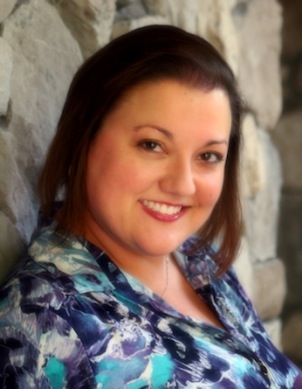
Stacy Juba has written about reality TV contestants targeted by a killer, an obit writer investigating a cold case, teen psychics who control minds, twin high school hockey stars battling on the ice, and teddy bears learning to raise the U.S. flag: she pursues whatever story ideas won’t leave her alone. Stacy’s titles include the adult mystery novels Sink or Swim and Twenty-Five Years Ago Today, the children’s picture books The Flag Keeper and the Teddy Bear Town Children’s Bundle (Three Complete Picture Books), and the young adult novels Face-Off and Dark Before Dawn. She is also the editor of the essay anthology 25 Years in the Rearview Mirror: 52 Authors Look Back.

Time to chat with Stacy!

What is your latest book?

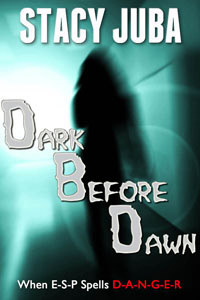
My latest book is the Audible edition of Dark Before Dawn, a paranormal thriller about a teen psychic who gets involved with a mysterious fortuneteller in a Maine beach town. Cassandra Morris is the narrator. I’m excited to have worked with Cassandra on this project as she has narrated over 80 audiobooks and received multiple awards from Audiofile Magazine and Publisher’s Weekly. Among her credits, Cassandra has narrated books in the Gossip Girl, Pretty Little Liars, Disney Fairies, and Magic School Bus series. She did a fantastic job performing Dark Before Dawn.

-3

I hear you have some very exciting news! Can you share it with us?

Over St. Patrick’s Day Weekend, my adult mystery/romantic suspense novel Twenty-Five Years Ago was ranked as the #5 book on Nook and was included among the top two bestselling mysteries on Nook and the top five romances on Nook.  It also made the Amazon Kindle Top 100 Paid list for the first time, in the Top 30, and was #6 on the GalleyCat list of Self-Published Barnes & Noble Bestsellers for the week. I worked really hard on a marketing and advertising campaign and was thrilled to have such wonderful preliminary results.

What else have you written?

In addition to the above books, I’ve written the adult reality-TV themed mystery novel Sink or Swim, the young adult family hockey drama Face-Off, the picture book The Flag Keeper, and the Teddy Bear Town Children’s Bundle. I’ve also written a short murder mystery titled Laundry Day, which is a free e-book download and a free 23-minute audiobook narrated by award-winning narrator Nicole Poole. In addition, I edited 25 Years in the Rearview Mirror: 52 Authors Look Back, an essay anthology inspired by Twenty-Five Years Ago Today. That’s currently a free download at many retailers. I’m finishing up a romantic comedy.

What part of writing a novel do you enjoy the most? The least?

I enjoy writing the beginning the most as it’s exciting to start getting to know the characters and to embark on the process of shaping the plot. Writing the middle is the toughest as it can be hard to keep the pacing from lagging – and the middle is long! Sometimes the ending seems like the light at the end of a very long tunnel.

Some writers edit excessively as they write; others wait until a novel is finished to do the bulk of the editing. How about you?

I edit as I go along. I have my critique partners read individual chapters as I write the first draft and I’ll make changes based upon their feedback. Once in a while, I’ll read over my draft and mark it up. I also do editing at the end, going through the manuscript with different-colored highlighters to hone in on areas such as dialogue, description, internal narrative, conflict, and pacing, making sure everything is balanced. I also have beta readers provide feedback on the entire manuscript and then do one more edit

Can you tell us about your road to publication?

I had my first book, Face-Off, published when I was 18. I wrote the book in high school study halls and entered it in a contest for teenage writers. Despite that first success, it did not help get my foot in the door for subsequent novels. I went through a great deal of rejection for several years. It was a rollercoaster ride, with lots of form rejections, but I also had an agent for a couple years, received the William F. Deeck Malice Domestic Grant awarded at the annual Malice Domestic Convention for mystery authors and readers, and had many close calls with publishers and in contests. In 2009, I sold the paperback version of Twenty-Five Years Ago Today to a small press, Mainly Murder Press, and that was when I launched my website. I eventually started self-publishing some of my books, through CreateSpace, Kindle Direct Publishing, Pub-It, and Smashwords.

Please, tell us about your experiences with social media. What are your favorite and least-favorite parts of it?

I’m an avid Twitter user and consider Twitter an important part of my marketing plan. I’ve connected with so many authors, book bloggers, reviewers, and readers over Twitter. I also use Facebook, Pinterest and Goodreads, though not to the same extent. I think social networking is important for authors, however the drawback is that it’s time-consuming. I’d like to be more interactive on Pinterest and Goodreads, but I have time constraints. My pet peeve about social networking in general is children using sites such as Facebook and Instagram – I get so frustrated when I see children with hundreds or thousands of followers and their parents have no idea what they’re posting or who they’re connecting with on-line.

How much research was involved in writing your book? How did you go about it?

I did the most research for Sink or Swim as I needed to research getting a license to carry a handgun. I participated in a one-day class as an unofficial student, obtaining some hands-on experience on the firing range. I also interviewed an FBI profiler for insight into the criminal mind on that book. For Dark Before Dawn, I did a lot of reading on psychics and crystals, and I actually took an on-line class in writing about psychics. For Twenty-Five Years Ago Today, I interviewed a local police chief about what penalty the murderer might be faced with 25 years after the crime was committed. For the Flag Keeper, I asked spokesmen from the national VFW Post and national American Legion post to look it over as I wanted to make sure that all of the facts about flag etiquette were accurate. I’ve been a journalist for many years, so when I need more information on a subject, I don’t hesitate to find an expert and ask.

Were you “born to write” or did you discover your passion for writing later in life?

I was definitely born to write as I wrote my first mystery in third grade, a short story called The Curse of the White Witch. By fifth grade, I was writing a mystery series inspired by Nancy Drew. I won a few contests in elementary school and the local newspaper interviewed me about my writing accomplishments. I was very introverted and writing was a way for me to express myself.

What’s your favorite comfort food? Least favorite food?

Favorite: Spaghetti, meatballs and fresh Italian bread is my favorite comfort meal. Least favorite: yogurt. I can’t stand the taste.

What’s the coolest surprise you’ve ever had?

For my 23rd birthday, my husband (who was my boyfriend at the time) surprised me and took me to New York to see a play on Broadway. Titanic. It was a lot of fun. He knew I’d enjoy it as I had written a recent newspaper article on how the local area was affected by the sinking of the ship. I used the microfilm, much like Kris Langley in Twenty-Five Years Ago Today, and read issues of the newspaper from 1912. I enjoyed the play and we also visited the Statue of Liberty.

If you could have one skill that you don’t currently have, what would it be?

I’d love to be better at math. Much better!

What might we be surprised to know about you?

I’m very holistic. I have a vision board over my desk and I’m trained in Reiki, a form of energy healing.

What music soothes your soul?

Strangely enough, slow music doesn’t soothe me. I like very few slow songs and change the station as soon as one comes on. I like Def Leppard, Aerosmith, and Bon Jovi. I love the Rock of Ages movie soundtrack. I’m listening to Firework by Katy Perry on my computer as I type, till I get tired of it.

What’s your favorite film of all times? Favorite book?

My all-time favorite film is Return of the Jedi and my favorite book is The Outsiders by S.E. Hinton.

CONNECT WITH STACY

Website

Facebook Author Page

Twitter

Goodreads

WHEN YOU ASSUME… part 2 in the series EDITING: MORE THAN I BEFORE E.

.


“When you assume, you make an ASS of U and ME”

By Laura Daly

When you’re editing, whether it’s your own work or someone else’s, you may find there are common problems in the writing that boil down to this: assumptions being made about what readers know.

Readers don’t know what you know. They don’t have plot outlines in front of them, detailed character sketches and descriptions of scenes. With a nonfiction book, other than an index and a table of contents, they may not understand fully what the scope of your book is. They don’t know what’s coming up, what’s happened before page 1, what’s possibly going to happen in the epilogue. If they’re reading a nonfiction book—a biochemistry textbook, for instance—they don’t know that a term that comes up in chapter 2 is going to be fully defined in chapter 6, so they don’t have to worry that in chapter 2 they’re totally lost in the language. Whether you’re dealing with a work of fiction or nonfiction, you owe it to your readers to set up scenes, set up information, fill them in on what you know.

Readers, for instance, won’t know what something looks like until you describe it, which doesn’t mean you have to go into minute detail, but you do have to establish the details so that THEY MAKE SENSE. They won’t know, for instance, why the protagonist, Joe Blow (Who’s he?), got in the car (What car? Where? How? Why?) and drove to Slobville (From where?) to visit a sick friend, Thelma (Who?), who lives on the block near the abandoned factory that has the big ready-to-crumble smokestack that … Where were we? And it’s not because you’re the omniscient narrator and know all, and therefore they couldn’t possibly know what you know. I mean they don’t have the facts, Jack.

{Yeah, I know, creative writers in Iowa are waving minimalism banners right now. But, see, minimalism, or the lack of details, has to have a point. And not providing details—information, definitions, description, context—can be really annoying to readers when there isn’t a point to the writing and when the lack of details is because of a writer’s (fill in the blank) sloppiness/laziness/ignorance.)

BooksEditing

Readers don’t know about your characters, for example, their backgrounds and traits. And by characters, I’m not just thinking of fictional characters. For me, living, breathing people in works of history are characters who, even if they’re well known, need to have details established—personality traits, say, or events in early life that can be seen as influencing the person’s later decisions. A common approach taken in historical biographies these days is to assume that readers are already fully familiar with a figure’s general life facts, so there’s no need for the writer to review them. I understand that not every biography should be a multivolume work, but I wonder how helpful it is to not set facts within a context, to instead assume that readers know that context and can make their own connections.

I’ve come across this same problem in memoirs. Now, in a memoir, the reason why details aren’t given may be because the subject doesn’t want to spill the beans on everything or doesn’t quite remember the events or wants to gloss over details that are, oh, embarrassing. But a memoir should feel honest to readers, and that means details should be connected and built on, and readers’ familiarity shouldn’t be assumed. A guy can’t be describing with relish his bachelorhood and sexual exploits with numerous womenfolk in various parts of the country while on the road with his band, say, then throw in, “By the way, I got married.” To whom? When? More importantly, why? Then the wife doesn’t show up again until five chapters later, when wife number 2 comes on the scene after the divorce. Say what?

Set up details early so that later details have a context, have meaning.

This assumption problem reminds me of a pithy rebuke by Felix Unger in an episode of “The Odd Couple”:

“When you assume, you make an ASS of U and ME.”

(A friend of mine recently groused that he never agreed with Unger’s dictum: “The first part makes sense. But how does what U do make ME look bad? It’s on U.”)

Whether we agree with what Mr. Unger says or not, we can all agree that making assumptions can be very bad in writing. Don’t do it.

Oh, and don’t be an ass.

285005_250819414929166_5880600_n

Laura Daly, a freelance editor, writer, and proofreader based in Maywood, NJ, has worked on fiction and nonfiction trade books, textbooks, trade magazines, and journals. She can be reached at laurajdaly@earthlink.net.

CHAT WITH RAINE THOMAS

-1

Raine Thomas is the award-winning author of bestselling Young Adult and New Adult fiction. Known for character-driven stories that inspire the imagination, Raine recently signed with multiple award-winning producer Chase Chenowith of Back Fence Productions to bring her popular Daughters of Saraqael trilogy to the big screen. She’s a proud indie author who is living the dream. When she isn’t writing or glued to e-mail or social networking sites, Raine can usually be found vacationing with her husband and daughter on one of Florida’s beautiful beaches or crossing the border to visit with her Canadian friends and relatives.

Time to chat with Raine!

What is your latest book?

My upcoming release (date TBD) is titled For Everly. It’s a New Adult Contemporary Romance novel about a bright and determined 22-year-old college student working on her doctorate in physical therapy and a 24-year-old professional baseball player struggling to recover from an injury before his team doctors and the media catch wind of it. Everly Wallace and Cole Parker are the main characters, and they’ve been so much fun to write!

Is your recent book part of a series?

For Everly is a standalone novel. This is the first standalone I’ve written, so I’m excited about it.

What else have you written?

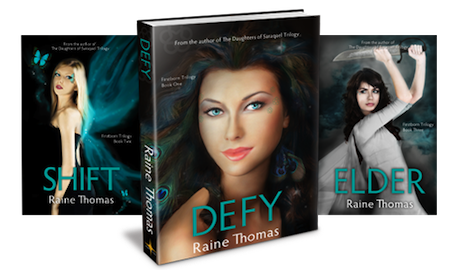
I’ve written six YA fantasy/romance novels and one short story about the Estilorian plane. The books are broken up into two trilogies, the Daughters of Saraqael Trilogy (Becoming, Central and Foretold), and the Firstborn Trilogy (Defy, Shift and Elder). The short story is free on Amazon and is called The Prophecy. My first novel, Becoming, won an award in Nashville last year at the UtopYA Awards, as did the trailer for Defy. Switching from fantasy to contemporary has been a challenge, but I’m really enjoying it.

RaineT2

What do you think some of the greatest misconceptions about indie authors are?

I think the greatest misconception is that indie authors haven’t “paid their dues.” I’m not entirely sure what that means, but I assume that people who say it are referring to the fact that indie authors haven’t gone through the same steps as traditionally published authors to get their books on the market. While that’s true, I certainly disagree that indie authors haven’t worked at least as hard as a traditionally published author in achieving their publication goals. The “dues” might be different, but we’re all paying them.

How often do your characters surprise you by doing or saying something totally unexpected?

Every single time I write a book! I start with an outline, but I never stick to it. The characters always make the story their own. In For Everly, the main characters accidentally kissed not long after they met. It was totally “unscripted” and made my day.

Do you have any advice to a new author if they asked you whether to pursue the traditional route to publishing or to start out as an independent writer?

In my experience, all new authors can benefit from attempting the traditional route to publication. While many agents won’t give custom feedback for every submission, some do. Those are the ones who offer the most priceless criticism and/or praise about your book. Smart authors will take that feedback and make productive changes to their work.

Also, writing query letters is a humbling experience. They take a certain knack and plenty of research to do effectively. By going through the process of writing and submitting queries and synopses, authors get to know their books in a new light. This is also the first stage of learning to accept rejection. By attempting the traditional route to publications, authors can develop a thicker skin.

Having our work out there to be judged by strangers is often daunting for writers. Do you have any tips on handling a negative review?

The first few times you receive negative feedback about your book, it hurts. Most authors take every review personally, so negative criticism strikes the heart. What I suggest for new authors is to go to Amazon and look up your favorite books. Then read the reviews. You’ll see that even the books you find to be the most amazing examples of literature on the planet have negative reviews. There’s no pleasing every reader, so brush off the criticism and get back to writing!

We all know the old saying; you can’t judge a book by its cover. This is true. However, how much importance do you place on your book cover design?

I place a very high level of importance on my book cover design. My very first sales were a direct result of the fact that I used my book cover as my Twitter avatar. Without knowing anything about the book, people tweeted me asking where they could buy it. Readers absolutely judge books by their covers. Invest in a spectacular designer!

Have you ever started out to write one book and ended up with something completely different?

Funny enough, this happened to me after I published Elder (Firstborn Trilogy #1) at the end of December. I had every intention of writing a futuristic YA thriller series with a male protagonist named Parish. Then I sat down to begin fleshing out the world where Parish and his love interest, Azure, lived.

I couldn’t get past some of the most basic questions. As I struggled to think things through, another story that had been dancing around in the back of my mind kept pushing itself forward. I tried to ignore it, as I hadn’t planned on writing a New Adult Contemporary Romance…but I couldn’t. Thus, For Everly will be my next release. Sorry, Parish!

RaineT1

What’s the coolest surprise you’ve ever had?

The bridal shower hosted by my cohorts in my master’s degree program. I’m very hard to surprise, and they planned it to take place during class. I was completely blown away.

What’s the best gift you’ve ever received?

My husband recently had a pendant custom-made for me in the design of the emblem from our publishing company, Iambe Books, LLC. It’s both beautiful and a symbol of all we’ve achieved in the past couple years. I know I’ll treasure it for years to come.

If you could have one skill that you don’t currently have, what would it be?

I’d love to be craftier and more artistic. I thought I would get into scrapbooking, but I did one page and that was it for me. I’d love to be able to design my own book covers and swag, but I just don’t have the ability. I marvel over people with artistic talent!

What makes you angry?

Websites that pirate books. I know how much time, work and effort goes into publishing a book, whether it’s traditionally or indie published. Sites that sell books for profit without the authors’ consent make me quite angry.

What are three things you think we can all do to make the world a better place?

Pay it forward, treat others with kindness and read lots of books!

CONNECT WITH RAINE

Twitter

Facebook

Goodreads

Pinterest

LinkedIn

Website

Blog

CHAT WITH DOROTHY DREYER

DorothyDreyer

Dorothy Dreyer has always believed in magic. She loves reading, writing, movies, take-out, chocolate, and spending time with her family and friends. Half-American and half-Filipino, Dorothy lives in Germany with her husband and two children. She also tends to sing, so keep her away from your karaoke bars.

Time to chat with Dorothy!

What is your latest book?

My Sister’s Reaper releases May 29th. It’s my debut novel and is in the genre young adult urban fantasy/paranormal.

DorothySisReaper

Here’s the blurb:

Sixteen-year-old Zadie’s first mistake was telling the boy she liked she could bring her dead sister back to life. Her second mistake was actually doing it.

When Zadie accidentally messes with the Reaper’s Rite that should have claimed her sister Mara, things go horribly wrong. Mara isn’t the same anymore—Zadie isn’t even sure she’s completely human, and to top it off, a Reaper is determined to collect Mara’s soul no matter what. Now Zadie must figure out how to defeat her sister’s Reaper, or let Mara die … this time for good.

Is your recent book part of a series?

Yes! The second book in the series comes out in May, 2014.

How often do your characters surprise you by doing or saying something totally unexpected?

It’s funny, but when I start to write dialogue, my characters suddenly become snarky or witty. I don’t know where that comes from. Maybe I’ve been suppressing something, lol.

Is it important for you to know the ending of a book before you write it? The title?

The title usually comes to me at some point between starting the book and the first few chapters. But I don’t fixate myself on the title, because I know this could easily change at the hand of my editor or publisher. The ending is important for me to know, however. I need direction. And if I don’t know where I’m going, I can’t take the first step.

Some writers edit excessively as they write; others wait until a novel is finished to do the bulk of the editing. How about you?

This is something that has changed as I’ve gotten into the business. I used to just draft a novel and push forward, full steam ahead, without looking back until I got to the end. But now that I’ve been doing revisions with my editors and I know what they look for and have learned how to better formulate my prose, I tend to revise as I go along. The downside to this is it now takes me much longer to turn out a book.

Do you have any advice for first-time authors?

Read! That’s my number one advice. Know what’s out there and learn from it. My second piece of advice is: Never give up!

Do you allow others to read your work in progress, or do you keep it a secret until you’ve finished your first draft? Can you elaborate?

I have two people I trust with my work as I go along. The first is my crit partner, who is also my pub sister and co-blogger, Elizabeth Holloway. She’s a critique ninja and I’m so glad I have her drop-kicking my chapters into shape. The second is a very dear friend of mine, Sarah Howell, who never says no to reading my work. She works for an editor and has a degree in English Lit, so I really trust her judgment.

We all know the old saying; you can’t judge a book by its cover. This is true. However, how much importance do you place on your book cover design?

I have to admit, a book cover can make or break a purchase for me. I love gorgeous, inviting covers, and having that eye candy on my book shelf is a thrill. I am very pleased with my book cover. The designer who created it makes just beautiful art.

What are the most important traits you look for in a friend?

Honesty. A sense of humor. And someone who doesn’t judge other people or see the negative side of everything.

Care to brag about your family?

What kind of mother would I be if I didn’t brag about my kids?

My  fourteen-year-old daughter is an up-and-coming talent. She’s been in theater school for almost seven years now, had a role in a musical, was cast in a Siemens ad campaign, and interned at the state opera house. Her performance group has put on shows all over Germany. She’s an amazing singer and has plans to start her own YouTube channel. She also writes on the side, which I’m pretty stoked about.

My twelve-year-old son, whose main hobby is playing video games, is an awesome guitarist. It gives me chills when he plays, and I think it’s awesome that he loves making music in this way. He wants to form a band one day and also give guitar lessons when he’s older.

If you could have one skill that you don’t currently have, what would it be?

Photography. I take blurry pictures. I don’t know why. I think my hands shake too much, lol. Or maybe I’m just cursed. I would love to be able to set up an awesome shot and make it turn out like art.

What’s your favorite film of all times?

I’m going to have to say Moulin Rouge, though many films come in close to this one. I love everything about Moulin Rouge, from the music, the comedy, and of course Ewan McGregor.

CONNECT WITH DOROTHY

Website

Facebook Author Page

Twitter

Goodreads

Barnes & Noble

Amazon.com link coming this spring!