THE THIRD BOOK IN MY NON-SERIES

THE THIRD BOOK IN MY NON-SERIES

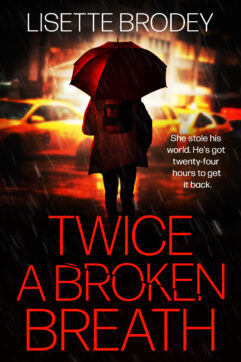
Three years ago, after having written books in many genres, it was time for me to consider a genre(s) that I’d always wanted to write but had previously overlooked: suspense / psychological dramas. I never intended to write a series, but after writing my first one, Twice a Broken Breath (TABB), I didn’t want to leave New York City … or my characters. Out of my three novels set in NYC, this one is closest to being a thriller. The entire novel is told in first-person POV by Liam Tallamore, a man who has 24 hours to comb the city, without a clue, to find his eight-year-old daughter before his wife and her lover leave the country.
A year later, staying in New York, I wrote What the Years Remember (WTYR), the story of fraternal twins, Amber and Jade, who have been apart for 23 years. Amber has lived under a different name for she fears the return of her psychopathic sister who believes she’d killed Amber when the girls were sixteen. As I began to tell this story, I realized that the characters I’d written (and loved) for TABB would be the perfect people to help Amber once she learns her sister has committed murder in California and is back in New York.

Still, I didn’t consider that I was writing a series, but companion books. I took great care to write this second suspense book (with multiple POVs) without revealing any secrets from the Twice a Broken Breath.

And now, I’m publishing the third book in my non-series (blurb at the end of this blog), Too Far Standing Still, and once again, I’m introducing new main characters while once again asking some of my established characters from TABB and WTYR to step in and help drive the story.

Each of these three New York suspense novels are very different. Each one is a stand-alone novel, and to be really precise, the genres may slightly vary (from suspense thriller to psychological suspense). As a writer, while great stories are paramount, creating complex characters is what I enjoy the most.

Out of these three books, Too Far Standing Still introduces some morally gray characters. They weren’t necessary planned this way, but this is who they revealed themselves to be.

This book is the fifteenth book I’ve written, and it wouldn’t surprise me if I stick around New York City for a future novel. We shall see.

Here’s the blurb:

How far would you go to realize your dreams?

Tilly Henley was raised in a life of privilege. The daughter of prominent, wealthy New Yorkers, she wants for little. In her late twenties, she marries attorney Jim McNaughton, and the two of them happily plan to start a family. But, for the first time in her life, Tilly learns that being born into money doesn’t guarantee you get everything you want. Far from it. Unable to conceive, and now, after years of failed IVF treatments, her dream of motherhood is slipping away—and so is her marriage.

Complicating matters, Tilly and Jim also covet the $50 million trust her grandfather left for his great-grandchildren. Unfortunately, Tilly’s father, who controls the money, has his reasons for wanting the trust to go only to biological Henleys, making adoption out of the question.

With time running out, desperation turns to recklessness. What begins as whispered “what ifs” spirals into dangerous games of deception, betrayal, and unfathomable choices that could destroy everything.

When the stakes are this high, how far is too far?

Too Far Standing Still is available on Amazon in Kindle or paperback editions. It’s also free to read for KindleUnlimited readers.

Here’s a universal link:

mybook.to/TFSS

Thanks for stopping by!


WHEN WRITING IS AN UPHILL JOURNEY

Patricia Furstenberg is a writer of historical fiction inspired by the forgotten corners of the past, where truth and legend entwine. With a medical degree and a heart rooted in Transylvania, her stories often explore resilience, hidden truths, and the quiet strength of women. She is best known for her war fiction Silent Heroes and historical fiction Joyful Trouble. Part of an upcoming book series, When Secrets Bloom is her latest release.


Thank you for hosting me once again at Lisette’s Writer’s Chateau, where there’s something interesting to discover in each room.

Lisette, I think you’ll agree with me when I say that every book we pen leaves a mark on us, the writers. My new release, the historical fiction When Secrets Bloom, carved itself into me slowly, like a root winding through stone.

On the surface, it began as a simple story: a woman accused of witchcraft, a healer in 15th-century Transylvania, and the long shadow of Vlad the Impaler. But the more I wrote, the more I realized this wasn’t just about one woman’s trial. It was about truth and memory, about what is remembered and what is silenced. And it became, without meaning to, a story I had to grow into.

Writing When Secrets Bloom was an uphill journey. Like climbing a mountain. Not the sharp, thrilling kind of incline that comes with a new idea, but the slow, grinding climb where each step forward means facing the weight of what you don’t yet know that lay ahead.

Black Church: Brasov, Transylvania

The Research—Endless and Essential

At its heart, this book is rooted in historical truth and I owed it to the characters to get that truth right. That meant months of reading: medical practices used by medieval women, the layout and legal customs of Kronstadt (today Brasov), the slow and miraculous spread of printing presses from Germany and across Wallachia and Transylvania, and the nature of exile under Ottoman suzerainty. And when I couldn’t find the answers in books, I walked the ground myself.

House in the old Saxon district of Brasov, Transylvania

I rode the train from Bucharest to Sighișoara, to Brasov and Sibiu, and allowed the rhythm of the tracks mirror the rhythm of the story. I stood where Vlad might have stood, in citadels that still echo with watchmen’s boots, in churches fortified against fears both real and imagined. I watched how the wind moves across the Carpathians where the same forests still grow, and how it shapes the silence in a way that words sometimes cannot.

Living With My Characters

Kate, the protagonist, took time to trust me. She’s not a loud character. She doesn’t make grand speeches. She heals. She listens. She observes. I had to do the same. I had to spend long days with her, weeks even, learning what she would do when no one else was watching; because that is where her strength lives.

And Vlad Dracula… Vlad I thought I knew. After all, I’ve studied him, read and written about him, walked through his lineage and legend. But in When Secrets Bloom he is seen only through Kate’s memories and through the wounds he left behind. He is not the fearsome ruler or the blood-soaked myth. He is the young exile man, the thoughtful commander, the boy who was shaped by captivity and who shaped Kate in return.

Bringing him to life without ever letting him fully step into the room was perhaps the hardest narrative balance I’ve ever attempted. But it taught me something new, not just about him, but about restraint in storytelling. About what is said and what is left unsaid.

The Weight of Folklore

Transylvania is a place of layered truths. There is rich history, yes, but also legend and plenty of superstition, as well as quiet wisdom passed down in whispers. In When Secrets Bloom folklore is not decoration, it is law. It informs how characters see illness, birth, love, danger. I spent a lifetime reading Romanian folktales, I brushed-up on old Saxon customs and the secret language of herbs. I fell in love with how seamlessly practical knowledge and belief were woven together. And I realized, to write this book, I would have to do the same.

Rope Street, Brasov, Transylvania

Maturing as an Author

I won’t lie, there were days I wanted to stop. Days I felt the story pulling in too many directions. Days I rewrote the same scene ten times because something still didn’t sit right in the marrow of it. But through those hours, I changed. I learned to trust the quiet arc. I learned to stop rushing a scene and instead listen, allow it breathe, to unfurl.

When Secrets Bloom didn’t come easily. It had to be earned. But through that struggle came depth: in the characters, in the themes and in my own understanding of what kind of stories I truly want to tell.

This is a novel about the strength of human spirit, about the silence between words, and about what it costs to remember. It is about a woman who dared to heal when the world told her to keep her head down. And it is about the ghosts we carry; not the ones that haunt us, but the ones that shaped us.

Sighisoara, Transylvania

A Story That Bloomed Slowly, Fiercely

I called it When Secrets Bloom because the title didn’t just belong to the plot. It belonged to the process. Every truth uncovered, every dialogue, every historical detail was a small, stubborn bloom emerging despite the weight of time, despite doubt, despite fear.

And perhaps, in the end, that is why this story had to be written. Because it reminds us: even under the coldest snow, even in exile, even when branded a witch, truth can take root. And from it, something beautiful, fierce, and unforgettable might grow.

If you’ve ever wondered what it means to be remembered — not as a legend, but as a human being — When Secrets Bloom is the story I hope readers will turn to. Let Kate guide you through the cobbled alleys of Kronstadt, past the hum of the printing press and into the hush of mountain forests where secrets are kept like prayers. And if you listen closely, you might hear a voice from the past, not monstrous but human, asking to be seen for who he truly was.

Tiny praying cross, covered, in the old Vlach district of Brasov, Transylvania


CONNECT WITH PAT

Amazon Buy Link

Blog

Facebook

Twitter / X