CHAT WITH JONATHAN MABERRY

Jonathan

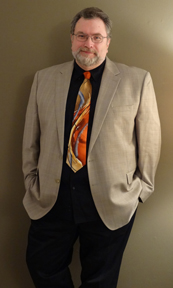
Jonathan Maberry is a New York Times bestselling author, writing teacher, lecturer, and Marvel Comics writer. He is the author of many novels and nonfiction books. Jonathan is a frequent keynote speaker and guest of honor at writers’ conferences and genre conventions around the country.

Time to chat with Jonathan!

What is your latest book?

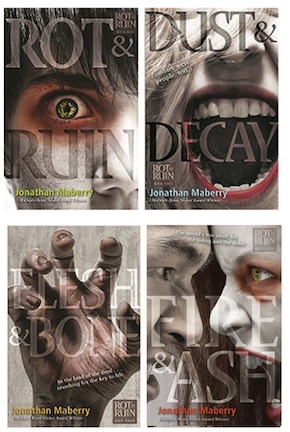
My latest novel is FIRE & ASH, a series of post-apocalyptic adventure for teens.

Is your recent book part of a series?

FIRE & ASH is the fourth and (possibly) final book of the ROT & RUIN series, which has won quite a few awards, including two Bram Stoker Awards and many reading awards for teens.

I hear you have some very exciting news! Can you share it with us?

The ROT & RUIN series has been optioned for film, and the producers plan to do all four books. I also have one of my adult novels, DEAD OF NIGHT, in development for film.
RotRuin

What are the special challenges in writing a series?

The biggest challenges in a series is providing for growth for each character. That’s crucial because a character’s growth is far more important than any high-concept plot point. The Rot & Ruin series has a moderately large cast, with six teenagers as central characters. Each of them has to grow in each book, and at the end they need to have completed a kind of emotional or psychological journey.

If you were to advertise your book on a bumper sticker, what would it say?

ZOMBIES WERE PEOPLE, TOO.

What else have you written?

I write fast and I write in different genres. My first three novels were the Pine Deep Trilogy set in the fictional Bucks County town of Pine Deep (GHOST ROAD BLUES, DEAD MAN’S SONG and BAD MOON RISING). Then I moved to weird-science thrillers featuring psychologically damaged hero Joe Ledger (PATIENT ZERO, THE DRAGON FACTORY, THE KING OF PLAGUES, ASSASSIN’S CODE, EXTINCTION MACHINE, and the forthcoming CODE ZERO and PREDATOR ONE). I wrote two books (so far) in an adult zombie apocalypse series (DEAD OF NIGHT and FALL OF NIGHT). I did a movie adaptation (THE WOLFMAN). And I have two new series debuting next year: a mystery-thriller series for older teens (WATCH OVER ME) and a middle-grade action-science fiction about aliens and monsters (THE NIGHTSIDERS).

Maberry3books

How often do your characters surprise you by doing or saying something totally unexpected?

Even though I plot my books and often writing the endings first, along the way characters transform from ideas to real people. They become three-dimensional, and subtle aspects of their personalities emerge. That’s always surprising and always welcome. When a character does not do this it’s a danger sign.
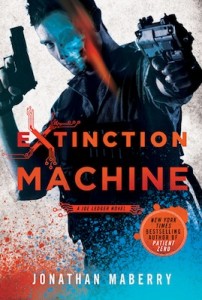
ExtinctionMachine

What part of writing a novel do you enjoy the most? The least?

I love the whole process from chewing on a raw idea all the way through the draft and revision phases.

Some authors, like me, always write scenes in order. But I know some people write scenes out of order. How about you?

I typically write the first chapter, then the last scenes, then I back up and aim at that ending. But, since I have an outline, I’m not restricted to linear writing. If I wanted to spice things up I’ll write whatever kind of scene appeals to me and then plug it into the manuscript. And, sometimes I’ll write out an entire subplot, end to end, then break it up and puzzle it into the larger manuscript.

Is it important for you to know the ending of a book before you write it? The title?

Always. Without that how can you plan for nuance, subtlety, and foreshadowing? How could you lay clues?

Some writers edit excessively as they write; others wait until a novel is finished to do the bulk of the editing. How about you?

I do not edit until I’ve finished a first draft. Then I edit in waves, picking different elements to focus on—voice, pace, chronology, dialogue, character relationships, etc.

After working for a very long time on a novel, many authors get to a point where they lose their objectivity and feel unable to judge their own work. Has this ever happened to you? If so, what have you done about it?

I soldier through those phases. If I have to I’ll write something bland and crappy just to get something down, then when I’m in a different headspace I go back and fix it.

How important is the choosing of character names to you? Have you ever decided on a name and then changed it because it wasn’t right for the character?

I pick my character names carefully. Though…there are times I’ve had contests to name characters. I also include some real-world people in my books.

Have you ever written characters that you truly despise?

I tend not to like my villains. They’re reprehensible.

Can you tell us about your road to publication?

I began pitching magazine articles while studying journalism at Temple University and was sold pretty regularly all the way into the late 1990s. Features, how-to stuff, columns, the works. In the early 90s I was approached to write some textbooks for the courses I was teaching at Temple, and for courses taught by a few colleagues. I did that and got a taste for writing books. In 2000 I went the small press route for some mass-market nonfiction books—three on martial arts, one on the folklore of vampires. Then in 2004 I started writing my first novel, GHOST ROAD BLUES, set in Bucks County. As soon as it was finished I went hunting for a literary agent, landed a good one, and that sent me sailing into the waters of mainstream publishing with major houses. I hit the New York Times bestseller list for the first time in 2010. Like all writers I racked up my share of rejections. I believe I could paper the entire state of North Dakota with rejection letters, but I don’t give up very easily. Or at all. I kept at it and now I’m in the wonderful position of being able to pick and choose projects. Fiction isn’t what I thought I’ve ever be writing, but it’s where I live now, and I couldn’t be happier.

Please, tell us about your experiences with social media. What are your favorite and least-favorite parts of it?

I’m all over social media. It drives the publishing world and any writer not invested in it is nuts. It not only allows the writer a measure of actual, useful control over the buzz and marketing of their projects, but allows for meaningful contact with peers and with readers. I write for fifty minutes out of each hour and then do ten minutes of social media. All day long. My favorite go-to places are Facebook (personal and group pages), Twitter, Goodreads, LinkedIn and Pinterest. But I’m on a bunch of others as well. If you budget your time it enhances your writing life rather than consumes it.

How much research is involved in writing your books? How do you go about it?

I was trained as a newspaper writer and spend decades writing features. That pretty much turned me into a research junkie. My thrillers, teen fiction and even my horror all have an enormous amount of research behind them. And all of my thrillers have a science theme—genetics, pandemics, etc. I do a lot of email interviews with experts all over the world, I read scads of scientific journals, and I cruise online sources. Usually I do a block of research before I start a project and then do ‘spot’ research along the way.

Have you received reactions/feedback to your work that has surprised you? In what way?

After my first teen novel—ROT & RUIN—debuted, I had a parent contact me to say that it was the first book his son read. Until then, his kid had been a reluctant reader. Now he wants to read and has become a “reader.” Since then I’ve heard similar stories from parents, educators, and librarians. The books in the series have won a number of awards, including several statewide awards where they were cited as “gateway” books. Books that open the door to reading for kids who might otherwise not crack a book. It’s staggering. It makes me want to cry. I don’t think anything in my writing career has had so profound an impact on me.

Do you write anything besides novels? Care to share?

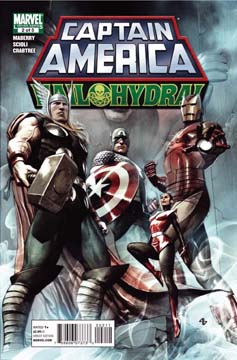
I’ve been an active writer since my college days. I’ve sold 22 novels, 28 nonfiction books (on subjects ranging from women’s self-defense to the folklore of vampire legends), two plays, 1200 magazine feature articles, 3000 columns, as well as greeting cards, TV shows, dozens of short stories, and twelve collections of comic books. I also co-created a show for ABC Disney (ON THE SLAB), which, sadly, remains in development limbo. Currently I’m writing four novels per year in difference genre.
-4

Were you “born to write” or did you discover your passion for writing later in life?

I was born for it. Even before I could read or write I was telling stories using toys or drawings. I wrote for school papers, I wrote for fun, and now I write for a living. Writing is a defining characteristic. Everything else I’ve ever done, every job I worked at while building my career (bouncer, bodyguard, martial arts instructor, graphic artist, etc.) were side-effects; they were a means to—what is for me—the only acceptable end.

Are you an early bird writer or night owl? And do you have any must haves like coffee, chocolates, wine, music or something else?

I’m a nine-to-fiver. I get up and get to work. It’s my day job. I usually spend my mornings at a Starbucks and I write until about noon. Then I wander home and write through the afternoon in my home office. I take nights off to spend time with my family. I write part-time on weekends. I don’t ever take a full day off.

How would you define your style of writing?

I’m a humanist writer. Even in the midst of high-concept and big action, my writing is all about the personal experience. Although my subject matter is often very serious I include a lot of humor. And I don’t go in for emotional cheap shots.

Do you ever suffer from writer’s block? If so, how do you get around it?

I don’t believe writers block exists.  Writers who say that they encounter it most often are those who are trying too hard to make their first draft read like a polished final draft. They are imposing unrealistic expectations on themselves.  First drafts should be done quick and dirty—get the story out of your head and onto the page. That process taps into the part of us that is instinctive—we’re either storytellers or we’re not. Once the essential story is down, no matter how flawed and clunky, we then shift mental gears and approach the revision with an entirely different process. Craft.  That’s something we learn. The skills of craft include figurative and descriptive language, point of view, person, pace, timing, dialogue, metaphor, and so on.  These are things we learn in order to refine our stories.  Writers who understand that these are separate stages of the writing process never get writers block.

What genre have you never written in that you’d like to try?

I don’t know. Maybe romance from a guys’ perspective. Maybe a straight military story. Or a classic western. However I genre jump all the time. Not just in novels but in short stories. I’ve become a go-to guy for anthology editors because they know that I’ll try damn near anything. Over the last eight years I’ve written in a crazy number of genres. I did a Sherlock Holmes story (“The Adventure of the Greenbrier Ghost”); a children’s tale set in the land of Oz (“The Cobbler of Oz”); military science fiction (“Clean Sweeps”), historical horror (“The Death Poem of Sensei Otoro”), ghost stories (“Property Condemned”), apocalyptic science fiction (“Chokepoint”), dystopian existentialism (“The Wind Through the Fence”), psychological thriller (“Doctor Nine”), a serial killer story (“Saint John”), a story about Edgar Allan Poe’s character Auguste DuPin (“The Vanishing Assassin”), an Edgar Rice Burroughs tale (“The Death Song of Dwar Guntha”), a GI Joe techno-thriller (“Flint and Steel”), a western (“Red Dreams”), a noir urban fantasy (“Strip Search”), and others.

What do you know now that you wish you’d known five years ago?

I wish I knew how much I’d enjoy writing for teens. I would have jumped into that swimming pool sooner.

Where do you live now? If you had to move to another city/state/country, where might that be?

My wife, Sara Jo, and I live in Warrington, but we’re packing up to move across country to La Jolla in San Diego. It’s where I’ve wanted to live for a long time. The move is partly motivated by the weather out there (it’s always perfect), partly because our son, Sam, lives there; and partly because I have two films in development and it’s only a two-hour drive to L.A.

What’s your favorite comfort food? Least favorite food?

Coffee revs me up, chocolate soothes my soul. Spinach is my kryptonite.

Care to brag about your family?

I’m the black sheep of the family, so I’m not much a cheerleader for our clan. However my great grandfather—who I’m named after—was a great guy. John B. Maberry fought at the Battle of Gettysburg, captured the Southern flag, and was awarded the Congressional Medal of Honor. Now, here’s the kicker. At that battle he captured a southern soldier named Dooley…who is my wife’s great grandfather. We learned this recently and it’s a weirdly stunning coincidence.

If you could have one skill that you don’t currently have, what would it be?

Rhythm. On the dance floor I am Whitey McWhitelson. I am, quite possibly, the worst dancer in the history of carbon-based life forms.

What was your favorite year of school? Why?

My favorite year was 1974 at Frankford High. Tenth grade. I made a slew of new friends, I fell in love for the first time, I joined a band, I did musical theater, I won several martial arts championships, I got my black belt, I grew my hair and beard long, I ran with a cool crowd of artists and singers, and I finally began to understand politics and art. It was the first of a lot of good years, and I remember every single day of it.

What might we be surprised to know about you?

That I used to do musical theater. I was in productions of Camelot, Jesus Christ Superstar, Fiddler on the Roof, How to Succeed in Business, 1776, A Funny Thing Happened on the Way to the Forum, and others. And I was in the traveling company for Godspell. That all ended when I got hit across the throat with a pool cue while working as a bouncer. I survived the hit, but my vocal chords were never quite the same. There are some who believe this was a good thing for the world of musical comedy.

What makes you angry?

Rude behavior. Pushes every last one of my buttons.

If you are a TV watcher, would you share the names of your favorite shows with us?

I vary between classics (Outer Limits, Twilight Zone, I Spy, Star Trek), modern comedies (Friends, Mad About You, Modern Family), and dramas (The Wire, Breaking Bad, Game of Thrones, Walking Dead, Orphan Black, Justified, Dexter, etc.).

What’s your favorite film of all times? Favorite book?

Favorite movies are THE WIZARD OF OZ, SINGING IN THE RAIN, and THE HAUNTING. Favorite books are SOMETHING WICKED THIS WAY COMES by Ray Bradbury, I AM LEGEND by Richard Matheson, PALE GRAY FOR GUILT by John D. MacDonald, FLETCH by Gregory McDonald, BLACK CHERRY BLUES by James Lee Burke and THE DANCERS AT THE END OF TIME by Michael Moorcock.

CONNECT WITH JONATHAN
Website and Blog

Facebook

Twitter

IMDb

Goodreads


CHAT WITH RYNE DOUGLAS PEARSON

RyneRyne Douglas Pearson is an accomplished novelist and screenwriter. Despite the often ‘dark’ nature of his novels and films, Pearson has been noted to have a ‘sweet, disarming quality’ by Entertainment Weekly-an accusation he has been unable to shake. He is addicted to diet soda and the sound of his children laughing. A west coast native, he lives in California with his wife, children, a Doberman Kelpie and a Beagle Vizsla.

Time to chat with Ryne!

What is your latest book?

My latest book, Cop Killer, is the first book in my new District One Thriller series. It tells the story of two detectives, Danny Owen and Jack James. One is a hard-charging young investigator who lives for the thrill of the chase. The other is a cool and methodical investigator with an almost legendary status in the department. When these two polar opposites are partnered there’s little time for them to reach some equilibrium of coexistence, as a brutal killer begins littering the city with bodies. But as Danny and Jack uncover the identity of this murderer, the lines of right and wrong begin to blur, leaving the partners to wonder just who is adversary, and who is ally.

CopKiller

What are the special challenges in writing a series?

The District One Thriller series will be the second series I’ve worked on, the other being my Art Jefferson Thriller series. The biggest challenge, for me, is not trying to lay too much groundwork too early. I already know the next three books in this series, but I don’t want to know everything. Being surprised it part of the fun of being a writer, and the temptation to begin threads in an earlier book that will play out in later books is strong, but I (mostly) resist.

What else have you written?

I’ve written eight other novels—All For One, Confessions, The Donzerly Light, Top Ten, Cloudburst. October’s Ghost, Capitol Punishment, and Simple Simon. I also write and publish short stories when the mood strikes me.

How often do your characters surprise you by doing or saying something totally unexpected?

All. The. Time.

Some authors, like me, always write scenes in order. But I know some people write scenes out of order. How about you?

I will write out of order when I get stuck somewhere. I find it’s best to keep the momentum going, even if that leaves a gap that needs to be addressed eventually.

Some writers edit excessively as they write; others wait until a novel is finished to do the bulk of the editing. How about you?

I edit continually. I can’t help it. I see something and have to fix it.

Have you ever written characters that you truly despise?

The ones you despise are the most fun. Writing the serial killer in Top Ten was a complete blast. What a bad, bad boy.

Do you have any advice for first-time authors?

Write a lot. Write like you’re gonna burn it. No one but you and the NSA will see what you write before you decide it’s crap and delete it, so write the crap. Crap leads to stuff that’s not crap.

Do you have any grammatical pet peeves to share?

I’m not a big grammar nazi. I tend to break rules if it helps the flow of a scene.

Do you write anything besides novels? Care to share?

I also write screenplays. I’ve worked in the film industry for thirteen years. The movie Knowing was based on my original screenplay, and I’ve done uncredited work on a number of films.

Do you feel your latest book is your personal favorite or one of your previous novels?

My previous novel All For One is my personal favorite. I just love writing kids, and, even in the horrific situation the story place them in, it was a joy to write them.

Having our work out there to be judged by strangers is often daunting for writers. Do you have any tips on handling a negative review?

Grow a thick skin and move on. Everyone is entitled to an opinion.

Trains, planes, automobiles, or boats?

Automobiles. I love to drive.

What’s your favorite comfort food? Least favorite food?

Lasagna is my favorite. Least favorite would be anything remotely resembling liver.

What music soothes your soul?

Hawaiian music is very, very soothing. I’m a big fan.

What’s your favorite film of all times? Favorite book?

Favorite film is It’s A Wonderful Life and favorite book is IT by Stephen King.

CONNECT WITH RYNE

Website

Twitter

Facebook

Amazon

Goodreads


KOOMKEY: A Community of Givers Paying It Forward


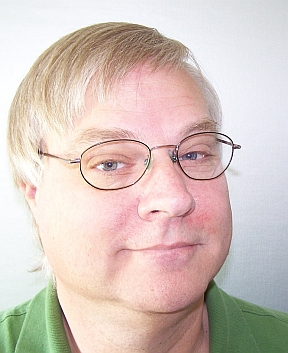
by Joseph Lacko

Even the most carefully outlined project can surprise us with unexpected turns and unforeseen adventures. It is the nature of creativity.

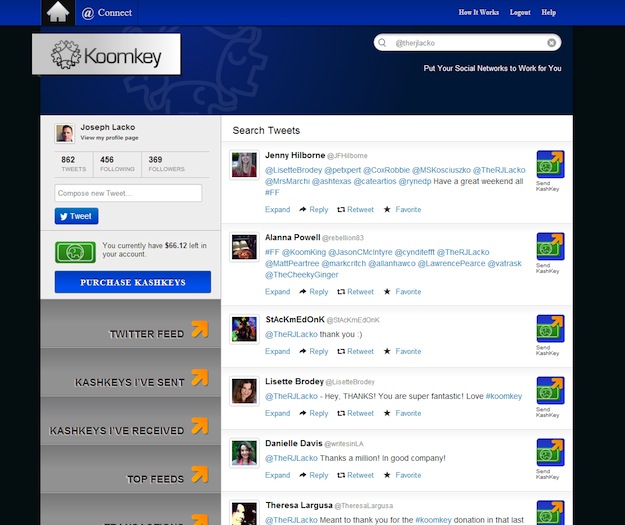
When I created Koomkey, the only method of sending unsolicited cash to people through Twitter, I experienced a few of these surprises.

If you’re new to the concept, Koomkey enables you to send what we call, “Kashkeys” to other people, in values between 25 cents to 10 dollars, without creating any sort of new account. Think of it as a virtual tip jar sitting on your worktable.

When Twitter followers appreciate the efforts you make in social media, or admire your offline creative outpouring, a quick “Kashkey” of encouragement can be sent your way.

Throughout development, I told myself: “I know what I see as the usefulness of this tool, but I will always be ready for the different ways social media users ultimately take it.”

When we launched Koomkey July 1, 2013, the Twitter users who’d tweeted, “How do I turn my social media efforts into cash?” didn’t respond. In fact, some of them blocked me.

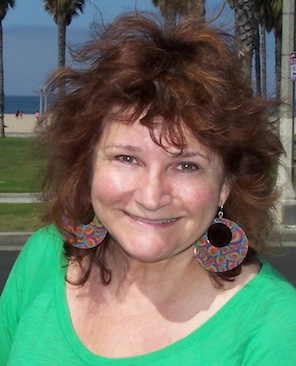
My wife, Rebecca, began her own venture, offering “latte & muffin” cash to her favorite authors. And there was my surprise; the first niche to latch on to the power of Koomkey’s usefulness was the writing community. Now I have befriended more wordsmiths than I ever imagined I might.

It makes sense. The intention of Koomkey is to empower social media users to instantly support others on a reasonable scale. This fits perfectly into the intimate world of writers networking and building an author platform.

KoomKey

More useful than merely clicking, “Like,” a humble thanks in the form of 25 cents can quickly add up. Anyone who sells a product in units—books, for instance—understands how quickly small numbers can snowball. Kashkeys are real income earned simply by maintaining your current online platform through social media.

If just 10% of your Twitter followers sent you a quarter, or maybe a dollar this month, and every month, how would it benefit you?

I’ve discovered the unexpected joy of joining others in giving heartfelt $10 Kashkeys to an author who found herself in a sudden bind. Together, we helped a stranger in need, and now count her among our friends. I have personally found the writing community the most receptive to random acts of generosity.

It stems from one of the key principles that went into the creation of the service: allowing people to simply be themselves and get financially rewarded for it.

Relationships are the cornerstone of social media. Readers love to interact with writers. In our first month of operation, two book fans, strangers in different countries, connected with their favorite author on Twitter using Koomkey. An exchange of Kashkeys was sent between them, and this small gesture was so appreciated, the fans teamed up to support the author’s Blog Tour of her latest book release. Their enthusiasm and partnership amazed me, and I was happy to donate Kashkey prizes for contests offered throughout the author’s tour.

What has been created in Koomkey is a simple way to cheer on a hard working writer, artist, charity, comic, blogger–whoever inspires us. Koomkey users have sent donations to favorite charities, students struggling to make ends meet, and educational programs in need of funding. Other Koomkey users notice these donations and join in giving—to both the worthy cause, and the original giver. I look forward to the time when a 25-cent Kashkey is as common as a retweet.

Signing up is as easy as logging in at www.koomkey.com with your Twitter handle and password. Claiming your cash is a matter of one click. You can use your funds received to send Kashkeys to others, or direct the money to your bank. It’s your choice.

If you have only a quarter or two to spare, try it. I challenge you to brighten someone’s day using Koomkey.

CONNECT WITH JOSEPH AND REBECCA

Koomkey

Joseph on Twitter

Rebecca on Twitter

How It Works

Why send someone cash for no apparent reason? (by Joseph Lacko)

Connecting, Writing, and Paying It Forward with Koomey (by Rebecca Lacko)

Facebook

YouTube

CHAT WITH JENNY HILBOURNE

JennyHIlbourneJenny Hilborne is a native Brit, currently dividing her time between Southern California and her hometown of Swindon, England. With a background in real estate and the finance industry, she is the author of four published mysteries and thrillers.

Time to chat with Jenny!

What is your latest book?

My latest book is a psychological thriller titled Stone Cold. It’s set in the idyllic English Cotswolds, where murder is rare. A double murder is shocking.

Is your recent book part of a series?

While Stone Cold was written as a stand alone, I haven’t ruled out the possibility of a sequel, based on reader feedback.

What else have you written?

Madness And Murder is my debut novel, and a psychological thriller set in San Francisco. It features homicide inspector Mac Jackson who, by popular demand, returns in my 3rd suspense Hide And Seek. I’ve also written another San Francisco based suspense titled No Alibi.

How often do your characters surprise you by doing or saying something totally unexpected?

All the time. All of my books have gone in directions different to those I’d originally intended. While it makes the writing process much harder, it strengthens the stories. If I’m surprised by what my characters do and say, I’m sure my readers will be, too.

Some authors, like me, always write scenes in order. But I know some authors write scenes out of order. How about you?

I’m a panster. As I don’t plot, the scenes are written in order. That’s not to say I don’t juggle them in the edits. In the editing of Madness And Murder, chapter fourteen eventually became chapter one.

Is it important for you to know the ending of a book before you write it? The title?

I rarely know the ending until I get there. If I have an idea of how a book will end, it will usually change before I get to it. As for the title, I try to establish that as early as possible. Working on an untitled piece is difficult.

How important is the choosing of character names to you? Have you ever decided on a name and then changed it because it wasn’t right for the character?

I find stellar names in my spam folder and have used a few of them for my characters. I’ve occasionally changed names where it didn’t suit the personality. At the request of a non-profit organization, I recently donated a character name with all the proceeds going to help improve lives of those with disabilities. It was a great cause and the character name the winner chose will be featured in my upcoming paranormal thriller.

What do you like best about the books you read? What do you like least?

As a reader, I prefer plot-based fiction and mostly enjoy dark and gritty thrillers. My favorites are the ones where the hero/heroine is hiding their own dark secrets, is less than perfect and not always likeable. I find them more realistic. Anything too saccharine is a turnoff for me. What I least like reading in thrillers is romance. It slows the story and often makes me cringe.

How much research was involved in writing your book? How did you go about it?

For Stone Cold, I spent six months in the UK and did a lot of research out in the field rather than online. It was refreshing. I drove the same routes the characters take in the book, visited the graveyard with the broken gate where Mara learns the secret behind the forgotten grave, and spent time with local police at the police station and inside the cells to get a real feel for the criminal side of life.

Have you received reactions/feedback to your work that has surprised you? In what way?

Feedback from my readers often surprises me. I write for pleasure. Apart from rooting for the underdog, I never attempt to deliver any kind of message in my work, so it surprises me when readers respond with what they picked up. For Madness And Murder, readers made me aware the book has a theme of second chances running through it. I was completely unaware.

Where do you live now? If you had to move to another city/state/country, where might that be?

Currently, I split my time between San Diego and my hometown of Swindon in the south west of England. If I were to live elsewhere, it would be San Francisco or New Zealand; San Fran for the research and NZ because traffic doesn’t stink like it does here.

If you could have one skill that you don’t currently have, what would it be?

I wish I could sing, or play a musical instrument. A jam session by an open fire always seems like such a great way to spend an evening.

What makes you angry?

Rudeness, stupidity, and cruelty. In any order.

If you are a TV watcher, would you share the names of your favorite shows with us?

I confess to watching Big Brother, Survivor, and Snapped.

Have you ever walked out of a movie? If so, what was it?

I walked out of Platoon. It was too graphic. The image of violent death is disturbing.

If you could add a room onto your current home, what would you put in it?

A library room with wall-to-wall books and a comfy leather chair.


CONNECT WITH JENNY

Amazon

Website

Blog

Facebook

Twitter

Goodreads

CHAT WITH ERIC B. THOMASMA

Eric

Eric B. Thomasma was born and raised in West Michigan, USA.
He still lives in the area with his wife of 35 years, Therese, and
together they raised two sons, Eric Jr. and Nicholas. Eric spent most
of his adult life working as an electrician and service technician in the
telecommunications industry, with side interests in computers and
video production.

Time to chat with Eric!

I hear you have some very exciting news! Can you share it with us?

My children’s book, The Wizards of the Body Shop, was recently selected for the 2013 KART Kids Book List Award. The Kids Are Readers Too (KART) Foundation is the private philanthropy division of PediNatural®, dedicated to children’s literacy. This is the second time one of my books has been selected for the list. My first children’s book, Sam And The Dragon, was chosen for the 2011/2012 award.

What is your latest book?

My most recently released book is Yeti In The Freezer. A children’s book about a brother and sister that come home from school and discover they have a new refrigerator that has an ice maker. But when they try to take ice out, the ice maker growls and throws ice chunks at them. Turns out this ice maker isn’t too happy about people taking his ice without so much as a thank you.

Yeti

What else have you written?

In addition to the children’s books already mentioned, I have one more, Billy’s Family. It’s a story about an only child that wishes he had a big family, but learns that family includes far more than just Mommy and Daddy. It’s designed to expose kids to some of the terms and concepts used in modern genealogy.

I also write novels for grown-ups. I’m nearly finished with the fourth book in my Sci-Fi series, SEAMS16. The first two books in the series, SEAMS16: A New Home and SEAMS16: Arrival, follow Charlie and Susan Samplin as they move to, and make their lives on, the Space Equipment Authority’s Maintenance Station number 16 (SEAMS16). With the third novel, And So It Begins…, I took a leap back in time to the beginnings of the society that SEAMS16 comes from. It takes place roughly 1000 years before the station is built, so it’s not really a SEAMS16 novel, but it is part of the series. It’s designed as a standalone story so it can be read out of order without relying on, or spoiling, the first two. The novel I’m currently working on, as yet untitled, returns to the station and the lives of Charlie and Susan. It picks up about a month after Arrival leaves off, and includes family dynamics, religion, politics, espionage, kidnapping, intrigue, action, and more.

And so it begins

How often do your characters surprise you by doing or saying something totally unexpected?

Very often! I am what’s referred to as a “pantser”, meaning I write by the seat of my pants. This is opposed to a “plotter” who carefully outlines the story before writing the first word. I tried that with my first novel but by the end of the first chapter the story no longer bore any resemblance to the outline, so I ditched it and have been a pantser ever since. It’s a fun way to write because you’re entertained by the story as you write it, but it can also be challenging without a clear view of where the story is going or how it’s going to end.

Some writers edit excessively as they write; others wait until a novel is finished to do the bulk of the editing. How about you?

I tend to edit as I go. Oftentimes the story takes an unexpected direction that either conflicts with an earlier part of the story, or makes it irrelevant. Sometimes, the conflict can be resolved in subsequent chapters and makes the story more interesting. But other times, the story needs to be rewritten to remove the conflicting or irrelevant information. Sometimes it’s as simple as changing a few words here and there, but other times a whole chapter needs to be scrapped and rewritten.

How important is the choosing of character names to you? Have you ever decided on a name and then changed it because it wasn’t right for the character?

I personally don’t think names define personality. I’ve met too many people that share the same name, but are polar opposites, so I can’t say I put a lot of research or thought into a character’s name. In most cases, I just use whatever the character tells me his or her (or its) name is. But I did once change an alien character’s name because it sounded too close to the name used for a baby, and I didn’t want anyone to get the impression that the baby was named after the alien. As the narrator in my stories, I sometimes don’t even know the name of a character until another character says it. I remember referring to one character as “the blonde” for a whole chapter before I found out her name.

How much research was involved in writing your book? How did you go about it?

The amount of research varies for each book. All of my books are fiction, and some people think I don’t have to do much research since I’m just “making stuff up”, but that just isn’t the case. Even made up stuff has to have a connection to reality to be believable. And the length of a book has little to do with how much research is required. I’ve found that sometimes a children’s book requires as much research as a novel. For example:

For my children’s book, Billy’s Family, I had to do research on modern genealogy to gain a better understanding of second cousins, third cousins, and cousins-once-removed. I had heard the terms all of my life, but never really understood them. And in questioning some of the people I’d heard use those terms, they didn’t really understand them either. They knew that so-and-so is a second cousin-once-removed, but when pressed they didn’t know the relationship that makes so-and-so a second cousin-once-removed.

For my novel, And So It Begins…, I had to research what happens as a spaceship enters an Earth-like atmosphere. This is no longer speculation. We’ve been to space and we know what happens, so it’s important to understand it before writing about it. That doesn’t necessarily mean you have to follow the rules, but you have to understand what the rules are before you bend them, or you risk losing credibility.

In both cases, it took hours of research to be able to properly represent the events for what will be read through in just a few moments.

When your story takes place on a space station, field research is not really an option. (But how cool would that be?) So I primarily have to rely on the internet for my research. There is information out there on nearly every subject, for nearly every purpose. Of course, there’s a lot of misinformation as well, so I try to find multiple sources for the information and do cross-referencing. I do searches using different search engines and it’s amazing the different results that can come up depending on the search engine used. I’m not going to mention names because they all have their strengths and weaknesses. I just think it’s important to use more than one when researching a subject.

It takes time and effort to sort through and determine which is good information and which is bad, and which is just a rehash of someone else’s work, but it’s worth it. I once had someone thank me for making him sound like an expert in a discussion. Imagine if the information I’d used was wrong. Instead of thanking me, he’d have cursed me for making him look like a fool.

Having our work out there to be judged by strangers is often daunting for writers. Do you have any tips on handling a negative review?

It’s important to remember that reviews are written for readers, not writers. The best course of action is to not read reviews at all, so there’s nothing to handle. But since we writers are human and tend to be a curious lot, few of us are capable of following that advice. That includes me, so even though reviews aren’t written for me, the author, here is how I approach them. Don’t do anything publicly. Don’t reply to the review. Don’t try to explain what you were thinking. Don’t point out where the reader is wrong, or missed the point. Don’t run to social media and whine about it. Don’t even try to be gracious and thank them for their review. None of it will reflect positively with other readers. My tip for handling a negative review is to punch your pillow, have a drink, cry, rant, pray, search your soul, do whatever you do to release your frustrations, but do it in private.

From a philosophical standpoint, I like that you phrased the question as “negative” rather than “bad” because to me, there is a difference. My definition of a bad review is one that does not explain why the reader formed the opinion they did. When a reviewer writes, “I love it, I love it, I LOVE it. You HAVE to read this book!” it may inspire other readers to give it a try, but there’s nothing there I can use. Likewise, if a review says, “This book sucks! Don’t waste your time.” Other readers might give it a pass, or it might make them wonder just how bad it could be, but either way there’s nothing there for me. A bad review can be positive or negative, but while it may it be helpful to other readers, it offers nothing to me as a writer and so I dismiss it as nothing more than one readers opinion.

A good review can also be positive or negative, but it will contain information that can be used to improve my writing. There are often lessons to be learned from the person who didn’t like the story, but is generous enough to explain why, even if they deliver it in what appears to be a mean-spirited way. I take whatever information from the review I can use to help improve my craft, and leave the rest alone.

A lot of authors are frustrated by readers who don’t understand how important reviews are? What would you say to a reader who doesn’t think his or her review matters?

Writers want reviews because readers telling readers about the book is the primary reason books sell. Not commercials, not book signings, not awards, and not posters on the wall; it’s readers telling readers. And that’s what a review is. A book with a lot of reviews is generally more interesting than a book with few or no reviews, regardless of the content of the reviews. Even books with a high number of negative reviews draw interest, and interest is the author’s best friend. But that offers very little incentive for readers to write them.

Fortunately for writers, reviews are important to readers too. I’ve heard many reasons sited, but most of them boil down to the fact that there is limited time available for reading, and we don’t want to waste it on books we won’t like. A flashy cover and attractive blurb may catch our interest, but how many times have you been disappointed by a book that looked interesting? The better way to know a book without actually reading it is through reviews. Discussion is what brings a book to a reader’s attention, and reviews are nothing more than a discussion in written form. Everyone that writes a review contributes to the discussion and is helping their fellow readers make better decisions about their reading material. It makes little difference whether the review is positive or negative because what some find off-putting, others find attractive. You may think that your review doesn’t matter, but every contribution increases the pool of knowledge. Have courage to be the lone voice, bucking the trend, because a discussion is moot without an opposing point of view. But even if your voice echoes what others have said, there is strength and reassurance in numbers. Continue the discussion because without reviews, decisions are made in ignorance. And history shows that good decisions are seldom made in ignorance.

Have you been involved with the Kindle Direct Publishing Select program?

No.

I think it’s a well thought out strategy for Amazon to grow its dominance in the marketplace and as some of my writer friends can attest, the rewards for the authors who decide to participate can be substantial.

But for me, the exclusivity clause of Select as well as some of the other restrictions are unacceptable. There are many readers who I think would be interested in my books, who don’t have Kindles, or for reasons of their own don’t want to buy from Amazon. I believe in allowing readers that choice, and the Select program is designed to take it away, both in the short term and the long term.

Now don’t get me wrong. I don’t hold any ill will towards anyone involved in the program. I’m quite happy with my dealings with Amazon and their print subsidy, CreateSpace. And I still consider the writers participating in the program to be my friends. But the Select program is not for me.

We all know the old saying; you can’t judge a book by its cover. This is true. However, how much importance do you place on your book cover design?

I place a great deal of importance on the cover design, but I don’t think it’s the same way that publishers do. See, my covers have all been designed by my brother Lanin, who also does the illustrations for my children’s books. I love the covers he has done and I’m proud to display them. But it has been suggested that I might gain more sales with a different cover design, so I’ve been toying with the idea of changing the SEAMS16 series covers. Perhaps when my current work in progress is ready for publishing I’ll look at redesigning the whole series using a common pattern, but for now I’ll keep them as they are.

Website

Books

Children’s Books

Twitter

Children’s Facebook

Seams16 Facebook

Goodreads

CHAT WITH CELIA BONADUCE

CeliaBonaduce

Currently a Field Producer on HGTV’s House Hunters, Celia Bonaduce has covered a lot of ground in TV programming. Her credits include field-producing ABC’s Extreme Makeover: Home Edition to writing for many of Nickelodeon’s animated series, including Hey, Arnold and Chalkzone.  An avid reader, entering the world of books has always been a lifelong ambition. Kensington eBooks’s The Merchant of Venice Beach, first in The Venice Beach Romances, was just published on August 1st.

Time to chat with Celia!

What is your latest book and is your recent book part of a series?

I’ve written a series of contemporary romances called The Venice Beach Romance books. The first, The Merchant of Venice Beach, was published by Kensington eBooks on August 1st.  The second, A Comedy of Erinn, will hit cyberspace on September 19th.  A third book is still in the works.

CeliaMerchant

How often do your characters surprise you by doing or saying something totally unexpected? 

I was raised by writers – my mother and father were both TV comedy writers and they had different opinions about whether a character was allowed to “lead his or her own life.” My mom thought “yes” but my dad was adamant that you had to take control or some rogue character would run off with your storyline. For years, I did it my father’s way, but then realized I was really missing out on where the characters might go if left to their own devices. So, I started giving them some leeway. Mother knows best.

Is it important for you to know the ending of a book before you write it?

I do think it’s very important to have a solid beginning, middle and end before you start actually writing. That’s not to say that the ending can’t change, but you need to be going somewhere. It’s like driving. If you are going to San Francisco from Los Angeles, you need to at least know you’re going north and about how long it will take. You can make adjustments as you go, but you still hope to end up at the Golden Gate Bridge – unless your trip reveals you might be happier in Seattle.

Some writers edit excessively as they write; others wait until a novel is finished to do the bulk of the editing. How about you?

I am a compulsive editor.  I edit every morning before I move forward.  By the time I am finished, I have very little rewriting to do…except for THOUSANDS of copy-editing mistakes.

Can you tell us about your road to publication?

My road to publication was long. I really wanted to go the traditional route, since many of my self-published friends seem to hit a wall at some point. I knew nobody in the publishing world, so I found a list of agents online and, one by one, sent them my sample pages. It took me three years to get an agent and one year to find a publisher.

How much research was involved in writing your book? How did you go about it?

I research as avoidance. Since I write contemporary romance and the books take place in my hometown of Santa Monica and our southern neighbor, Venice Beach, I didn’t really need to do a ton of research. But the books center around a funky teashop – so I did a ton of research on teas. At one point, the teashop gets remodeled, and I researched construction and design. I love to just start poking around the internet.

When I decided to write a book about a woman who falls in love with her no-good dance instructor (The Merchant of Venice Beach), I decided I should take dance lessons since I had no idea what that world was like. I became obsessed with dance and danced four days a week! When I started traveling for House Hunters, I had to cut back and I really miss the rush of Salsa, Swing and Tango!

Do you allow others to read your work in progress, or do you keep it a secret until you’ve finished your first draft? Can you elaborate?

I have a group of trusted readers and I wait until I have a first draft.  Growing up with writing parents, it used to drive me crazy when my dad would tell me page by page what he had written and then he’d present me with the completed script for critique. I already knew the entire plot, so couldn’t really evaluate it. My father passed away many years ago but my mom continues to be my prize “evaluator.” I try hard not to tell her what I’ve written every day.

We all know the old saying; you can’t judge a book by its cover. This is true. However, how much importance do you place on your book cover design?

One thing about having a big House publish your book is that they design your covers and they might not have been what you had in mind.  Because my book revolves around a teashop, I pictured a cover sort of like Crooked Moon or Fried Green Tomatoes, so I was shocked when Kensington presented me with this super sexy cover! We discussed it and they said that they were sure their audiences would respond to the cover they designed. They are a very successful company and I figured, “Well, you’re the experts.”

Do you ever suffer from writer’s block? If so, how do you get around it?

I imagine all writers suffer from writer’s block at one time or another. I actually went to a hypnotist and it worked! I highly recommend it!

Where do you live now? If you had to move to another city/state/country, where might that be?

I travel for a living, and see a different city every other week on House Hunters. I always try to imagine myself living other places, and while I fancy that I could be happy living in Italy, England or some parts of the USA, when I come home to Santa Monica, California, I know I am where I should be. I love it here.

What are the most important traits you look for in a friend?

I am a very loyal friend and try to stay in touch with people. But my schedule in not conducive to friendship.  I’m on the road a ton, so, the trait I look for in a friend is PATIENCE.

If you could have one skill that you don’t currently have, what would it be?

I would love to play the piano and speak Italian fluently.  (I know those are two skills and they are both learnable, so it is maddening that I haven’t done either.)

What might we be surprised to know about you?

I am a very good seamstress and got my first producer-job at HGTV because I could sew, not because I could produce.

If you could add a room onto your current home, what would you put in it?

A sewing room, because I make a HUGE mess when I’m making a full-sized quilt (which I do whenever I can).  Also, since I don’t play the piano, I don’t need a music room.

CONNECT WITH CELIA

Website

Twitter

Facebook Author Page

Goodreads


CHAT WITH TAYLOR EVAN FULKS

TaylorFulks

Taylor Evan Fulks is a practicing Registered Nurse First Assistant, specializing in open heart surgery to pay the bills. She’s also a wife, a mother of two very challenging (in a good way) teenage daughters, and an ardent “nocturnal gardener” due to her ongoing battle with skin cancer. She resides in a quaint little town in Southern Ohio, along the banks of the Ohio River.

Time to chat with Taylor!

What is your latest book?

Hello everyone! I’m Taylor Evan Fulks, author of My Prison Without Bars: The Journey of a Damaged Woman to Someplace Normal. Whew! That’s quite a mouthful! My debut novel is based on a true story…my story. It’s a dark, disturbing and very graphic account of my life as a survivor (I really hate that term…I prefer warrior) of Child Sexual Abuse.

You have written about deeply traumatic experiences that affect millions of people yet are not always understood or discussed openly. How did you reach a place within yourself where you were able to share your past?

Actually, I didn’t set out to write this particular book at all. I wanted to be a romance writer. I’m a voracious reader! I’ve read over seven hundred books since 2007, so I flippantly reasoned, “How hard can it be?” I’m also a storyteller, though my audience is listening to me ramble on and watching me gesticulate with my hands (I’d explode if you tied them behind my back) rather than reading my words. I sat down to write a romance that had been percolating in my head but found I couldn’t write. I hadn’t lost my muse…I didn’t have one. All I could hear was a little girl inside my head, inside of me, begging for a voice. So, I finally listened.

In the beginning, I wrote about the abuse I endured, tentatively, innocuously, without detail or description, leaving it to the reader’s imagination as to the horror a child suffers at the hands of an abuser. I was completing chapter sixteen of my forty chapter novel when the Penn State, Jerry Sandusky child abuse scandal broke into the national headlines.  In the beginning, I was elated, thrilled with the stance the University and the NCAA took in regards to Joe Paterno’s culpability, stripping him of his awards and accolades. They even removed a statue of him from the University campus. I was thrilled with the arrest and prosecution of Jerry Sandusky, now a convicted pedophile.

I watched like a hawk for stories from the victims, some quite young. But all I saw were grossly edited snippets of interviews that minimized the severity and sometimes questioned the validity of the abuse. Then the day of reckoning came…a day that altered my life forever. I watched a group of students, administrators and staff from Penn State stand in front of a TV camera and cry foul! One middle-age man said right into the camera with unflinching eyes, “The punishment is too harsh for the crime!”

I have known rage in my life, feelings of anger so toxic it’s frightening, but I had never amassed and embraced this level of insanity. I was possessed! I didn’t think. I didn’t process or calculate what I was about to do. I just reacted.

I shredded the first eight chapters of my novel and sat down to begin again…this time, in graphic detail. I didn’t consciously think through the consequences of telling my story, at least the consequences to me personally. I did discuss it with my daughters, assuring them I wouldn’t publish if they were the least bit against it. Both girls came at me with a resounding “Go for it, Mom!”

Raw, blatant honesty became my mission statement!

The words poured out of me like a faucet with a busted valve. I wrote with rage and fury, letting the words and experiences flow from the depths of my soul. I wrote until my hand cramped and my fingers were numb…then I cried. I cried for myself and then for all the innocent children that are lost and have no voice. I cried in Shame…

For good or bad, I laid myself naked and exposed to the world (or at least to the few friends that I thought would actually read my book). I bared myself before the world to be judged, criticized and condemned.  I left nothing to the imagination…I take the reader far beyond what is comfortable and far beyond what most would consider inappropriate.

This is as naked and exposed as I’ll ever be…

PrisonWOBars

On your website, you say that you have always been struck dumb and quite frankly amazed, by the concealed and often guarded reporting of sexual abuse. Can you talk more about this?

It’s a sad truth. That which we fear, that which we don’t understand, we shun. Society and abusers hone and cultivate victims of child sexual abuse into becoming gatekeepers of secrecy. It’s a shameful, taboo subject that dates back to biblical times, yet we don’t talk about it. We don’t like things that push the envelope, cross boundaries or make us uncomfortable. We like neat and tidy.

I was introduced to Shame at a very young age…I believe I was six at the time. Shame was that little voice in my head telling me that what was happening to me was wrong. Because you see, abusers seclude their victims, putting them in solitary confinement with no connection to the norms of society or the ways of the outside world. Children learn what they live. Had I not met Shame, not been introduced to the “wrongness” of the life I lived, the cycle would have probably continued with me…for without Shame, we know no better.

Child Sexual Abuse is Shameful in the minds of most people in society. It’s something very hard to wrap your mind around. The mind is a compensatory organ, a flesh and blood computer if you will, allowing a plethora of knowledge and feeling to flow through its pathways…yet, always filtering and camouflaging some things, buffering and blocking others, and shutting off completely when it’s unable to handle or compute. In other words, it makes sure the soul can handle the download of images (real or perceived) and information. And therein lays the problem with Child Sexual Abuse. We hear those three words and our minds will only allow us to imagine so far before we filter, buffer, block, or completely shut off the things too unpleasant to handle. My mission became clear…I had to take the reader to that dark, dismal, shameful place no one ever talks about, and with written words…make them feel.

I know a place so dark that the only light is the knowledge I survived last night. I know a place so shameful, that the only hope in my life is surviving tonight, and the next night, and the next…

Was I too descriptive? Probably. Was I too graphic? Definitely! But I saw no other way to lead readers through my journey…the journey of a lost and forgotten child that had no voice, no protector, no way out. I do not apologize for the subject matter or the way I wrote it (I hate to sound arrogant…I’m not, I swear). My job as a writer in this instance is to provide you the reader, a literary video clip for your mind to grasp and ultimately making you feel. If you come away from my book with an inkling of what it’s like to have no choices, no freedom and no safety as a defenseless child, well then…I’ve done my job. By the same token, I also believe in full disclosure. To the horror and angst of my editor, I put a “Note from the Author” missive on the first page of my book warning readers of the descriptive and graphic nature. My editor said it would kill my sales. Maybe so…but I can sleep soundly at night.

What kind of feedback have you received after writing My Prison Without Bars?

My novel to date has done very well. On Amazon it has over 120~ 5 star reviews and is ranked in the Top 25 in two categories for twenty weeks. On Goodreads my book maintains a 4.5 rating. All of this is fantastic and quite shocking to me. But the greatest blessings in all of this are the emails, Twitter messages, and Facebook messages I’ve received from people wanting to share their horror stories, some of whom have never told a soul. The honesty and trust these wonderful readers have bestowed upon me is far greater and more humbling than any 5-star reviews I’ve gotten thus far.

My community and my colleagues have embraced me with so much love and support. It’s funny, I was so afraid I would have to hang my head in shame, eyes downcast after everyone read my book…I work in the operating room with a mask on my face…only my eyes showing. I pondered how in the world I was going to pull that one off.

Can you tell us about your road to publication?

Ah well…let’s just say that traditional publishers are not ready for edgy, controversial or taboo topics. I contacted five publishing houses (three big ones and two smaller houses) that were taking open submissions. I even contacted TWCS~ The Writer’s Coffee Shop Publishing House, original publisher of The Fifty Shades Trilogy.  I wasn’t even given the chance to submit. The submission requirements for all these Houses declined my topic, listing it with subjects like Child Porn, bestiality, and necrophilia. This made me furious, but it also galvanized me to get my book out there.

I spent two months researching self-publishing and my options. I went with Amazon’s Createspace and I’m very proud of the product I’ve published.

Do you allow others to read your work in progress, or do you keep it a secret until you’ve finished your first draft? Can you elaborate?

It’s ironic you ask this question. When I started my book I used a speech recognition program to type my MS. I’m not a typist…I do open heart surgery. Anyway, you have to verbalize everything; punctuation, paragraphs, quotations etc… I could never get a feel for the ebb and flow of my writing. Was it a good story? Did it read like a novel, or like a book report?

So, I asked four of my closest friends at work to proofread my MS a chapter at a time as I completed them. They were very positive and encouraged me to continue. Then Penn State occurred and subsequently my rewrite. I brought those pages in, handed them to the girls and promptly walked away. I came back to the locker room an hour later and was blown away. All four women were in tears, looking at me with what can only be described as “awe.” The scene is permanently etched in my mind. The initial encouragement to write my story changed to vehement demands to finish it and publish. I sat down next to them and we all cried.

Having our work out there to be judged by strangers is often daunting for writers. Do you have any tips on handling a negative review?

First of all, I don’t believe ANY BOOK should receive a review lower than a 3 star rating. The sheer effort to write, edit, format, publish and market the book should warrant 3 stars.

I could give the pat answer~ Ignore it, but we all know as authors, we don’t. I’ve had three 1 star reviews so far (knock on wood), one on Amazon and two on Goodreads. All three were vicious and hurtful, telling the world that what I wrote couldn’t have happened. Between Amazon and Goodreads I have over 200~ 4 and 5 star reviews. I choose to go with the majority.

The world is full of “not very nice” people whether they’re a reader giving a bad review, or a co-worker that you’d love to throttle. My advice is to allow yourself to feel the hurt for a day, two if need be, then dust off and seek the positive. You can’t please everyone…

We all know the old saying; you can’t judge a book by its cover. This is true. However, how much importance do you place on your book cover design?

You can judge my book by its cover…that was my intention when I designed it. I wanted no doubt that the reader could tell exactly what they were about to read.

I entered a cover contest on a rather large and popular blog. I waited anxiously for two months for the results. I came in second to last out of sixty-four entries and the judges posted a comment next to my cover that said, “This is disturbing and really very ‘creepy.’” Well, to say I was crushed is a gross understatement! For two days I was undesirable to live with. Then, the little girl inside of me said, “You won dummy! That’s what we were going for…”

What do you know now that you wish you’d known five years ago?

I wish I had known the power of healing is in the TELLING! I’ve lived in shame and secrecy for four decades believing I wasn’t worthy of love, of acceptance or anything better. I lived in a state of suppressed rage…for my abuser, for my faults and mostly toward my mother. In telling my story, I have found acceptance, not necessarily from others, but acceptance of me, by me. My life is what it is. My past is just that…my past. I don’t live there anymore. It’s time to move on.

Care to brag about your family?

Ah…my favorite topic! I’ve been blessed with two of the loveliest daughters a mother could ask for. My oldest daughter is twenty-one and entering her first year of nursing school at Marshall University in Huntington, West Virginia. She’s my worrier, my pleaser and very much a “momma’s girl.”

My youngest daughter is seventeen and my social butterfly. She actually set me up with social media. She found it amusing when she set me up on Twitter, without instructions I might add, and told me to have at it! She and eleven of her friends (ages 18 and under) were my first followers. She got a kick out of watching me thank myself for the follow and thank myself for the retweet for the first three weeks I was on twitter. I got a kick out of confiscating her car keys and keeping them for the next three weeks after I finally figured out what I was doing wrong.

She will be starting her senior year of high school this fall and hopes to get a scholarship to a Division 1 college to play softball. She has a 64 mph fastball and a curveball that breaks 9 inches off the plate. She is definitely a “daddy’s girl.”

What music soothes your soul?

This will sound odd, but I love Classic Rock! The louder the better! If you can’t feel it rattle your bones, it’s not loud enough, and not worth listening to. Both my girls were raised listening to it. They prefer Zeppelin and Fleetwood Mac to the noise that’s on the radio nowadays. It takes me to a good place in my head…it drowns out bad thoughts and stirs as much as it soothes my soul.

What’s your favorite film of all times? Favorite book?

My favorite movie would have to be Braveheart with Mel Gibson. I know, I know, it’s so GRAPHIC! I love things, stories, and people that push the boundaries. I lived so many years with my feelings sequestered that now, I’m all about passion. I want things to make me feel, make me ponder long after it’s over and take my breath away! This movie does all of these for me.

My favorite book, hands down, is the Outlander Series (eight books) by Diana Gabaldon. In my opinion, it is the greatest love story ever written. I reread all eight books once a year. It’s time travel, historical fiction and a delicious love story all in one. I highly recommend it! I rate it 10 stars!

Well, I believe my time is up. I want to thank Lisette’s Writers’ Chateau for graciously allowing me to guest blog today. I’m truly honored and humbled.

I’m proud to say the little girl inside my book (inside of me) is fine…I protect her now. She’s finally found her voice…

CONNECT WITH TAYLOR

Website

Facebook

Twitter

Goodreads

Amazon (U.S.)

Amazon (U.K)


CHAT WITH RACHEL HANNA

woman close-up in orange sweater

What is your latest book?

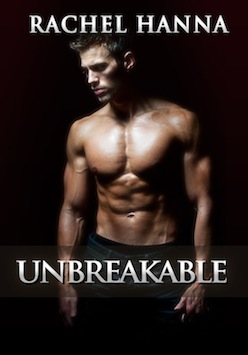
My latest book is called Unbreakable. This is a new adult romance featuring a heroine named Sophie Morgan. After having a tumultuous time in her teenage years, her parents decide to send her off to stay on a farm with her aunt and uncle in another state. That’s where she meets our hero, Miller Rhodes. And, of course, sparks fly!

-1

What else have you written?

A lot of the books I’ve written up until now have been in the contemporary romance genre. Recently, I’ve also started to write in the new adult romance genre because I find it interesting to take characters from youth until they become adults. Often, these books are filled with more emotion and angst than a typical contemporary romance. For me, that’s fun to write. But it’s also fun for the reader because they get to go on a journey with the characters.

What do you think some of the greatest misconceptions about indie authors are?

I think the greatest misconception about indie authors is that we are inexperienced. Personally, I have a degree in journalism and a long history of working in that field, so writing is nothing new for me. However, a lot of people think that indie authors are somehow lesser than a traditionally published author, but that is simply not true. There are creative people in all walks of life, and some people just haven’t had the chance to get traditionally published.

What part of writing a novel do you enjoy the most? The least?

The part of writing that I like the least would be just the beginning sections of the book where all of the introduction has to be done. I love to write the action parts of the book, so it’s hard for me to go through the early process of letting the readers get to know the characters before jumping into the action.

The part of writing that I like the most is creating characters and situations out of thin air. I especially enjoy writing dialogue as I think it lets readers really get to know and identify with the characters.

Some authors, like me, always write scenes in order. But I know some people write scenes out of order. How about you?

I write all of my scenes in order. It’s just easier for me to do it that way. If I try to jump ahead and write scenes out of order, I risk losing some of the continuity of the story or missing out on important facts that I’ve included elsewhere. Also, if I write the action first, it becomes even more difficult for me to go back and write the less exciting scenes.

Is it important for you to know the ending of a book before you write it? The title?

When I start writing, I have at least some idea of how the book will end. However, I am more of a fly-by-the-seat-of-my-pants writer. Plotting and outlining is something I’ve tried, but it seems to stifle the creative process for me. However, before I start a book, I know who my characters are, at least somewhat, and I know what the overall idea for the story is. The title usually comes to me about halfway through the book.

Some writers edit excessively as they write; others wait until a novel is finished to do the bulk of the editing. How about you?

I don’t do a lot of heavy editing or revisions of my work, so the final draft is very much like the original draft. However, I do edit for spelling and grammar, and I do that as I go along. So I write for a period of time and then go back and edit that work before I start my next section of writing. I also run my book through a professional editor for spelling and grammar checks before it’s published.

Do you have any advice for first-time authors?

My advice for first-time authors is to just keep writing. You will improve your writing skills the more you write. You have to keep your butt in the chair and consistently put words on the screen in order to be successful in this business. If you allow people to knock you down or make you feel like you aren’t a good writer, you’ll quit too soon. Take the criticism constructively and use it to better your writing.

Please, tell us about your experiences with social media. What are your favorite and least-favorite parts of it?

My favorite thing about social media is that I get to interact personally with my readers. I spend a lot of time on Facebook and Twitter chatting with my readers, doing polls and doing giveaways of Amazon gift cards and other things. I’ve gotten to know a lot of my readers personally, and I know that they are a loyal fan base. I really don’t have a least favorite part of dealing with social media as I think it’s one of the most fun parts of being authors in this day and age.

We all know the old saying; you can’t judge a book by its cover. This is true. However, how much importance do you place on your book cover design?

Cover design is probably the second most important part of publishing a book. In fact, it might be the most important because no one is going to read your content if your cover doesn’t look good. I place a lot of importance on covers, and I hire mine out to a designer for that very reason. When I used to try to design my own covers, it was very obvious that they were homemade even though I used expensive software to do them. I think that most people should hire out for professional covers instead of creating their own even if they know how to.

Where do you live now? If you had to move to another city/state/country, where might that be?

I live in Atlanta, Georgia, and I was raised here. While I love the South and a lot of my books are set here, I would love to live closer to the beach. Maybe one day I’ll be able to do that! My big dream is to get a motorhome and be able to travel all around the United States anywhere I want to go at any time.

Care to brag about your family?

I have an amazing family. I’ve been married for almost 16 years to my husband, together for 18 years. We have three children ages 13, 12 and 10. They are turning into super people and are involved in lots of different activities including martial arts, music and ballet.

What music soothes your soul?

I love all kinds of different music, but I’m especially fond of piano music, blues and some jazz music. I listen to all kinds of music with the exception of very hard rock and alternative music, but when I write I like to listen to things that don’t have words so that I don’t get distracted.

What was the most valuable class you ever took in school? Why?

Being that I’m a writer, I would have to say that English class was the most valuable class I ever took in school. It was also the class that I always had the best grades in!

If you are a TV watcher, would you share the names of your favorite shows with us?

I do watch TV, and I get lots of ideas for my books from doing so. Some of my favorite TV shows… I really like reality shows like Survivor, Big Brother, The Voice and others. I’ve also been watching Days Of Our Lives since I was in the eighth grade, and we know soap operas can give you some great plot points for books!

What’s your favorite film of all times? Favorite book?

Being from the South, it’s probably no surprise that my favorite film and book are Gone With The Wind. I’ve always loved that movie and have seen it dozens of times since they shared it to us in our classroom in the eighth grade.

What’s your biggest pet peeve?

My biggest pet peeve is when people are late. I’m always early or right on time, and I can’t stand it when people are late. I feel that it shows a lack of respect.

What are three things you think we can all do to make the world a better place?

The first thing is to dream big. I think that a lot of people put themselves in a box and don’t dream big enough to make real changes in the world. The second thing is to be kind to other people even if you don’t understand who they are. A lot of times we are unkind to people simply because they’re different from us. The third thing is to step out of your own problems and help other people. When you do that, your problems will seem small in comparison and you will be focused on helping them rather than what’s going wrong in your own life.

 CONNECT WITH RACHEL

Website

Twitter

Facebook

Amazon

Goodreads

CHAT WITH DARCIA HELLE

DarciaHelle

Darcia Helle writes because the characters trespassing through her mind leave her no alternative.  Only then are the voices free to haunt someone else’s mind.

Time to chat with Darcia!

What is your latest book?

On June 1st of this year, I published Killing Instinct: A Michael Sykora Novel. This is the third book in the series. No Justice is book #1 and Beyond Salvation is book #2.

I love to explore the darker side of life, and Killing Instinct is one of my darkest. The plot involves obsession, revenge, a bit of madness, and a love story, though not in the traditional romantic sense.

DarciaBook

What else have you written?

I have 10 published books, including the three in my Michael Sykora Series. My other titles are:

Enemies and Playmates

Hit List

Miami Snow

The Cutting Edge

Into The Light

Quiet Fury: An Anthology of Suspense

Secrets

All of my writing falls somewhere within the suspense genre. Enemies and Playmates is my first and leans heavily into romantic suspense. Hit List is more psychological suspense. The Cutting Edge is dark humor suspense, if that’s even a genre. It’s also the only book I’ve written in first person. Into The Light is my only book (so far) with a paranormal aspect.

What part of writing a novel do you enjoy the most? The least?

I love writing the first few scenes. This is the period when I’m discovering the characters and their stories.

I get very cranky when I reach the final edit, before sending the book off to my editor. By then, I’ve lived and breathed the story to excess. I’m tired of my own words, tired of the routine and drudgery.

Some writers edit excessively as they write; others wait until a novel is finished to do the bulk of the editing. How about you?

I usually fall somewhere between these two parameters. A normal routine for me is, when I sit down to write, I first reread the scenes I wrote during my previous session. This helps me get into the mindset of the characters and the mood of the story. In the process, I do some minor editing. Occasionally, I find myself completely rewriting scenes or even tossing them out. Typically, though, I finish writing the entire book before doing any major edits.

How much research was involved in writing your book? How did you go about it?

A lot of my research is done before I even know what I need or why. I read a lot of nonfiction books on sociology; studies in human behavior, how the mind works, true crime, etc. I also read a lot of random articles, such as research studies on criminal recidivism, the effects of isolation in prison, and assorted, obscure tidbits of information. When I come across something of particular interest, I file it away for reference.

Both of these factors came into play with Killing Instinct. I’d read an article on the Internet underground and knew immediately that Michael Sykora, my main character in this series, had to explore this vast part of cyberspace unknown to most of us. During the writing process, I was also reading an early review copy of The Anatomy of Violence: The Biological Roots of Crime by Adrian Raine. A big part of this book’s content involves looking at and understanding the fMRIs (functional magnetic resonance imaging) of sociopaths. This helped me give a realistic feel to the protagonist’s character, and also sparked the idea for something that happens to shape the man he becomes.

Were you “born to write” or did you discover your passion for writing later in life?

I was definitely born to write. I’m pretty sure I’d require a padded cell if I was forced to stop.

I wrote my first story in kindergarten. Over summer breaks from school, I’d create word search puzzles, each with a specific theme. I loved doing phonics workbooks, and was probably the only 10 year old in my town who got excited about conjugating verbs. During my teen years, I wrote a lot of dark poetry. Even back then, I preferred the dark side.

When I wasn’t writing, I was creating stories in my mind. I’d lie awake half the night with a story playing out. When those stories became so invasive that I could no longer sleep, I sat down and wrote a scene. Then I wrote another. Soon I had my first novel

Writing is not something I decided to do one day; it’s an inherent part of who I am.

Are you an early bird writer or night owl? And do you have any must haves like coffee, chocolates, wine, music or something else?

I despise mornings. My brain cells don’t talk to each other before 9 a.m., and even then they’re not happy about being called upon. Creativity is impossible before noon.

When my sons were young, I did all my writing late at night. Sometimes I’d be up until four in the morning writing, despite having to be up at 6:30 to get the kids off to school and myself off to work. Now that my sons are grown and I no longer have a day job, I do most of my writing in the afternoon when the house is quiet. Once my husband gets home from work, there is noise and various distractions. I don’t do well with noise and distractions when I’m trying to write. My dream home will have a soundproof room.

My must have is silence. White noise doesn’t bother me. The dogs can bark, providing they aren’t barking at someone pounding on my door. But, to write, I need to immerse myself in the characters and their story. Voices take me out of the moment, whether they belong to a person in the house with me or are coming from the TV. (Or my loud neighbors.) And, as much as I love music, it’s far too distracting. I find myself singing the lyrics. Even music without lyrics seeps into my being and alters my mood.

We all know the old saying; you can’t judge a book by its cover. This is true. However, how much importance do you place on your book cover design?

Cover design can be crucial, since it’s often the first thing a person sees. The cover design reflects the genre, the content, and, more importantly, either entices readers or gives them a subliminal cue to move along.

I’ve personally passed on countless books based solely on the cover. For instance, I don’t like Harlequin romances. No offense intended to the authors or the readers; I simply don’t like formulaic romance novels. Certain covers give me the immediate impression of this sort of novel, and I won’t even stop to read the description. Other times, I see an obviously amateur cover, sometimes almost cartoonish, and again I won’t bother to look further. I could be missing out on many books I’d enjoy, but the cover design acts like a flashing caution sign telling me to avoid the story ahead.

We can never know what appeals to any one person. The best I can hope for is that my covers manage to reflect the story within and capture the attention of the majority of readers looking for the kind of books I write.

Do you have complete control over your characters or do they ever control you?

This question made me laugh. I have absolutely no control over my characters. They are in full control from the time they pop into my head, which tends to happen spontaneously and sometimes at inopportune moments.

What’s your favorite comfort food? Least favorite food?

My favorite comfort food is ice cream. In fact, I’m a bit of an ice cream snob. I prefer organic, such as Stoneyfield Farms. Cold Stone Creamery is absolutely addictive. I like Ben & Jerry’s, partly because they don’t use hormones on their cows and also because it’s creamy and tastes really good. I’m not a big fan of the typical grocery store brands, such as Breyers. The flavor is a little generic and it’s not creamy enough. The one oddity in my ice cream snobbery is that I could probably overdose on Dairy Queen.

My least favorite food is, without a doubt, peanut butter. The smell alone makes my stomach quiver.

What might we be surprised to know about you?

I love to write from the POV of a deranged killer, but I’m a total, unapologetic peacenik.

What makes you angry?

I’d need to write an entire book to answer this question. On second thought, I’d probably need to write a series of books!

Some things that anger me: lack of respect, animal abuse, child abuse, narrow-mindedness, insurance companies, greed, and the hackers who hijacked my website for use in a bank scam.

What music soothes your soul?

Almost all music soothes me. I have an eclectic, obsessive, out-of-control collection. Certain styles of music work better to soothe me, depending on the situation and my mood. Overall, there is nothing like a blues guitar to make my spirit vibrate. A few chords is all it takes for the music to creep under my skin and touch me to the core.

What simple pleasure makes you smile?

My dogs make me smile, even on my worst days.

CONNECT WITH DARCIA

Website

Blog

Facebook Page

Twitter

Pinterest

Goodreads

CHAT WITH PETER POLLOCK

PeterPollock

Peter Pollock is an author, blogger, stay-at-home dad, web hosting trainer and geek (and proud of it!) His most recently published book, Web Hosting For Dummies, is proving to be a hit with readers as well as people within the hosting industry as they are recommending it to their clients.

Time to chat with Peter!

PeterP_Dummies

How did you come to write your new book, Web Hosting For Dummies?

I’d have to say it was hard work, trial, and error and not a small amount of serendipity! I get asked this question a lot and the honest answer is, I really don’t know. One thing led to another and all of a sudden I had a book contract in my hand.

The most important thing I did though was going to conferences and, despite my shyness and the fact I’m an introvert, I made friends and talked to as many people as I could.

It was those connections that put me in the position where everything could come together for me.

What was your inspiration for writing the book?

To the average person, web hosting can seem too technical of a concept to understand. As I try to demonstrate in my book though, most of the functions and facilities provided in a hosting account are actually very easy to master, if you have the right teacher.

My belief in pretty much everyone’s ability to get more out of their hosting than they currently do led me to write the book and also start planning a series of workshops around the country to teach people, in a hands on environment, what they need to know, but have been too afraid to try. For more information, go to WebHostingWorkshops.com.

How can your book help people with hosted blogs?

My main aim in everything I do is to help others. I believe that we can all do so much more than believe with our websites if we could gain just a little more knowledge – simple knowledge at that.

There are many facilities which come with web hosting that people don’t know about but which are actually really simple and can assist any and all website owners seem more professional and make their sites more secure and protected.

In Web Hosting For Dummies, I try to lay those things out in simple terms using analogies anyone can understand to help people get the most out of their hosting accounts.

Why are you such a fan of WordPress?

WordPress helps level the playing field between those who can afford professional developers and those who can’t. Obviously, there will always be a market for expert professionals but WordPress enables anyone to make a professional site on his or her own.

What were the easiest and hardest parts of writing this book?

The easiest part by far, was procrastinating – but the publisher tends not to like it when I do that, I can’t imagine why! The hardest part was ensuring that I made the book simple enough for anyone to understand and follow yet detailed and deep enough to teach valuable skills. Finding the right balance was very tricky!

Is your recent book part of a series?

WHFD is part of the fantastic For Dummies series of books, which now extends to over 1600 titles. I feel incredibly blessed and honored to have been able to write for this series.

If you were to advertise your book on a bumper sticker, what would it say?

Okay, you got me there. I did actually make Web Hosting For Dummies bumper stickers, which just have the Web Hosting For Dummies logo on them. Now you ask that though, I am going to have to come up with something clever for the next batch. Maybe something like, “I’m no dummy now that I have read Web Hosting For Dummies.”

What else have you written?

Earlier this year I self-published a children’s fiction book, called A Very Different School, which is the first in a series called The Fantastic Fieldtrips series (yes, I am on a campaign to make fieldtrip an acceptable compound word!). The second book in the series is planned for later in the year, to come out in time for Christmas.

What part of writing a non-fiction do you enjoy the most? The least?

The best thing about writing non-fiction is that you get to do something that you know will benefit people in the future. Conversely though, the hardest part is the weight of knowing that people will rely on you to get everything right and knowing that if you make mistakes, you will be panned for it in reviews. With fiction you can’t be “wrong,” with non-fiction, you can be very, very wrong indeed!

Some authors, like me, always write books in order. But I know some people write them out of order. How about you?

I wrote this book mostly chronologically simply because it’s easier to keep track of which chapters have been done that way. I have to admit though, that some of the chapters were more difficult to write than others and at times I skipped the hard ones to write the easy ones.

Please, tell us about your experiences with social media. What are your favorite and least-favorite parts of it?

Being active in social media is essential these days. However, making your voice heard in the crowd can be difficult. I use Facebook and Twitter more than the other platforms, but that’s just my own personal preference. Just remember that every update you write affects how potential readers see you and how they judge your writing abilities, so even the shortest of updates can influence whether or not someone decides it read your book.

A lot of authors are frustrated by readers who don’t understand how important reviews are? What would you say to a reader who doesn’t think his or her review matters?

People are highly influenced by not only what reviews say, but by the volume of reviews left on each book. Even a very short review tells another potential reader that the book was either good enough or bad enough to warrant sixty seconds of your time to rate it online. So please take a moment to leave a review of any book you read on sites like Amazon, Barnes and Noble and Goodreads.

Where do you live now? If you had to move to another city/state/country, where might that be?

We currently live in the armpit of America, aka the Central Valley (California). It is hot and it smells! If I could move anywhere, I think maybe somewhere around Denver, Colorado would be my preference, because it is hot in the summer and nicely cold in the winter.

Trains, planes, automobiles, or boats?

Planes, definitely planes, I love flying. Or maybe automobiles – I love fast cars! … I’m a guy!

What’s your favorite comfort food? Least favorite food?

Ben and Jerry’s Chocolate Fudge Brownie Ice Cream is my favorite comfort food!!!! (although I generally just eat the brownies and throw most of the ice cream away.

My least favorite food is…. umm…. I can’t think right now, all I can think about is a tub of Ben and Jerry’s Chocolate Fudge Brownie. Thanks, Lisette, now I have to go shopping!

If you could have one skill that you don’t currently have, what would it be?

I would love to be able to draw/paint. In fact I would love to have enough fine motor control to even write neatly. My handwriting is terrible!

What music soothes your soul?

“Oh, give me the beat, boys, to soothe my soul I wanna get lost in your rock and roll and drift away…”

What are three things you think we can all do to make the world a better place?

Buy my book

Read my book

Tell others about how awesome my book is!

… At least, that will make the world a better place for me… and one person out of 6 billion isn’t bad, right?

CONNECT WITH PETER

Website

Business

Facebook

Twitter

Goodreads